How to Open a Supermarket in Iraq: Location, Shelves, Suppliers, and Daily Operations
A practical guide to opening and running a supermarket in Iraq: choosing location, product range, suppliers, illustrative startup costs in IQD, shelving, barcodes, cashier habits, inventory, delivery, and honest POS checks.
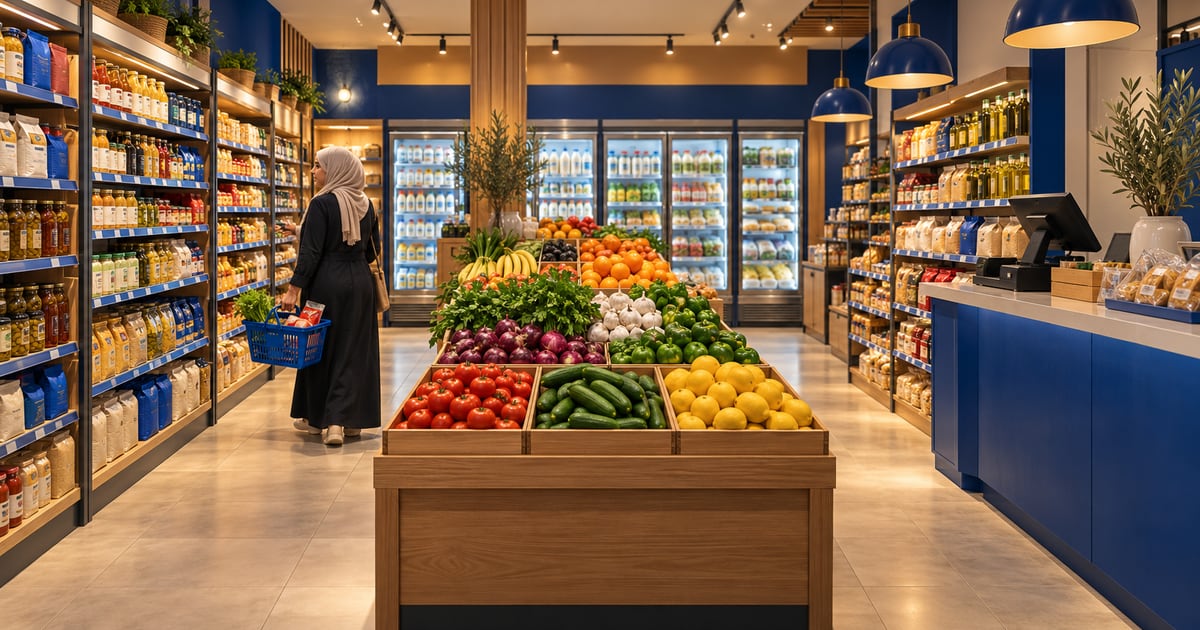
A supermarket in Iraq is a medium-to-large food and household retail store that combines fresh and packaged goods, clear aisles, supplier purchasing, barcode checkout, and daily stock discipline. Success depends on location fit, a focused product range, dated supplier quotes, shelf layout that matches Iraqi shopping habits, accurate barcodes, cashier and inventory routines, and optional delivery or an online store—not only on decoration.
01
How to Open a Supermarket in Iraq: Location, Shelves, Suppliers, and Daily Operations
Opening a supermarket in Iraq is less about copying a glossy mall concept and more about matching a real street: school-run mornings, Friday family baskets, late-night water runs, and supplier trucks that arrive when traffic is worst. This guide is for owners who want a practical supermarket workflow—where to situate the shop, how to choose range, how to talk to wholesalers, what illustrative startup costs look like in IQD, how to plan shelves and barcodes, and how cashier and inventory habits protect margin. For software selection depth, read grocery store and mini-market software in Iraq; here we stay on the floor.
Pair planning with feasibility study for Iraq shops, barcode discipline from barcode in Iraq, counting habits from stocktaking software in Iraq, and reorder thinking from low-stock reorder alerts in Iraq.
Quick answer: A supermarket in Iraq combines location fit, a focused product range, dated supplier quotes, aisle layout that matches how families shop, barcode-ready labeling, cashier lanes that update stock, and optional delivery or online sales. Illustrative IQD tables below are worksheets—not promises. After opening, POS that supports offline checkout, barcode items, inventory after sales, and configurable low-stock thresholds helps you see shortages early; RA8M plans start at 7,500 IQD/month (Basic), 15,000 (Advanced), 30,000 (Manufacture), with ecommerce from 50,000 IQD/month—verify on pricing.
02
What is a supermarket in Iraq—and who is it for?
In Iraqi cities, customers use “سوبر ماركت” for anything from a wide mini-market to a full aisle store with chilled dairy, frozen chicken, detergents, and seasonal displays. For planning purposes, treat a supermarket in Iraq as a store that:
Your neighborhood may call a 120 m² shop a supermarket if it *feels* like one—what matters is whether you manage categories, supplier minimums, and multiple employees without losing track of stock.
| Trait | Mini-market | Supermarket (planning definition) |
|---|---|---|
| SKU count | Dozens to low hundreds | Hundreds to thousands |
| Aisles | One or two lanes | Multiple aisles + end caps |
| Fresh | Limited | Often dairy, frozen, produce corner |
| Deliveries | Occasional cartons | Scheduled wholesaler trucks |
| Checkout | One register common | One or more lanes at peak |
| Staff | Owner + helper | Shifts, receivers, cashiers |
03
Why location beats interior design on day one
Rent is paid on foot traffic, not on Pinterest photos. Walk the block at three times: school drop-off, evening grocery rush, and late night when only lights and security matter.
Google’s SEO Starter Guide becomes relevant when you publish a website or Google Business Profile; even without a site, one spelling for your supermarket name on maps, bags, and receipts prevents delivery confusion.

| Signal | What to observe | Decision it supports |
|---|---|---|
| Visibility | Can drivers see your sign from the main road? | Sign budget and angle |
| Parking | Cars double-park for water and milk? | Lane width at checkout |
| Competition | How many shops within 500 m? | Range differentiation |
| Buildings | Apartments vs villas vs offices | Pack sizes and price points |
| Power | Generator noise, voltage dips | Refrigeration risk |
| Security | Night sales plan | Staffing and shutters |
04
Product range: how to avoid a warehouse of slow movers
New owners often over-order variety because every cousin suggests a brand. A disciplined supermarket in Iraq opens with a core basket families repeat weekly, then expands from sales evidence.
Add a produce corner only if you can rotate stock fast and tolerate shrink from handling. A wilted tomato display damages trust faster than an empty crate.
| Aisle theme | Example SKUs (illustrative) | Why it belongs in week one |
|---|---|---|
| Water & beverages | Water packs, juice, soft drinks | High turnover, price-sensitive |
| Dairy & breakfast | Milk, laban, cheese, eggs | Daily need; watch expiry |
| Staples | Rice, oil, sugar, flour, pasta | Basket anchor |
| Tea & coffee | Iraqi tea brands, instant coffee | Loyalty driver |
| Snacks | Chips, biscuits, chocolate | Impulse at checkout |
| Cleaning | Detergent, dish soap, bleach | Stable household demand |
| Personal care | Shampoo, soap, diapers | Margin mix |
| Frozen | Chicken, vegetables, ice cream | Needs reliable freezers |
05
Suppliers, purchasing, and the invoice habit
Supermarkets live on wholesaler relationships. Before you paint shelves, collect three dated quotes for water, rice, oil, and detergent—the categories that define your reputation.
1. List minimum order quantities each supplier demands; note whether split cases are allowed.
2. Photograph competitor shelf prices on your block; your study compares *your* planned margin, not rumors.
3. Receive with a paper or digital invoice every delivery; match cases to the truck before signing.
4. Enter purchases into inventory the same day when possible so sales deductions make sense.
5. Review weekly which supplier was late, which SKU was short-packed, and which promo actually moved.
When a wholesaler offers “free display” fridges, read maintenance and exclusivity clauses. A broken chiller on a July afternoon is not a marketing problem—it is a cash problem.
06
Illustrative startup costs in IQD (worksheet only)
Numbers below are illustrative; replace each cell with your vendor quote before you transfer rent deposits.
Run these tables through a feasibility study with your own foot-traffic counts—not national statistics you cannot cite.

| Item | Illustrative IQD | Notes |
|---|---|---|
| Rent deposit (3 months) | 18,000,000 | Negotiate fit-out vs rent |
| Shelving & gondolas | 12,500,000 | Used racks need safety checks |
| Refrigeration & freezers | 15,000,000 | Warranty and spare parts |
| Checkout counter & belts | 2,800,000 | Lane width affects queue |
| POS hardware (tablet, printer, scanner) | 900,000 | Software is subscription |
| Signage & façade | 3,200,000 | Municipal rules vary |
| Initial stock | 25,000,000 | Spoilage if you over-buy |
| Generator hookup | 4,500,000 | Capacity for peak AC + chillers |
| Licenses & misc. | 2,000,000 | Confirm locally |
| **Illustrative total** | **83,900,000** | Add contingency separately |
07
Shelves, aisles, and the psychology of the basket
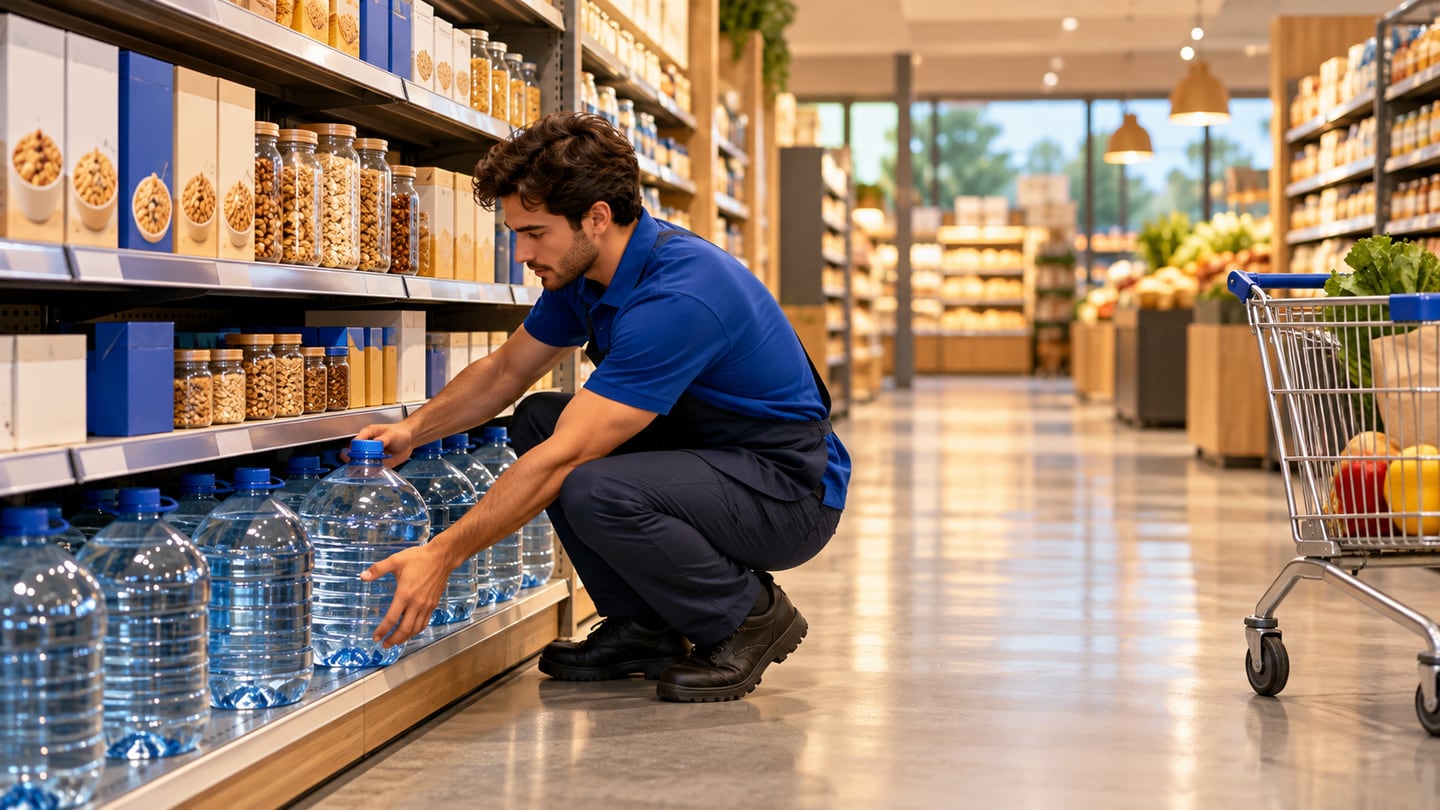
Shelving is operations, not decoration. Place heavy water and beverages on sturdy lower shelves near the path customers already walk. Put impulse snacks adjacent to checkout but leave space for queues during Ramadan evenings.
Train receivers to face products daily—a full facings photo reads as “fresh” even when turnover is normal.
| Layout rule | Practical application |
|---|---|
| Golden zone | Eye-level for high-margin packaged goods |
| End caps | Seasonal promos, not permanent clutter |
| Dairy wall | Cold chain closest to receiving door |
| Frozen bank | Keep doors sealed; monitor night temperature |
| Price tags | Large Arabic numerals; IQD without confusion |
| Aisle signs | Category names staff actually use |
08
Barcodes, labels, and GS1 discipline
Checkout speed depends on barcode quality. Manufacturer cases often ship with GS1-compatible codes; local repacks need internal SKUs and printed labels. GS1’s public materials explain why global trade item numbers matter for supply chains; even if you never join a registry, read GS1 barcode basics so staff understand check digits and duplicate codes.
Deep dive: barcode in Iraq. Operational rules:
Barcode mistakes are expensive at scale: one wrong digit on cooking oil turns margin into arguments at the lane.
| Situation | What to do |
|---|---|
| Scanned item beeps wrong product | Stop selling; fix master data |
| Sold by weight | Scale label + linked PLU |
| Multi-pack | Separate barcode or quantity prompt |
| Promo bundle | One clear POS rule, not mental math |
| New delivery | Scan one unit before shelving entire case |
09
Cashier lanes, shifts, and honest handover
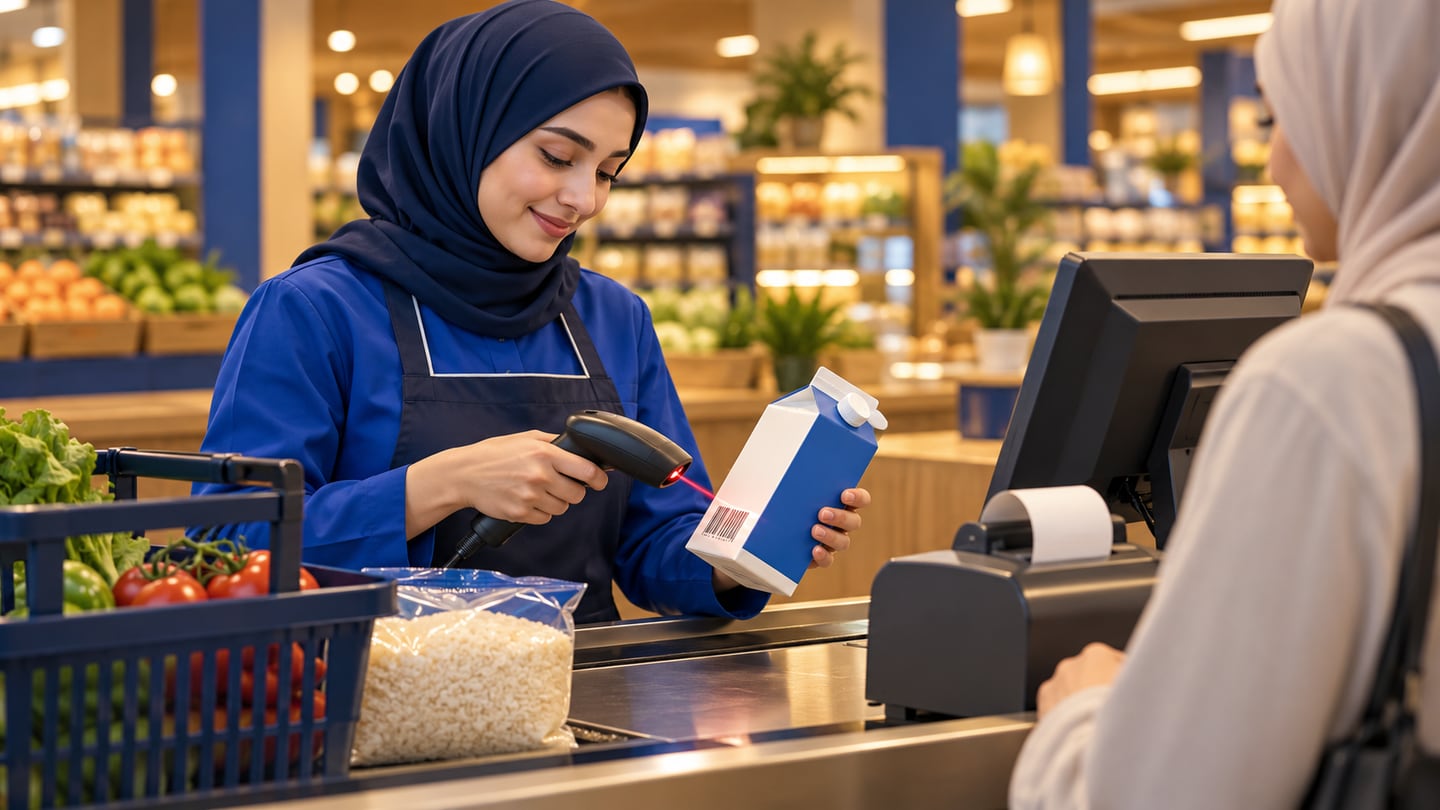
A supermarket in Iraq fails quietly when checkout is fast but handover is vague. Define shifts, float amounts, and who may void lines.
Software detail belongs in grocery mini-market software; on the floor, test a mock busy hour before grand opening.
| Lane habit | Why it matters |
|---|---|
| Scan every item | Prevents “friendly” manual prices |
| Visible void permission | Reduces silent shrink |
| Payment method buttons | Wallet vs cash reconciliation |
| Receipt header | Matches sign and delivery name |
| End-of-shift report | Compare float to POS |
10
Inventory after sales—not after arguments
Inventory is the memory of your supermarket. Every invoice should reduce on-hand quantity; every return or damage should be permissioned. Schedule a weekly spot count on ten hero SKUs: water, milk, rice, oil, sugar, detergent, diapers, frozen chicken, tea, and one promo item.
Connect counting rhythm to stocktaking software in Iraq and set low-stock thresholds so receivers order before shelves go empty—see low-stock reorder alerts in Iraq.
Investigate variances while invoices still exist—not at month-end when everyone forgot.
| Event | Units |
|---|---|
| Opening count | 400 |
| Purchase received | 600 |
| POS sales | 820 |
| Damaged | 6 |
| Expected on hand | 174 |
| Physical count | 168 |
| Variance | 6 |
11
Delivery, phone orders, and optional online store
Delivery can start without a fancy app: printed list, WhatsApp voice notes, and a driver who knows building entrances. Scale when mistakes hurt—wrong apartment towers, mixed payment methods, missing change.
An owned storefront pairs with POS when stock records stay connected; ecommerce pricing in RA8M onboarding shows a 50,000 IQD/month add-on combined with your POS tier—confirm features on pricing and ecommerce.
| Channel | Strength | Risk |
|---|---|---|
| Walk-in | Highest margin, instant payment | Queue peaks |
| Phone/WhatsApp | Personal trust | Order transcription errors |
| Aggregator apps | Discovery | Commission and menu sync |
| Owned online store | Brand control | Needs catalog discipline |
12
Staffing, training, and shrink you can actually control
Hire for reliability before charisma. Receivers who hide shorts in “adjustments” cost more than slow cashiers. Train three scripts: greeting, bag policy, and “we will check the shelf” when an item scans wrong.
Cameras help, but clear permissions in POS reduce temptation—Advanced plans add depth for permissions and inventory; verify live menus on pricing.
| Role | Week-one focus |
|---|---|
| Receiver | Invoice match, cold chain, facing |
| Cashier | Scan discipline, payments, receipts |
| Supervisor | Voids, discounts, shift report |
| Owner | Supplier calls, price changes, theft review |
13
Honest RA8M checks for supermarkets (verified in product)
This section states only what RA8M’s codebase and public marketing support:
RA8M does not replace your landlord negotiation, municipal licensing, or accountant. Use RA8M POS after the physical layout works; use reports to compare forecast vs actual as in the feasibility guide.
| Claim | Evidence |
|---|---|
| Offline POS | Checkout panels record offline sales and sync when online returns |
| Barcode on items | POS checkout supports barcode entry and scanning workflows |
| Inventory after sales | Sales workflows deduct stock tied to items |
| Low-stock threshold | POS settings include configurable lowStockThreshold |
| Plan pricing | Onboarding lists Basic **7,500**, Advanced **15,000**, Manufacture **30,000** IQD/month |
| Ecommerce add-on | Onboarding adds **50,000** IQD/month for ecommerce bundle |
14
First 30 days: opening sequence without chaos
Days 1–7: finalize lease, measure aisles, order shelving, sign first suppliers, walk competitor prices.
Days 8–14: install chillers, generator test under load, paint signage mockup at night.
Days 15–21: enter opening stock, print shelf labels, barcode pilot on fifty SKUs.
Days 22–28: mock checkout days, train voids, set low-stock thresholds, define delivery zone.
Days 29–30: soft open for neighbors; full open after one clean stock count.
15
Sources and related reading
Readable titles and helpful pages: Google SEO Starter Guide.
Barcode standards context: GS1 barcodes.
Internal: grocery software guide, feasibility study, barcode Iraq, stocktaking, low-stock alerts.
16
Conclusion: a supermarket in Iraq earns trust aisle by aisle
Customers forgive a temporary out-of-stock; they rarely forgive wrong prices, warm yogurt, or queues that disrespect their time. Treat supermarket in Iraq planning as a chain: location → range → suppliers → shelves → barcodes → cashier → inventory → optional delivery. Illustrative IQD tables are starting points—your dated quotes are the real model. When operations need digital memory, choose POS that matches how Iraqi lanes actually behave, including offline selling and stock that moves when receipts print.
17
Frequently Asked Questions
What is a supermarket in Iraq?
It is a retail store larger than a corner mini-market, selling packaged food, beverages, household goods, and often fresh categories, with multiple aisles, supplier deliveries, barcode checkout, and daily inventory discipline.
How much does it cost to open a supermarket in Iraq?
Costs vary by city, size, and refrigeration. Use illustrative IQD tables in this guide as a worksheet only—replace every number with dated quotes from your landlord, fit-out contractor, and equipment suppliers before signing.
Do I need barcodes on every item?
Manufacturer barcodes should be scanned where they exist. Bulk, bakery, and local packs often need internal codes and shelf labels. Clean barcode data prevents checkout mistakes and supports inventory after each sale.
Can a supermarket run delivery without an online store?
Yes. Many neighborhoods start with phone and WhatsApp orders, a printed price list, and a driver roster. An online storefront adds catalog discipline and payment tracking but is optional on day one.
When does RA8M fit a new supermarket?
When you need Arabic POS, barcode sales, stock updates after invoices, supplier purchases, low-stock thresholds in POS settings, permissions, reports, and optional ecommerce. Basic POS is 7,500 IQD/month, Advanced 15,000, Manufacture 30,000; ecommerce add-on is 50,000 IQD/month in onboarding—confirm on /en/pricing.
How is this guide different from grocery store software article?
This article focuses on opening and operating the physical supermarket—location, shelves, suppliers, and lanes. The grocery mini-market software guide focuses on choosing and testing POS features.
18
Refrigeration, generators, and the hidden electricity bill
Chillers look identical in showroom photos; in Baghdad summers they separate professionals from experimenters. Log door-open time during receiving: staff chatting with the driver while dairy faces warm air is a margin leak. Install thermometers customers can glimpse—transparency builds trust. Size your generator for worst-case: checkout PCs, lights, two freezers kicking compressors at once. Illustrative fuel line in your monthly sheet should include Ramadan hours when you stay open later.
19
Promotions that do not destroy margin
A supermarket promotion should move known SKUs, not random clutter. Run one hero promo per week with a start and end date printed on the shelf tag. Train cashiers which barcodes pick up the discount automatically versus which need supervisor approval. After the promo ends, walk the aisle the same day—stale tags cause checkout arguments that social media amplifies.
20
Municipal signage and neighbor relations
Before you weld a tall sign, ask neighboring shops how night lighting affects them. A friendly neighbor warns you about traffic patterns; an angry one calls inspectors. Keep a copy of permit paperwork where staff can show it during inspections. Your supermarket name on the sign should match bags, WhatsApp status, and receipt header text.
21
Security without turning the aisle into a prison
Balance cameras at entrances, checkout, and high-value cosmetics with customer comfort. Post a simple bag check policy at the door if you use one—ambiguous rules embarrass families. Night shifts need two people when possible: one on floor, one on register. Document incident notes; patterns reveal whether shrink is theft, training, or supplier short packs.
22
Wholesale markets vs direct distributor contracts
Some owners buy rice and oil from central wholesale markets for flexibility; others sign distributors for stable delivery. Compare landed cost per unit including driver tips, unloading time, and breakage—not only invoice price. Switching suppliers because one invoice was cheap often costs shelf gaps the following week.
23
Packaging waste and back-room discipline
Cardboard piles attract pests and block receiving. Schedule twice-weekly recycling runs and keep a clear path from truck to dairy case. Back-room chaos shows on the sales floor as empty facings because receivers cannot find cases.
24
Measuring success without fake statistics
Do not quote national market size you cannot source. Instead track your metrics: baskets per hour, average items per receipt, top twenty SKUs, promo uplift, delivery error rate, and stock variance on hero items. Those numbers feed your feasibility update monthly.
25
Partnerships and family capital
Many Iraqi supermarkets start with family pools. Write who decides prices, who signs supplier cheques, and how cash drawer shortages are handled—before opening. Ambiguity destroys families faster than slow sales. If a partner is silent investor only, document it plainly; if they work shifts, define roles like any employee.
26
Seasonal calendars worth planning
Ramadan shifts basket mix toward juice, dates, and bulk staples. Summer spikes water and ice cream. Back-to-school moves snacks and stationery if you carry them. Build a simple calendar on the wall so purchasers order early instead of panic-buying from scalpers.
27
When to add a second checkout lane
If queues regularly exceed five carts during your peak hour, model the cost of a second lane: hardware, staff, and electricity. Sometimes re-layout fixes more than a second register—move impulse items, widen exit path, or add a express lane for water-only baskets.
28
Label printers and shelf edge consistency
Invest in a label workflow before SKU count explodes. Arabic product names on shelf edges should match POS names cashiers see—transliteration differences cause “item not found” delays. For internal bakery items, print bake time on labels when regulations require it.
29
Customer complaints as operations data
Log complaints in one notebook: warm drink, wrong change, missing promo. Review weekly. Patterns point to training gaps, supplier issues, or POS configuration—not “bad luck.”
30
Insurance and equipment warranties
Photograph serial numbers on freezers the day they arrive. Store warranties where a power surge cannot erase them. Insurance is optional for some owners but consider coverage for civil liability if your street is crowded—this is general planning, not legal advice.
31
Banking, wallets, and reconciliation
Iraqi customers mix cash, cards, and mobile wallets. Train cashiers to tap the correct payment type every time; end-of-day reports only help when inputs are honest. Deposit cash on a schedule that matches your risk tolerance—do not let weekend sales sit in a drawer until Tuesday.
32
Final walkthrough before ribbon-cutting
Invite a skeptical friend to shop with a list of twenty mundane items while you only watch queues, cold case temperature, label readability, and receipt clarity. Fix friction before paying for ads.
Frequently asked questions
What is a supermarket in Iraq?
It is a retail store larger than a corner mini-market, selling packaged food, beverages, household goods, and often fresh categories, with multiple aisles, supplier deliveries, barcode checkout, and daily inventory discipline.
How much does it cost to open a supermarket in Iraq?
Costs vary by city, size, and refrigeration. Use illustrative IQD tables in this guide as a worksheet only—replace every number with dated quotes from your landlord, fit-out contractor, and equipment suppliers before signing.
Do I need barcodes on every item?
Manufacturer barcodes should be scanned where they exist. Bulk, bakery, and local packs often need internal codes and shelf labels. Clean barcode data prevents checkout mistakes and supports inventory after each sale.
Can a supermarket run delivery without an online store?
Yes. Many neighborhoods start with phone and WhatsApp orders, a printed price list, and a driver roster. An online storefront adds catalog discipline and payment tracking but is optional on day one.
When does RA8M fit a new supermarket?
When you need Arabic POS, barcode sales, stock updates after invoices, supplier purchases, low-stock thresholds in POS settings, permissions, reports, and optional ecommerce. Basic POS is 7,500 IQD/month, Advanced 15,000, Manufacture 30,000; ecommerce add-on is 50,000 IQD/month in onboarding—confirm on /en/pricing.
How is this guide different from grocery store software article?
This article focuses on opening and operating the physical supermarket—location, shelves, suppliers, and lanes. The grocery mini-market software guide focuses on choosing and testing POS features.
Written by
RA8M Team
Practical guides for restaurants, shops, and operations teams
Next step
Try RA8M with data close to your operation
Read next