Small Business Ideas in Iraq: Practical Shops, Cafés, and Online Stores
Explore small business ideas in Iraq—from restaurants and supermarkets to pharmacies, clothing, and online stores—with honest notes on sales, inventory, POS, and when RA8M fits.

Small business ideas in Iraq are practical ventures such as restaurants, cafés, mini-markets, pharmacies, clothing shops, and online stores where daily work depends on fast sales, accurate stock, receipts, staff permissions, and reports. Success comes from location, discipline, and systems—not from copying hype. Most of these ideas need a cashier or POS workflow, inventory discipline, and clear purchasing habits. RA8M offers POS plans at Basic 7,500 IQD per month, Advanced 15,000, Manufacture 30,000, optional ecommerce from 50,000 IQD, and a 14-day trial; confirm live pricing before subscribing.
01
Small Business Ideas in Iraq: Practical Shops, Cafés, and Online Stores
Choosing small business ideas in Iraq is less about chasing viral trends and more about matching a real neighborhood need with daily discipline: purchasing, pricing, staffing, receipts, and stock you can trust. Baghdad, Basra, Erbil, Najaf, and smaller cities each have different foot traffic, rent levels, and customer habits—but every durable shop still answers the same operational questions. Can you sell quickly at the counter? Do you know what is on the shelf? Can the owner review sales without rebuilding spreadsheets at midnight?
Quick answer: Small business ideas in Iraq are practical ventures such as restaurants, cafés, mini-markets, pharmacies, clothing shops, and online stores where success depends on location, service, and systems—not guaranteed profit headlines. Most ideas need a cashier or POS workflow, inventory habits, and clear reports. RA8M connects POS, stock, purchases, and optional ecommerce with plans at Basic 7,500, Advanced 15,000, and Manufacture 30,000 IQD per month, ecommerce from 50,000 IQD, and a 14-day trial—confirm on pricing.
This guide walks through common small business ideas in Iraq, what each type needs at checkout and in the back office, and where specialized RA8M articles go deeper. It does not promise income figures; your rent, suppliers, and team costs decide economics.
02
What counts as a small business idea in Iraq?
A small business idea in Iraq is any venture you can start with focused capital and operate with a small team while serving a clear local demand. That includes food service (restaurant, café, bakery), daily-needs retail (supermarket, mini-market, convenience), regulated or sensitive retail (pharmacy), fashion (clothing and accessories), and digital sales (open an online store in Iraq when stock and delivery are ready).
Search interest around افكار مشاريع صغيرة and مشاريع مربحة في العراق (profitable projects in Iraq) shows that owners want inspiration—but profitability is an outcome of margin, waste control, and repeat customers, not a label on a business type. Treat “profitable projects” as a reminder to model costs honestly: rent, utilities, licenses you actually need, shrinkage, and the time you spend ordering stock.
Before you sign a lease, write a one-page operating sketch: who buys, what they pay in Iraqi dinar, how you restock, and how you will close the day. If that sketch already needs barcode scanning, kitchen tickets, or batch discipline, plan software early instead of bolting it on after the first busy month.

| Business type | Daily sales pattern | Stock complexity | Software priority |
|---|---|---|---|
| Café | Fast tickets, modifiers | Recipe ingredients | Cafe POS in Iraq |
| Restaurant | Tables, kitchen flow | Recipes, perishables | Restaurant POS and permissions |
| Supermarket | Barcode volume | High SKU count | Grocery and mini-market software |
| Pharmacy | Regulated items, traceability | Batches, expiry | Pharmacy POS in Iraq |
| Clothing | Variants (size/color) | Seasonal SKUs | Clothing store POS |
| Online store | Orders + delivery | Same stock as shop | POS + ecommerce add-on |
03
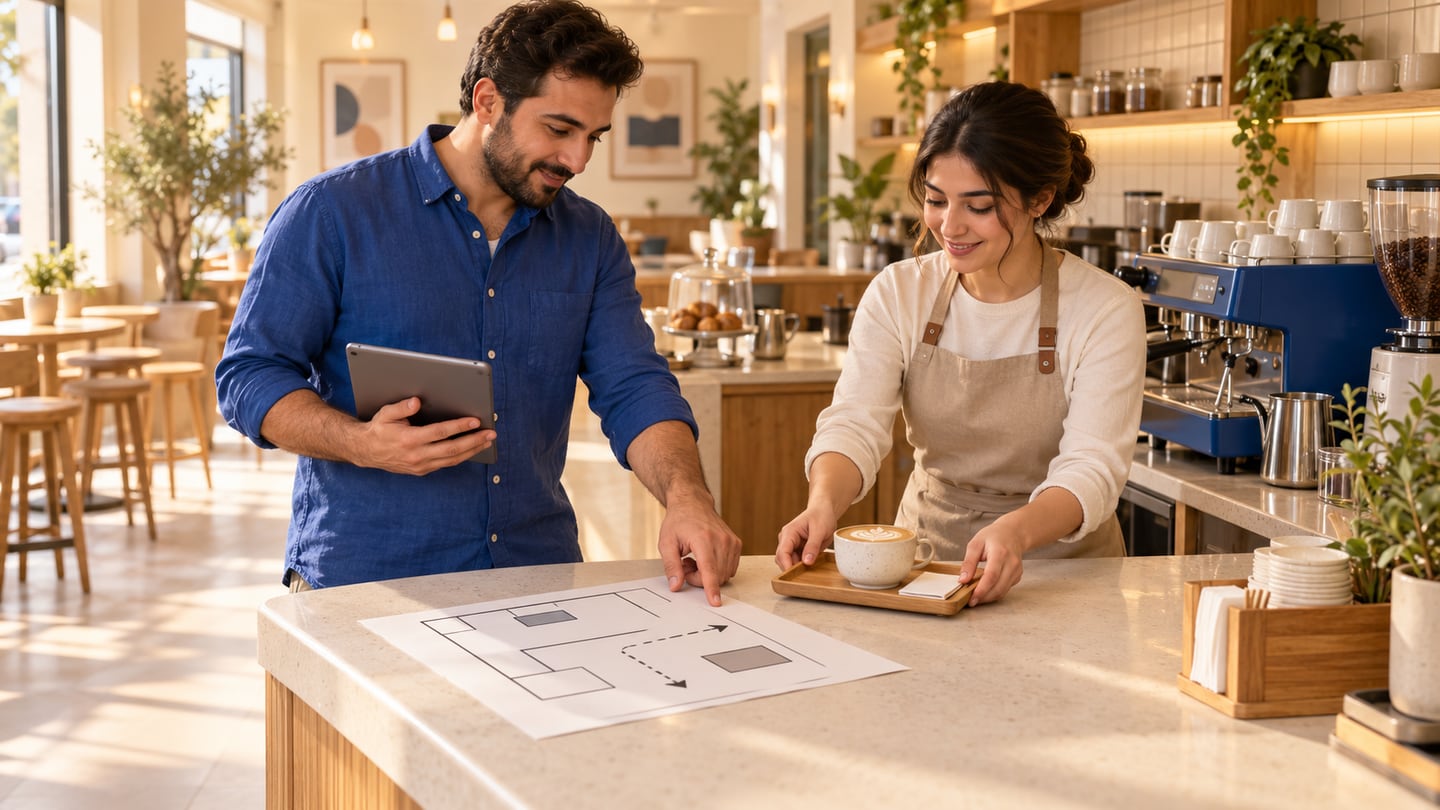
Restaurant and café ideas: speed, menu, and floor plan
Restaurants remain among the most visible small business ideas in Iraq because food demand is steady—but they are also sensitive to location, menu focus, and peak-hour service. A full-service restaurant must coordinate seating, kitchen timing, void rules, and sometimes delivery aggregators. A café may prioritize drink customization and takeaway speed over table management.
Start with a realistic menu: fewer items executed well beat a long list that confuses kitchen and inventory. Walk the floor during lunch and dinner peaks in similar venues near your target site. Notice queue length, parking, and whether customers dine in or leave with bags—those observations shape counter layout and printer placement more than any generic template.
Order screens that support Arabic and English item names staff actually use.
Modifiers (extra cheese, size, sugar level) priced automatically, not memorized.
Permissions so only supervisors void sent items or apply deep discounts.
End-of-day reports by item and hour—not only a cash total.
Offline selling when internet drops during service (test on your network).
Cafés with coffee-focused menus should read cafe POS in Iraq for drink sizes, recipe inventory, and offline workflows. Restaurants comparing kitchen tickets and table flows should review best POS software for restaurants in Iraq alongside staff training plans.
Food businesses fail operationally when owners treat the cashier as a calculator. Each ticket should feed reports and, where possible, ingredient usage. Even a simple daily milk or oil calculation prevents silent waste.
04
Supermarket and mini-market ideas: barcodes, aisles, and purchasing
Supermarkets and mini-markets are classic neighborhood small business ideas in Iraq because households buy frequently. Success is less about novelty and more about shelf availability, fair pricing, and checkout speed. Customers remember empty aisles and long queues more than decorative branding.
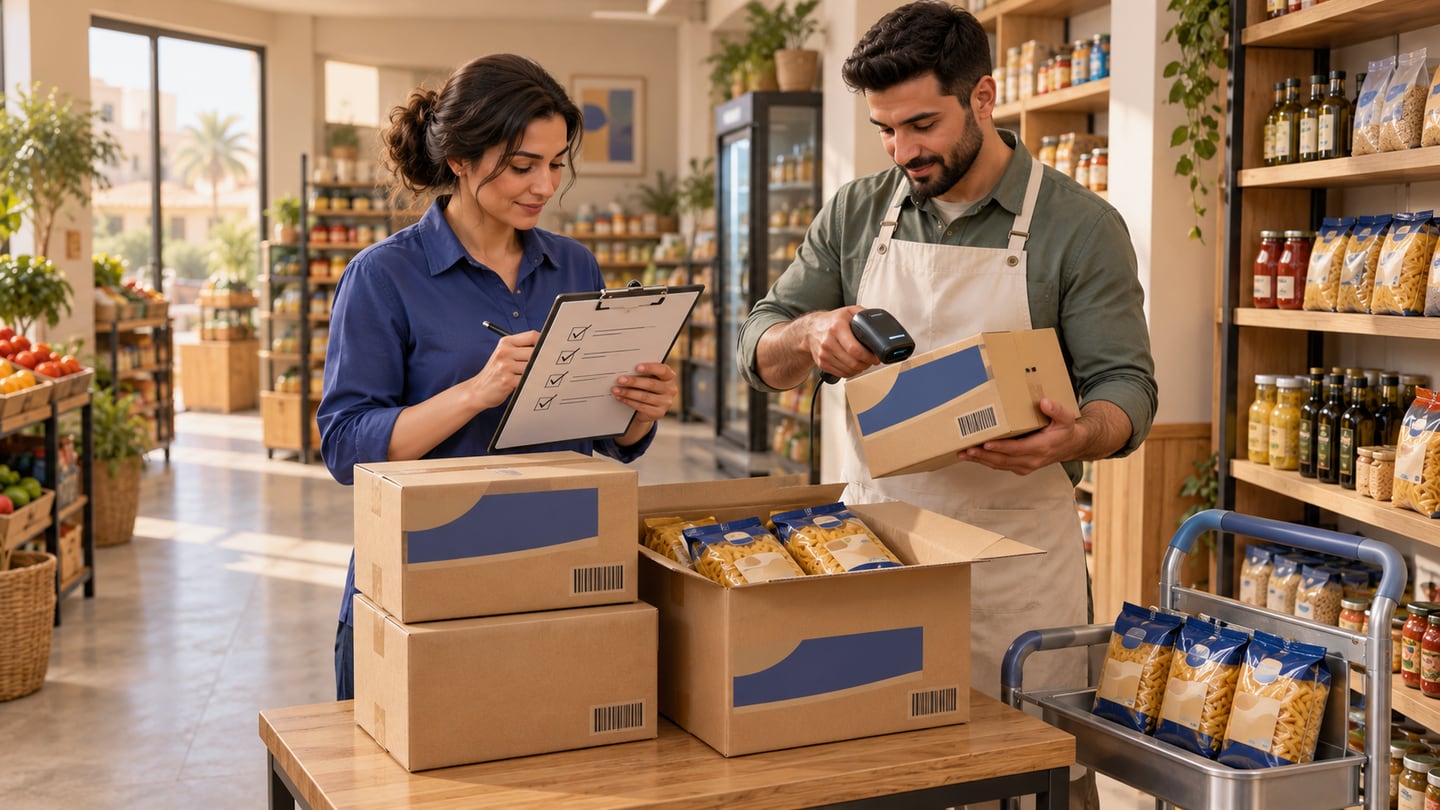
Layout matters: fast movers (water, milk, bread, detergents) should be easy to restock without blocking the register. Plan one receiving zone where deliveries are checked against supplier notes before items hit shelves. Without that habit, POS stock becomes fiction within weeks.
Supermarket operators should plan for:
Barcode scanning at checkout with quantity changes and suspended tickets.
Purchase receiving linked to on-hand stock—not only sales deductions.
Supplier history and reorder lists based on movement, not guesswork.
Multi-user logins: cashier versus manager versus purchaser.
Periodic cycle counts on top sellers instead of annual heroic counts.
Deep workflow guidance lives in grocery and mini-market software in Iraq. Pair it with POS barcode system in Iraq when you standardize wedge scanners and label printers.
Mini-markets with limited space can still carry hundreds of SKUs. That is the threshold where notebook stock breaks. A Basic POS plan at 7,500 IQD per month is often cheaper than the labor of nightly manual reconciliation—illustrative logic only; use your real wage and error rates.
05
Pharmacy, clothing, and specialty retail ideas
Pharmacies combine retail speed with responsibility. Customers expect availability and correct pricing; regulators and partners expect traceability on sensitive lines. Even if your shop is small, batch and expiry discipline separates professional operation from risky guesswork.
Read pharmacy POS in Iraq before you choose a cashier tool that cannot record batch movement or restrict discounts. Permissions matter: cashiers should not change prices on regulated items without manager approval.
Clothing and footwear shops introduce variants—size, color, style—which punish generic cashiers that only accept a single price field. Returns and exchanges during seasonal peaks need clear policies encoded in software, not argued at the counter.
Clothing store POS software in Iraq explains variant SKUs, label printing, and reports by category. Cosmetics, mobile accessories, and gift shops share the same pattern: modest floor space but high SKU complexity.
Specialty retail small business ideas in Iraq also include hardware stores, bookshops, and toy shops. The unifying need is trustworthy inventory: what sold, what remains, what to reorder before a holiday rush.
06
Online store and omnichannel ideas
Selling online is a strong complement when in-store operations are stable. An online storefront should display the same prices and availability you honor at the counter. Otherwise you pay cancellation costs and reputation damage.
RA8M ecommerce is an add-on from 50,000 IQD per month on any POS plan, connecting web orders to shared stock. Public materials note that storefront subdomains stay indexable for search—useful when customers discover you on Google rather than only through social posts. Still write accurate product pages; indexing does not replace honest descriptions and delivery times.
Follow open an online store in Iraq for payments, delivery, and launch order. If you already run a physical shop, treat ecommerce as another sales channel on one inventory record, not a second business hidden in WhatsApp screenshots.
Nightly compare web orders fulfilled versus stock deductions.
Define who answers customer messages and how refunds appear in reports.
Test a 14-day trial on the plan that includes the features you need—start at /create-account.
07
When do small businesses need connected ERP-style tools?
Not on day one for every stall—but sooner than owners expect once purchases, staff, and branches multiply. ERP for small business in Iraq explains when separate notebooks stop agreeing.
Warning signs:
Purchases entered days after goods already sold.
Branch managers sending sales photos instead of structured reports.
Owner cannot answer “how many units left?” without a physical hunt.
Online and in-store channels oversell the same SKU.
A lightweight connected platform beats a heavy corporate ERP when you need Arabic workflows, IQD, offline POS, and optional ecommerce without a year-long implementation.
08
Launch steps that protect your idea
Ideas fail when execution skips boring steps. Use a phased launch:
Name the customer segment and top twenty SKUs or menu items.
Visit competitors for price and service benchmarks (no copying their P&L).
Draft supplier list and minimum order habits.
Count opening stock physically; enter barcodes and costs you know.
Configure payment methods you truly accept.
Print receipt sample customers can read in Arabic.
Train cashiers on suspend, return, and discount rules.
Assign who receives deliveries and who approves voids.
Review sales by item, hour, and payment method.
Adjust purchasing on evidence, not mood.
Licensing and tax rules change; use official portals such as Google Iraq business resources for general digital presence guidance and consult qualified professionals for registrations that apply to your governorate and sector.

09
RA8M pricing and trial for new operators
RA8M publishes IQD tiers on pricing:
Onboarding copy mentions a 14-day trial on selected plans—run your real catalog, barcode flow, and end-of-day report before subscribing. Branches and extras may carry separate fees; always confirm live pricing.
RA8M is worth evaluating when your small business idea in Iraq needs Arabic and English POS, inventory, purchases, reports, roles, offline selling, and optional ecommerce—not when a paper notebook still matches reality.
| Plan | Monthly price (IQD) | Typical small business fit |
|---|---|---|
| Basic | 7,500 | Retail, mini-market, clothing, cosmetics |
| Advanced | 15,000 | Deeper operations on the Advanced tier |
| Manufacture | 30,000 | Production, recipes, raw materials |
| Ecommerce add-on | +50,000 on any plan | Online store on shared stock |
10
Common mistakes when picking an idea
Mistake one: choosing hype over foot traffic. A trendy concept without customers near your door burns rent.
Mistake two: ignoring stock discipline. Food and retail ideas live or die on shrinkage and reorder timing.
Mistake three: delaying POS until after opening chaos. Training staff during peak weeks costs more than a structured trial week.
Mistake four: splitting online and offline stock. Double records create overselling.
Mistake five: copying “profitable projects” lists without cost models. Profitability is operational, not a category label.
11
Conclusion: match the idea to daily systems
The best small business ideas in Iraq are the ones you can operate honestly every day: clear menu or assortment, fair pricing, trained cashiers, stock that matches reports, and an owner who reviews numbers weekly. Restaurants and cafés need speed and modifiers; supermarkets need barcodes and purchases; pharmacies and clothing need variants and permissions; online stores need shared inventory and truthful delivery promises.
Start with the idea that fits your capital and skills, then prove the workflow on a 14-day trial with the RA8M plan closest to your reality—7,500 / 15,000 / 30,000 IQD POS tiers plus ecommerce from 50,000 IQD when you are ready. Small business ideas in Iraq succeed when systems match the floor, not when slogans replace receipts.
12
Frequently asked questions
What are small business ideas in Iraq?
They are practical ventures you can operate locally—such as a café, restaurant, mini-market, pharmacy, clothing shop, or online store—where daily success depends on sales discipline, stock control, customer trust, and reliable checkout rather than vague promises.
Which small business ideas need POS or inventory software first?
Supermarkets, pharmacies, and clothing stores usually need barcode or SKU checkout and stock deduction from day one. Restaurants and cafés need fast order entry, modifiers, and often recipe-linked inventory. Online stores need the same stock record as the physical shop if you sell both channels.
Are restaurants and cafés the same operationally?
Both sell food and drinks, but restaurants often manage tables, kitchen tickets, and complex modifiers, while cafés emphasize drink sizes, speed, and smaller menus. Each needs a cashier workflow matched to how customers actually order.
How much does RA8M cost for a new small business?
POS plans start at Basic 7,500 IQD per month, Advanced 15,000, and Manufacture 30,000. Ecommerce is an add-on from 50,000 IQD per month on any plan. A 14-day trial is available on selected plans—verify details on pricing before you subscribe.
Should I open an online store before fixing in-store stock?
Usually no. If physical stock is inaccurate, selling online multiplies customer complaints and cancellation costs. Connect ecommerce to the same inventory record once counting and purchasing habits are stable.
When does a small business need ERP-style software?
When sales, purchases, stock, invoices, and reports live in separate notebooks or apps and no longer agree. Lightweight connected platforms can replace double entry before you consider a heavy corporate ERP project.
13
Sources and reference notes
Google Business resources for Iraq — general guidance on digital presence for local businesses (not legal advice).
World Bank Iraq overview — macro context for planning; does not replace local licensing research.
International Trade Centre SME definitions — export-oriented checklist useful when weighing online sales beyond your city.
RA8M pricing and /create-account — verify current IQD plans, trial terms, and ecommerce add-on pricing before purchase.
Frequently asked questions
What are small business ideas in Iraq?
They are practical ventures you can operate locally—such as a café, restaurant, mini-market, pharmacy, clothing shop, or online store—where daily success depends on sales discipline, stock control, customer trust, and reliable checkout rather than vague promises.
Which small business ideas need POS or inventory software first?
Supermarkets, pharmacies, and clothing stores usually need barcode or SKU checkout and stock deduction from day one. Restaurants and cafés need fast order entry, modifiers, and often recipe-linked inventory. Online stores need the same stock record as the physical shop if you sell both channels.
Are restaurants and cafés the same operationally?
Both sell food and drinks, but restaurants often manage tables, kitchen tickets, and complex modifiers, while cafés emphasize drink sizes, speed, and smaller menus. Each needs a cashier workflow matched to how customers actually order.
How much does RA8M cost for a new small business?
POS plans start at Basic 7,500 IQD per month, Advanced 15,000, and Manufacture 30,000. Ecommerce is an add-on from 50,000 IQD per month on any plan. A 14-day trial is available on selected plans—verify details on pricing before you subscribe.
Should I open an online store before fixing in-store stock?
Usually no. If physical stock is inaccurate, selling online multiplies customer complaints and cancellation costs. Connect ecommerce to the same inventory record once counting and purchasing habits are stable.
When does a small business need ERP-style software?
When sales, purchases, stock, invoices, and reports live in separate notebooks or apps and no longer agree. Lightweight connected platforms can replace double entry before you consider a heavy corporate ERP project.
Written by
RA8M Team
Practical guides for restaurants, shops, and operations teams
Next step
Try RA8M with data close to your operation
Read next
Related RA8M guides
All-in-One Business Management
ERP for Small Business in Iraq: POS, Stock and Reports
Read article
Accounting and Invoicing
Accounting Software for Small Business in Iraq
Read article
All-in-One Business Management
Business Management Software in Iraq: One System to Run It All
Read article
Local and Geo-Modified
Online Store Basra: How Iraq Shops Can Sell Smarter
Read article
Payments and Ecommerce
Payment Gateway Iraq: Online Store Checklist for Merchants
Read article