Business Management Software in Iraq: One System to Run It All
A practical guide to business management software in Iraq for connecting POS, inventory, purchases, finance, reports, branches, and ecommerce.

Business management software is one connected system for sales, inventory, purchases, finance, reports, roles, branches, and sometimes ecommerce. For Iraq businesses, the best fit is usually Arabic-first, bilingual, offline-ready at the cashier, and able to connect daily POS sales with stock movement, invoices, expenses, and owner reports.
01
Business Management Software in Iraq: One System to Run It All
A growing shop, restaurant, pharmacy, café, or online seller in Iraq can quickly outgrow separate cashier, inventory, purchase, accounting, and reporting files. When each team uses a different tool, the owner sees yesterday's numbers late and staff spend time reconciling instead of selling.
Quick answer: Business management software is one connected system for sales, inventory, purchases, finance, reports, roles, branches, and sometimes ecommerce. For Iraq businesses, the best fit is usually Arabic-first, bilingual, offline-ready at the cashier, and able to connect daily POS sales with stock movement, invoices, expenses, and owner reports.
02
What is business management software?
Business management software is the operating layer for daily work. It records sales, updates inventory, tracks purchases, organizes customers, protects staff permissions, and turns activity into reports. In a POS-led business, the cashier is the front door of the system, but the value comes from what happens after checkout.
For example, a sale should reduce stock, create a transaction, update the customer record if needed, appear in daily reports, and help finance understand revenue. A purchase bill should increase stock, record supplier cost, and appear in payable or expense tracking. When those steps are connected, the owner stops asking staff to copy the same number three times.
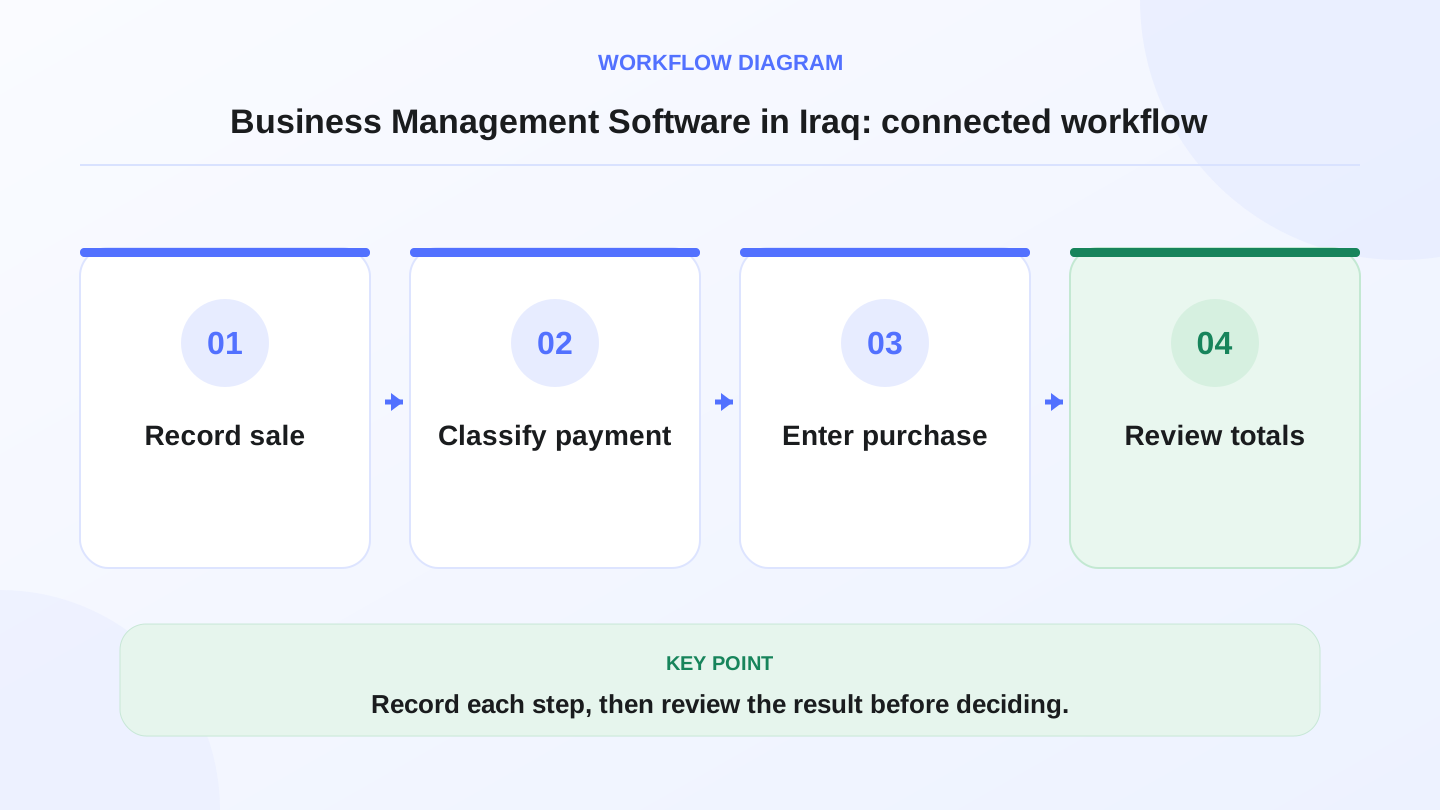
A practical sequence has four connected steps: Record sale, Classify payment, Enter purchase, Review totals. Recording each step makes the daily result easier to review.
03
Why one system matters for Iraq businesses
Iraq business owners often manage mixed realities: Arabic and English teams, internet interruptions, cash-heavy workflows, stock moving between branches, and online orders coming from a storefront, Instagram, WhatsApp, or delivery channels. A disconnected stack makes that reality harder.
A unified system reduces the gap between what happened at the counter and what appears in the report. It also gives managers a cleaner daily rhythm: open cashier, sell, receive purchases, adjust stock, review reports, close shift, and plan the next order.
The goal is not software complexity. The goal is operational control without forcing the owner to become a data-entry manager.
04
Which workflows should be connected?
A practical system should connect the workflows that affect money and stock. If the business only digitizes checkout but keeps purchases and inventory in a notebook, the owner still cannot trust stock value or reorder decisions.
This table is also a buying checklist. If a vendor cannot show the connection clearly, ask for a live workflow demo.
| Workflow | What should happen | Why it matters |
|---|---|---|
| POS sales | Sell items, discounts, receipts, payment methods | Creates the daily revenue record |
| Inventory | Deduct sold items, add purchases, show low stock | Reduces shortages and hidden losses |
| Purchases | Record supplier bills and received quantities | Explains why stock increased and what it cost |
| Finance | Connect revenue, expenses, payments, and reports | Reduces manual money tracking |
| Roles and branches | Limit staff access and separate branch visibility | Protects control as the team grows |
| Ecommerce | Sync online orders with the same products and stock | Helps avoid overselling and duplicate entry |
05
POS plus inventory is the foundation
For restaurants, cafés, supermarkets, clothing stores, pharmacies, and salons, POS and inventory should not be separated. Every checkout changes the stock position or service record. Every stock movement changes buying decisions.
A cashier-only system can show sales totals, but it may not explain whether stock is healthy. A stock-only system can show counts, but it may not tell the owner what sold during the shift. The combination matters because decisions depend on both: what sold and what remains.
RA8M POS is built around this connection: cashier workflows link to inventory, customers, finance, reports, and ecommerce. That makes it useful for business owners who want daily visibility instead of isolated screens.

06
Worked example: stock and sales in one report
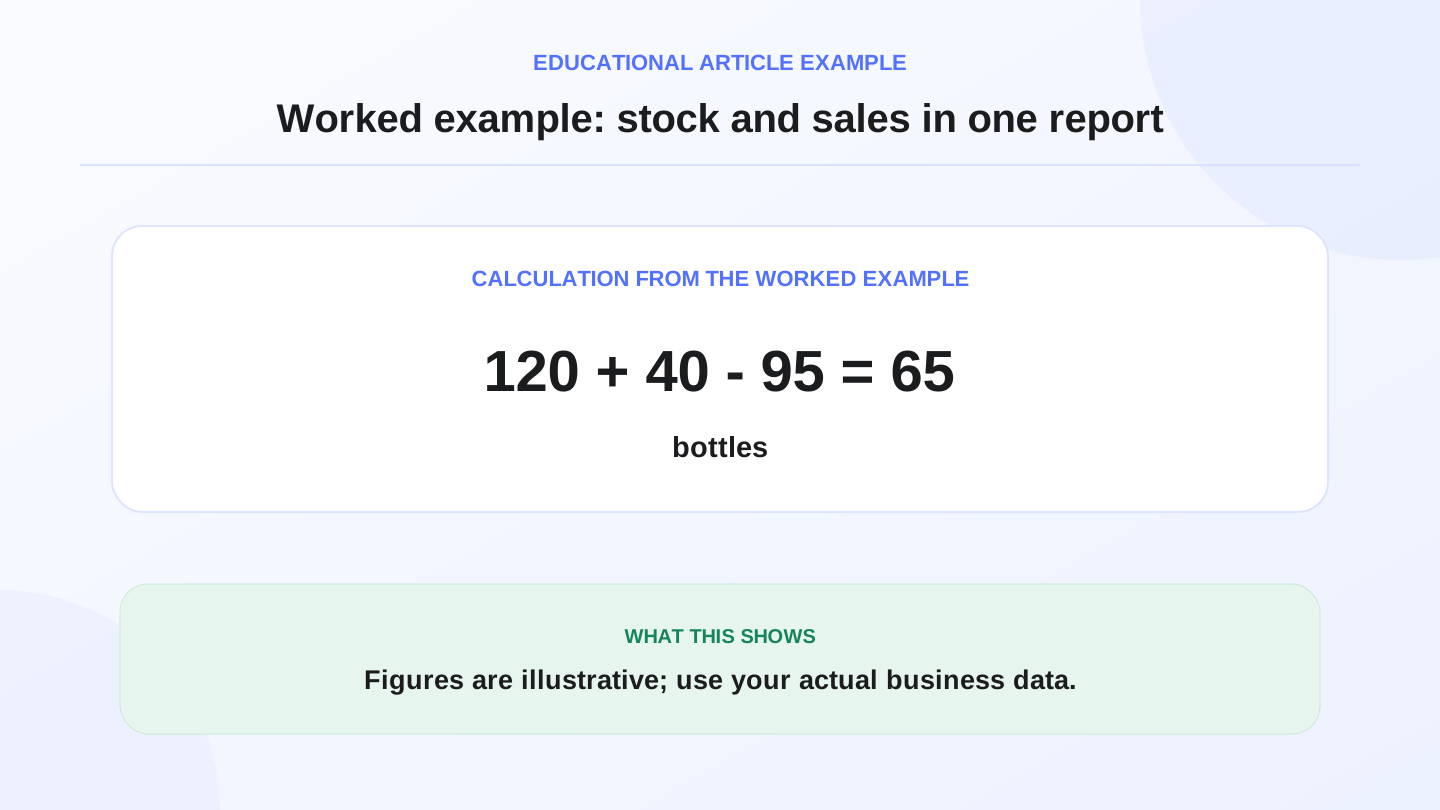
Assume a mini-market starts the day with 120 bottles of juice. During the day it receives 40 more from a supplier and sells 95 through the POS.
Expected closing stock = opening stock + purchases - sales.
120 + 40 - 95 = 65 bottles expected closing stock.
If the shelf count is 61, the difference is 4 bottles. The owner can investigate breakage, unrecorded sales, wrong purchase quantity, or theft. Without connected POS and purchases, the owner may only discover the issue at month-end, when the trail is cold.
This is why daily operational math matters more than a beautiful dashboard. The system should make basic equations visible.
07
Reports should answer owner questions
A good report does not only show charts. It answers practical owner questions: What sold today? Which products are low? Which branch performed best? Which staff handled sales? What purchases increased cost this week? Which online orders affected stock? How much cash should be in the drawer?
For Iraq SMBs, reports should be readable by owners and managers, not only accountants. They should work in Arabic-first operations and support English-speaking team members where needed. The owner should not wait for someone to export spreadsheets before understanding the day.
RA8M reports cover sales, items, customers, inventory, revenue, expenses, payments, branches, and operational trends based on the public product reference.

08
Business management software vs ERP for small business
ERP for small business is a common search phrase, but not every small business needs a heavy ERP implementation. Many shops need a practical POS-led system first: cashier, inventory, purchases, finance, reports, users, branches, and ecommerce.
A heavy ERP may fit complex manufacturing, large finance teams, or multi-department organizations. A POS-led management platform fits businesses where daily sales and stock control are the core operational problem.
The right choice is the lightest system that still controls the workflows that matter.
| Option | Best fit | Risk |
|---|---|---|
| Spreadsheet and manual cashier | Very small seller with few products | Data gets outdated quickly |
| POS-only software | Simple checkout and receipts | Stock, purchases, and reports may stay disconnected |
| POS-led business management software | Growing shops, restaurants, ecommerce sellers, branches | Requires staff discipline and setup |
| Heavy ERP | Larger organizations with complex departments | Can be expensive and slow if the business only needs daily control |
09
When ecommerce should be part of the same system
If the business sells online, ecommerce should not become a separate island. Online orders should use the same product catalog and stock records as in-store sales. Otherwise, staff may sell the last item in the shop while the online store still accepts an order for it.
RA8M Ecommerce adds a branded online storefront connected to POS products and stock. Public materials describe storefront URLs, Arabic and English journeys, Visa, Mastercard, cash on delivery, and delivery/logistics capabilities. Payment and logistics details can change, so verify the current setup before making a commercial decision.
For online sellers in Iraq, the main question is simple: will the order reduce the same stock the cashier uses?
10
What to check before choosing a system
Before buying business management software, test real workflows, not only menus. Create a product, sell it, receive a purchase, count remaining stock, create a customer, check the report, and test user permissions. If you have branches, test branch visibility and transfer logic.
Also check language fit. Arabic RTL screens, Arabic receipts, and English support can reduce training friction for mixed teams. Offline-ready cashier workflows matter when internet drops during a busy shift.
Useful RA8M pages to review are POS, Ecommerce, Industries, and Pricing.
11
When RA8M fits and when simpler tools are enough
RA8M fits Iraq businesses that need connected POS, inventory, purchases, finance, reports, customers, roles, branches, and ecommerce in Arabic-first and bilingual workflows. It is relevant for restaurants, cafés, retail shops, supermarkets, pharmacies, salons, manufacturers, and multi-branch operators.
A simpler tool may be enough if one person sells a small number of products, does not need inventory accuracy, has no branches, and can review numbers manually. But when staff, stock, purchases, reports, or online orders matter, disconnected tools become expensive even if they look cheap.
12
Conclusion: choose control over tool count
The best business management software is not the one with the most screens. It is the one that connects the few workflows your business depends on every day. For Iraq businesses, that usually means POS, inventory, purchases, finance, reports, roles, branches, and ecommerce where relevant.
Start from your daily operating questions, then choose the system that answers them with the least duplication. A connected system should make the business easier to run, easier to audit, and easier to grow.
Frequently asked questions
What is business management software?
It is a connected system for everyday operations such as sales, inventory, purchases, finance, reports, branches, roles, customers, and sometimes ecommerce.
Is business management software the same as ERP?
ERP is usually broader and more complex. Many small businesses in Iraq need a practical POS-led management system before they need a heavy ERP rollout.
Why should POS and inventory be in one system?
Because every sale should reduce stock, every purchase should increase stock, and reports should show the owner what happened without copying data between tools.
Does RA8M fit multi-branch businesses?
RA8M supports roles, branches, inventory visibility, reports, and connected POS workflows, so it is relevant for growing Iraq businesses with more than one location.
When is a simpler setup enough?
A spreadsheet or simple cashier may be enough for a tiny operation with few products, one person, no branch needs, and no serious inventory pressure.
Written by
RA8M Team
Practical guides for restaurants, shops, and operations teams
Next step
Try RA8M with data close to your operation
Read next