Payment Gateway Iraq: Online Store Checklist for Merchants
A practical Iraq guide to payment gateway readiness for online stores: products, inventory, order statuses, COD, reconciliation, and POS sync.
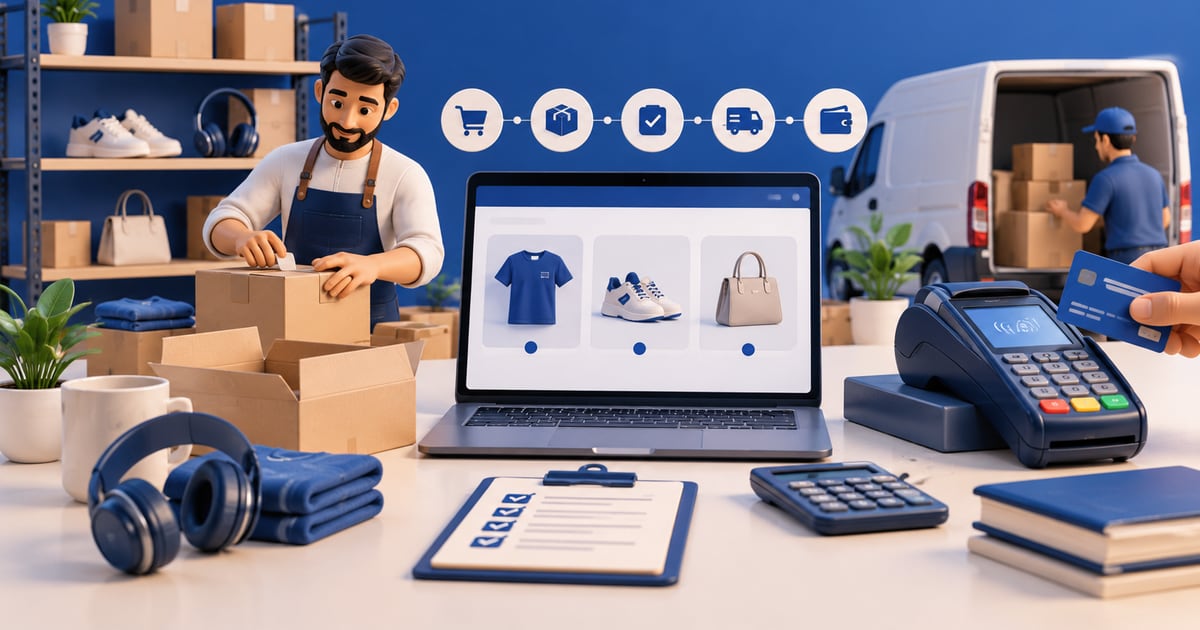
A payment gateway in Iraq is only one part of accepting online orders. Before enabling online payment, merchants should prepare products, prices, stock, order statuses, delivery rules, cash-on-delivery handling, and daily reconciliation. RA8M helps connect ecommerce orders with POS products, inventory, payments, delivery workflows, and reports, but supported payment options and fees should always be verified before launch.
01
Payment Gateway Iraq: Online Store Checklist for Merchants
A payment gateway in Iraq is important, but it is not the whole ecommerce operation. If the product catalog is messy, stock is wrong, delivery rules are unclear, or reports do not match orders, online payment will expose the problem instead of fixing it.
Quick answer: A payment gateway in Iraq is only one part of accepting online orders. Before enabling online payment, merchants should prepare products, prices, stock, order statuses, delivery rules, cash-on-delivery handling, and daily reconciliation. RA8M helps connect ecommerce orders with POS products, inventory, payments, delivery workflows, and reports, but supported payment options and fees should always be verified before launch.
02
What does a payment gateway do for an online store?
A payment gateway helps an online store accept or process digital payments and gives the merchant records to compare against orders. In practical terms, the owner wants to know which customer paid, which order the payment belongs to, whether the order was fulfilled, and whether the money matches the invoice or receipt.
In Iraq, many online stores use a mix of payment methods. Some customers prefer cash on delivery. Some may use digital wallets, cards, transfers, or branch payment depending on the merchant and provider. The article is not a guarantee that every method is available for every store. It is a checklist for preparing the business before choosing or enabling any payment option.
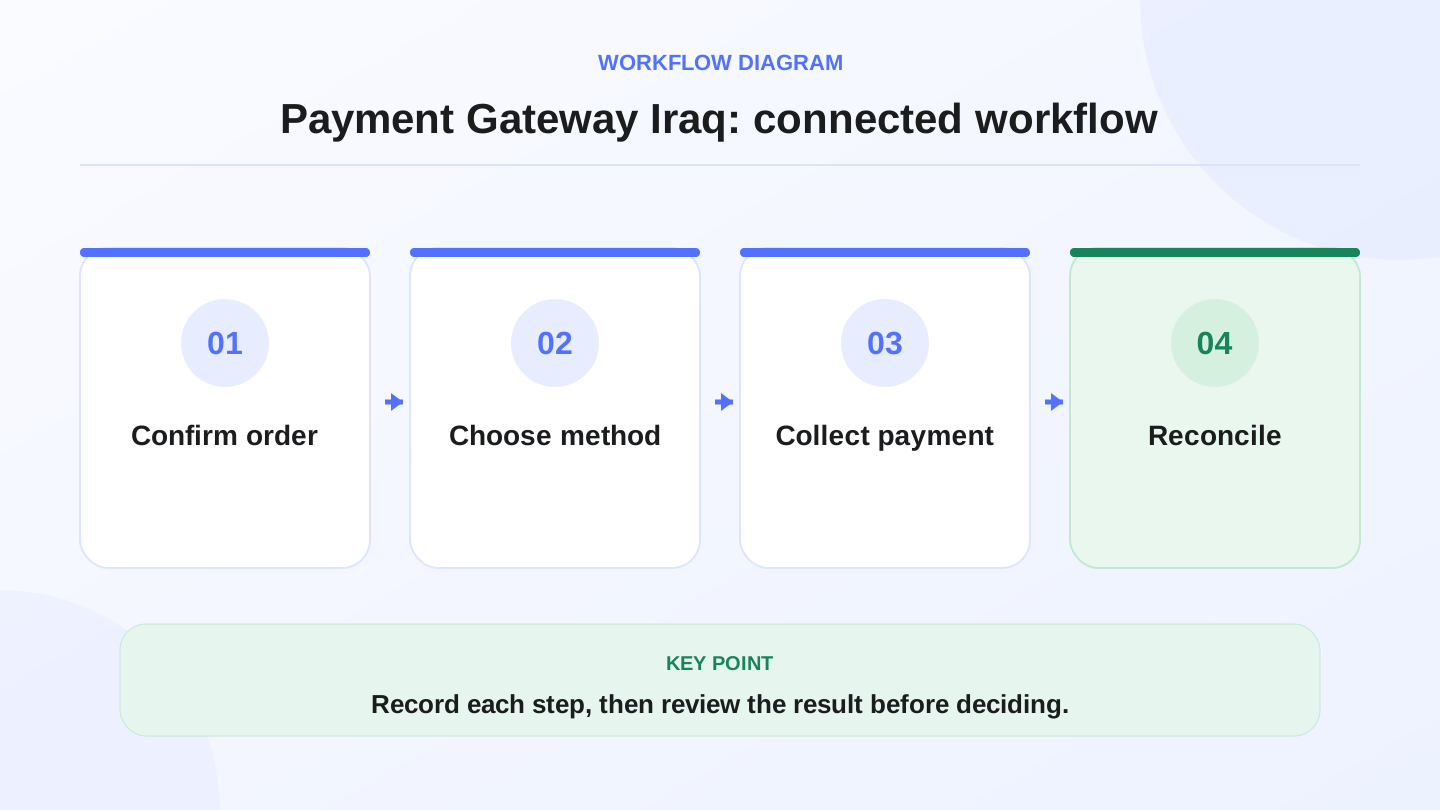
A practical sequence has four connected steps: Confirm order, Choose method, Collect payment, Reconcile. Recording each step makes the daily result easier to review.
03
Payment gateway vs full order workflow
A payment gateway answers the money collection question. It does not automatically solve product data, stock availability, delivery, returns, or customer service. Those pieces must be ready before payment goes live.
The stronger the order workflow, the easier payment becomes. That is why the best payment setup starts with operations, not with a button.

| Area | If ignored | Better workflow |
|---|---|---|
| Product catalog | Customer pays for unclear item | Clean names, images, prices, variants |
| Inventory | Paid order for out-of-stock product | POS-connected stock or frequent sync |
| Order status | Staff do not know what to prepare | New, paid, preparing, shipped, delivered |
| Delivery | Disputes about area or cost | Clear delivery zones, fees, and timing |
| Reconciliation | Payments and orders do not match | Daily comparison by method and order ID |
| Returns | Refund or exchange is messy | Written return status and stock adjustment |
04
What Iraq merchants should prepare before online payment
Before adding online payment, prepare the store like a real branch. Product names should be clear in Arabic and, if needed, English. Prices should be current. Inventory should be accurate enough that online customers do not order unavailable products. Delivery rules should tell customers where you deliver, how fees work, and when they should expect contact.
Owners should also decide who checks paid orders. Is it the cashier, ecommerce manager, branch supervisor, or delivery coordinator? A paid order still needs picking, packing, delivery, customer communication, and final reconciliation. If those responsibilities are unclear, payment records become confusing quickly.
05
Cash on delivery still needs control
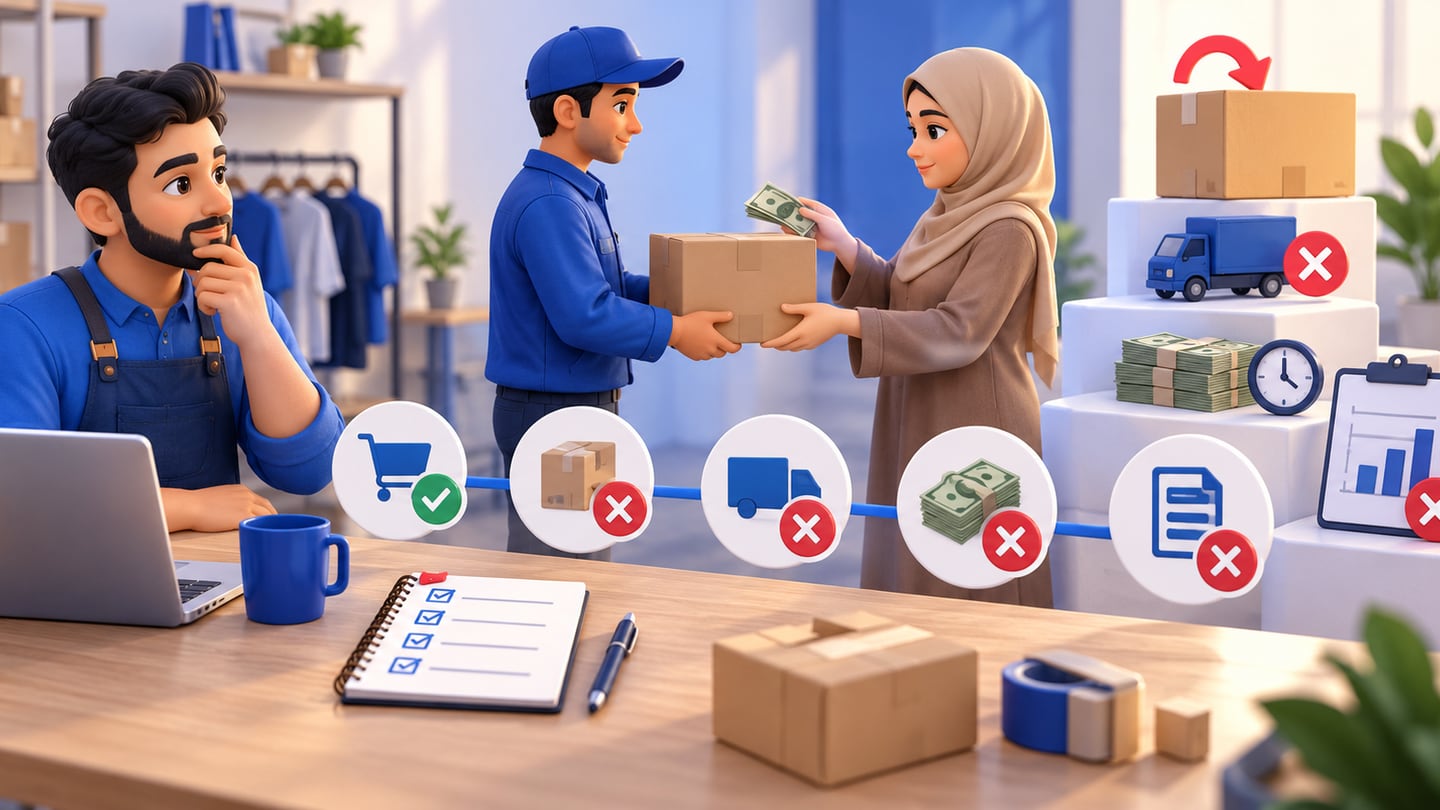
Cash on delivery is familiar in Iraq and can be useful for customers who are not ready to pay online. But COD is not risk-free. Orders can be cancelled, delivery can fail, collected cash can be delayed, and the accounting report can look stronger than the real collected money.
Treat COD as its own payment status. A COD order is not the same as a prepaid order. It should appear in reports as expected cash, then confirmed cash only after delivery and collection. This separation helps the owner avoid counting money before it is actually received.
06
Worked example: separating prepaid and COD orders
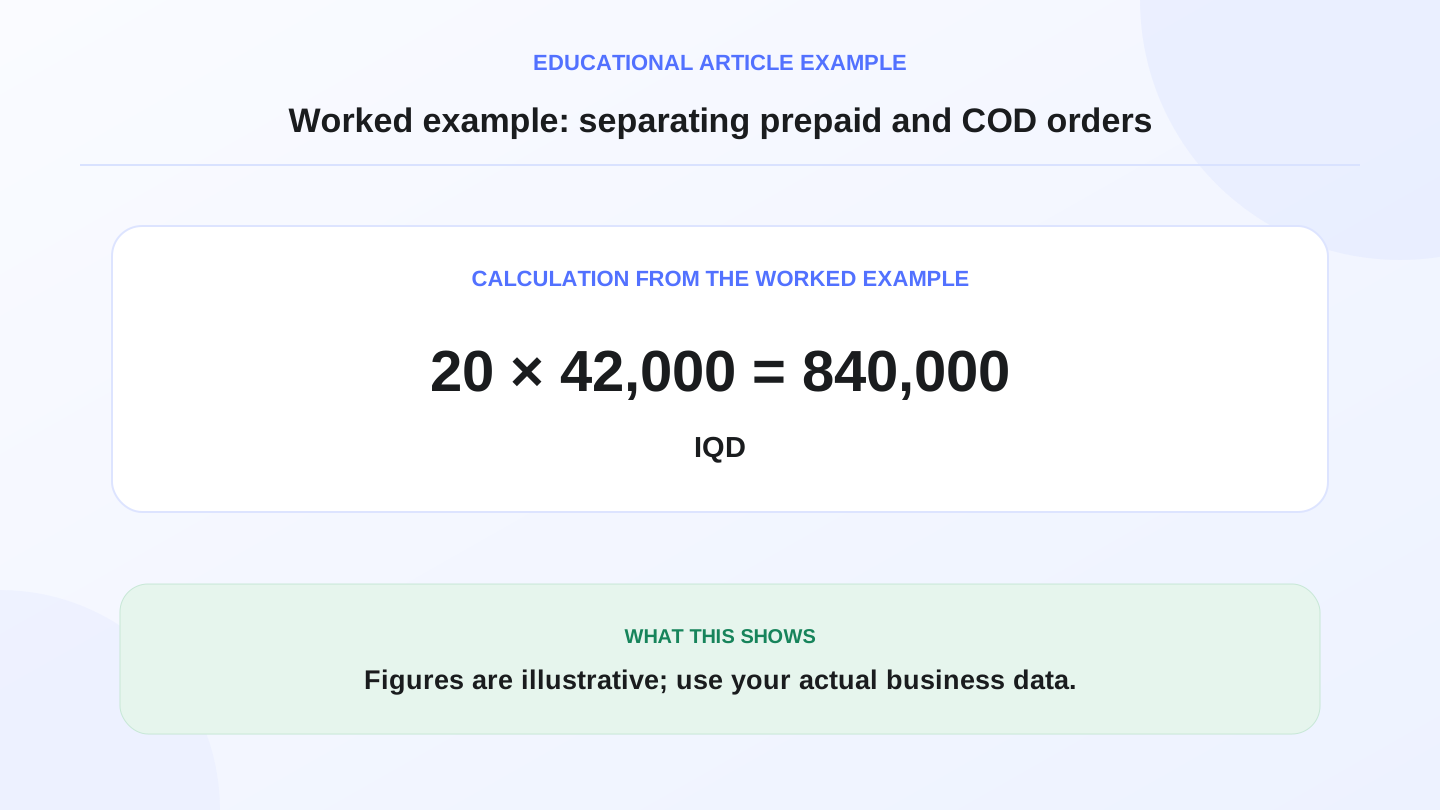
Assume an online store receives 60 orders in one day. Twenty orders are prepaid through a digital method at an average of 42,000 IQD. Forty orders are cash on delivery at an average of 35,000 IQD. Three COD orders fail delivery, worth 105,000 IQD total.
Prepaid expected amount = 20 × 42,000 = 840,000 IQD. COD expected amount before failed delivery = 40 × 35,000 = 1,400,000 IQD. Confirmed COD after failed delivery = 1,400,000 − 105,000 = 1,295,000 IQD. Total expected collected value = 840,000 + 1,295,000 = 2,135,000 IQD, before any provider fees, delivery fees, discounts, refunds, or other adjustments.
These numbers are illustrative. Use your actual gateway report, delivery report, cancellation list, and invoice data before making financial decisions.
07
Why POS and ecommerce should share stock
Payment becomes painful when ecommerce and POS stock are separate. A customer may pay online for a product that the physical branch already sold. Staff then need to cancel the order, refund or replace the item, and explain the problem to the customer. This creates avoidable friction.
RA8M Ecommerce is positioned as a branded online storefront connected to POS products and inventory. That connection matters because online orders and in-store sales can draw from the same product data instead of two separate lists. Merchants can review RA8M Ecommerce for storefront workflows and RA8M POS for in-store selling, stock, and cashier workflows.
08
Payment methods: verify before promising customers
It is tempting to advertise payment options before setup is complete. Do not do that. Verify which payment methods are currently supported, what documents are required, what fees apply, how settlement works, and how refunds or cancellations are handled. Public product pages can describe capabilities, but final availability can depend on provider settings, plan, approval, or implementation status.
The safe message to customers is specific only after confirmation. If you support cards, wallet payment, transfer, or cash on delivery, state it clearly on the checkout page. If you are still preparing a method, keep it out of the customer journey until the workflow is tested end to end.
09
Reconciliation: the daily habit that protects profit
Online payment adds another report to the business. The owner or manager should compare orders, invoices, payment records, delivery collections, cancellations, returns, and refunds. This does not need to be complicated, but it should happen daily while the team remembers what happened.
A useful daily checklist:
1. Count new orders by payment method.
2. Separate prepaid orders from cash-on-delivery orders.
3. Mark cancelled, returned, and failed-delivery orders.
4. Compare payment gateway totals with order totals.
5. Compare collected COD with delivery records.
6. Check inventory movements for fulfilled orders.
7. Review discounts, delivery fees, and adjustments.
8. Record unresolved differences for follow-up.
10
When a simple store setup is enough
A new seller may start with a small catalog, manual confirmation, and cash on delivery. That can be enough while order volume is low and products are simple. The owner should still keep product names, prices, order status, and daily collections organized.
Once volume grows, manual tracking becomes risky. More orders mean more chances for missed payments, duplicate stock, wrong delivery status, and unclear refunds. At that stage, connecting the online store to POS, inventory, and reports is not only more professional; it protects margin and customer trust.
11
When RA8M fits payment-ready ecommerce
RA8M fits merchants who sell in store and online and want one system for products, stock, orders, payments, delivery workflows, POS, and reports. It is relevant for retail shops, supermarkets, restaurants, cafés, pharmacies, salons, and SMBs in Iraq that need Arabic-first storefront and operations with English support.
RA8M may be more than necessary if you only sell a few handmade items per month and manually confirm every order. But if the business is becoming serious, especially with a physical branch and online orders together, the connected workflow can prevent many mistakes.
12
Pricing and provider caveats
Payment and ecommerce decisions can involve provider fees, settlement timing, plan options, and operational responsibilities. Verify current RA8M pricing on pricing, and verify payment provider terms directly before publishing promises or relying on a payment method commercially.
This article is operational guidance, not legal, tax, banking, or payment-provider advice. For formal decisions, consult the relevant provider, professional, or authority.
13
Conclusion: prepare operations before enabling payments
The right payment gateway is easier to choose after the store workflow is clean. Prepare catalog data, stock sync, delivery rules, payment statuses, COD handling, and reconciliation first. Then enable the payment options that match your customers and provider approvals.
RA8M helps Iraq merchants connect ecommerce, POS, inventory, orders, reports, and pricing decisions in one workflow. Review the current pages and confirm supported payment methods before launch.
14
FAQs
What is a payment gateway?
A payment gateway is a service that helps an online store accept or process digital payments, then provides records that the merchant can reconcile with orders and invoices.
Is a payment gateway enough to run an online store in Iraq?
No. You also need organized products, accurate stock, delivery rules, order statuses, customer communication, and daily reconciliation between orders and payments.
Should Iraq stores keep cash on delivery?
Many stores keep cash on delivery because customers are familiar with it. The key is to separate COD from prepaid orders in reports and reconcile collected cash after delivery.
Does RA8M guarantee every payment method?
No article should be treated as a guarantee of a specific payment provider. Verify currently supported methods, setup steps, and fees with RA8M or the provider before launch.
Which RA8M pages should payment-focused merchants read?
Read the ecommerce page for storefront and order workflows, the POS page for inventory and cashier sync, and pricing for current plan details.
Frequently asked questions
What is a payment gateway?
A payment gateway is a service that helps an online store accept or process digital payments, then provides records that the merchant can reconcile with orders and invoices.
Is a payment gateway enough to run an online store in Iraq?
No. You also need organized products, accurate stock, delivery rules, order statuses, customer communication, and daily reconciliation between orders and payments.
Should Iraq stores keep cash on delivery?
Many stores keep cash on delivery because customers are familiar with it. The key is to separate COD from prepaid orders in reports and reconcile collected cash after delivery.
Does RA8M guarantee every payment method?
No article should be treated as a guarantee of a specific payment provider. Verify currently supported methods, setup steps, and fees with RA8M or the provider before launch.
Which RA8M pages should payment-focused merchants read?
Read the ecommerce page for storefront and order workflows, the POS page for inventory and cashier sync, and pricing for current plan details.
Written by
RA8M Team
Practical guides for restaurants, shops, and operations teams
Next step
Try RA8M with data close to your operation
Read next