Cafe POS in Iraq: Faster Orders, Stock and Reports
A practical guide to choosing cafe POS in Iraq for drink sizes, modifiers, recipes, inventory, staff permissions, reports, and offline-ready service.
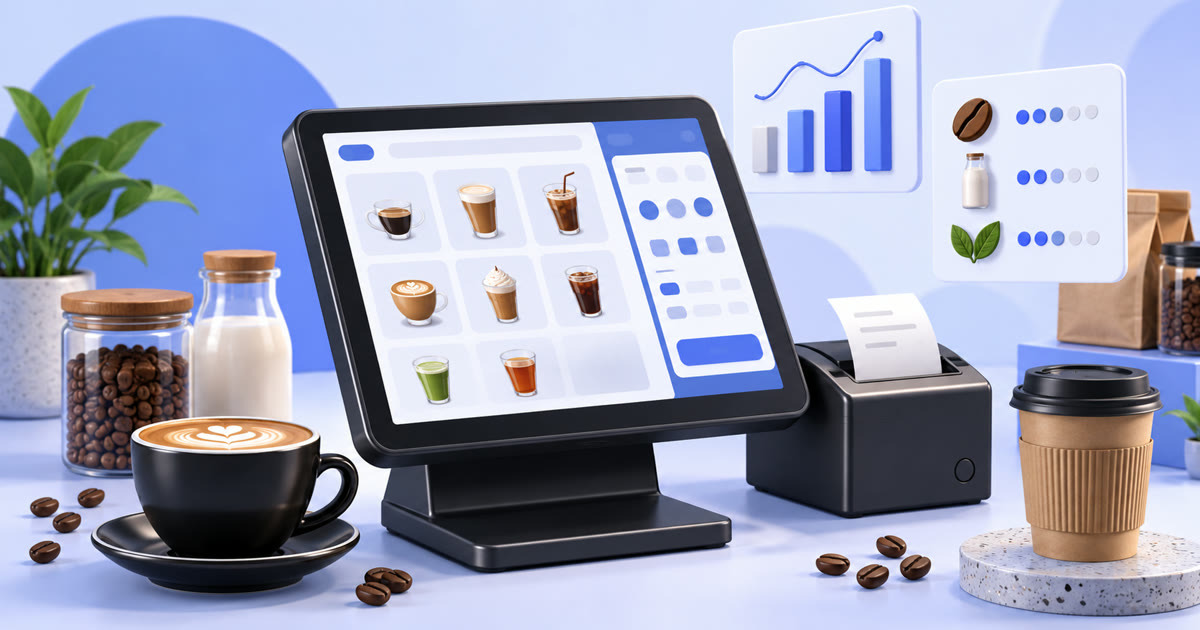
Cafe POS is a point-of-sale system that helps coffee shops enter orders quickly, choose drink sizes and modifiers, issue receipts, deduct recipe ingredients from inventory, and review sales reports. In Iraq, cafe POS should support Arabic and English workflows, IQD payments, staff permissions, and offline selling when internet connectivity drops.
01
Cafe POS in Iraq: Faster Orders, Stock and Reports
A cafe needs a cashier system that is faster than handwritten orders and deeper than a calculator. During peak service, the team should record drink size, modifiers, payment, and receipt details quickly while the owner still gets clean stock and sales reports.
Quick answer: Cafe POS is a point-of-sale system that helps coffee shops enter orders quickly, choose drink sizes and modifiers, issue receipts, deduct recipe ingredients from inventory, and review sales reports. In Iraq, cafe POS should support Arabic and English workflows, IQD payments, staff permissions, and offline selling when internet connectivity drops.
02
Why is cafe POS different from a normal shop cashier?
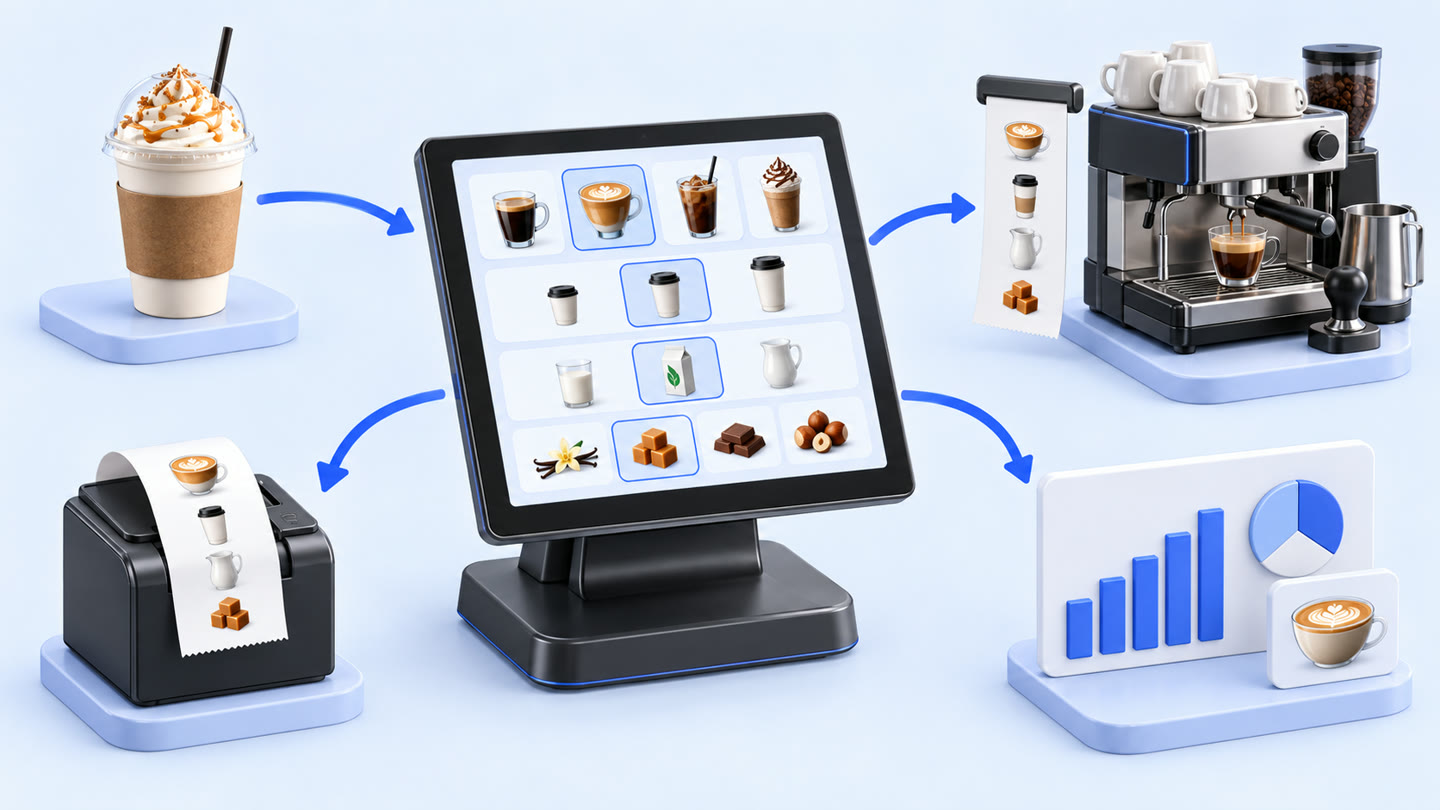
A coffee order can contain more details than it first appears: size, milk type, sugar level, syrup, hot or iced preparation, dine-in or takeaway, and sometimes dessert or retail items. If the cashier screen cannot capture these details, staff fall back to notes and memory.
A basic shop cashier may record the sale amount. A good cafe POS turns each order into useful operating data: best-selling drinks, ingredient usage, busy hours, staff activity, discounts, and stock movement.
03
What features should you check first?
Start with the order screen. It should be fast, touch-friendly, and usable by Arabic-speaking or bilingual staff. The cashier needs to choose the item, size, modifiers, payment method, and receipt without slowing the queue.
Then check what happens behind the sale. Does the order reduce inventory? Does it appear in reports? Can the owner control discounts and cancellations? These details separate a temporary cashier tool from a daily cafe operating system.
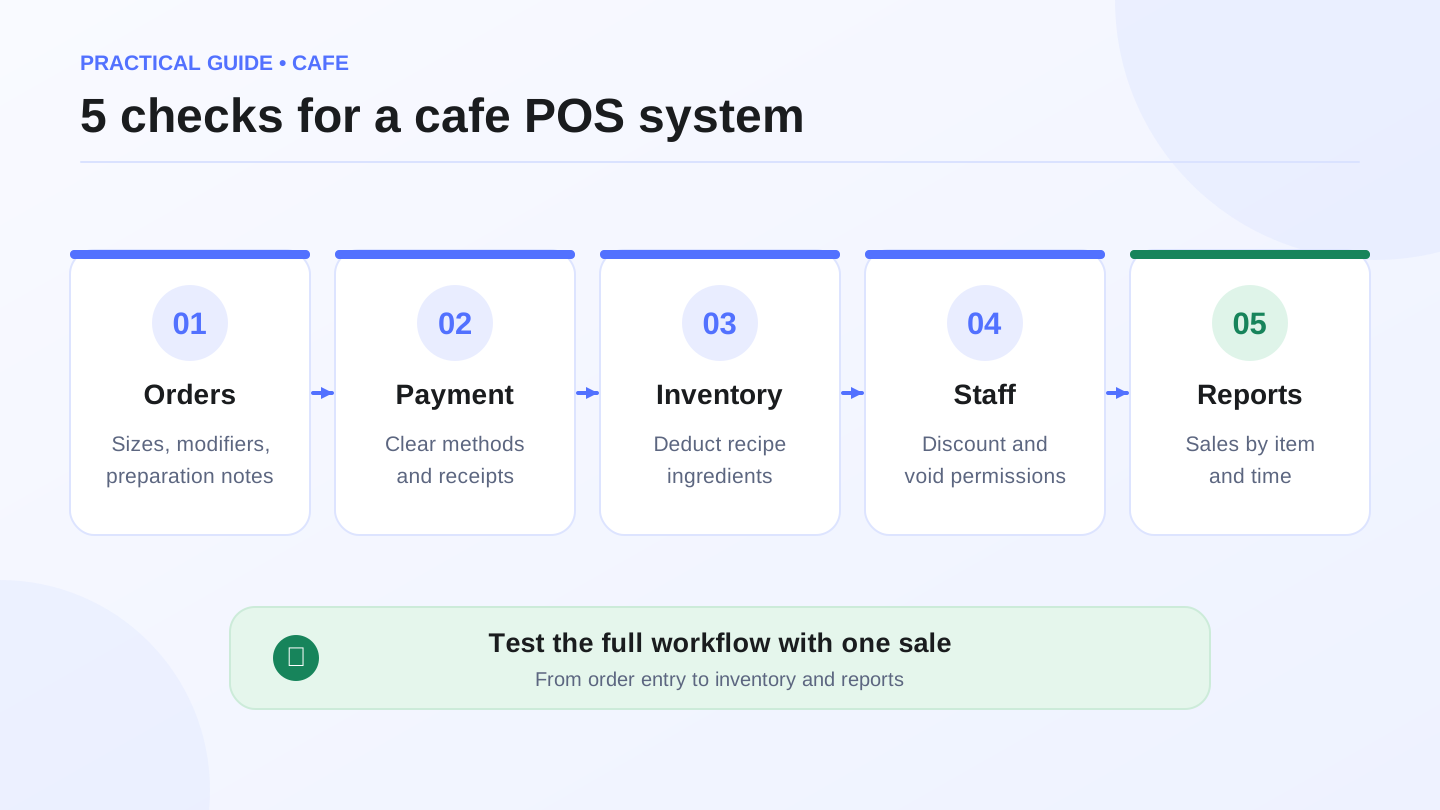
| Area | Needed feature | Why it matters |
|---|---|---|
| Orders | Sizes, modifiers, notes | Reduces preparation mistakes |
| Payment | Clear methods and receipts | Speeds up checkout |
| Inventory | Ingredient and recipe deduction | Shows shortages and waste |
| Staff | Discount and cancellation permissions | Protects cash and reports |
| Reports | Sales by item and time | Improves purchasing and scheduling |
04
How does inventory help a small cafe?
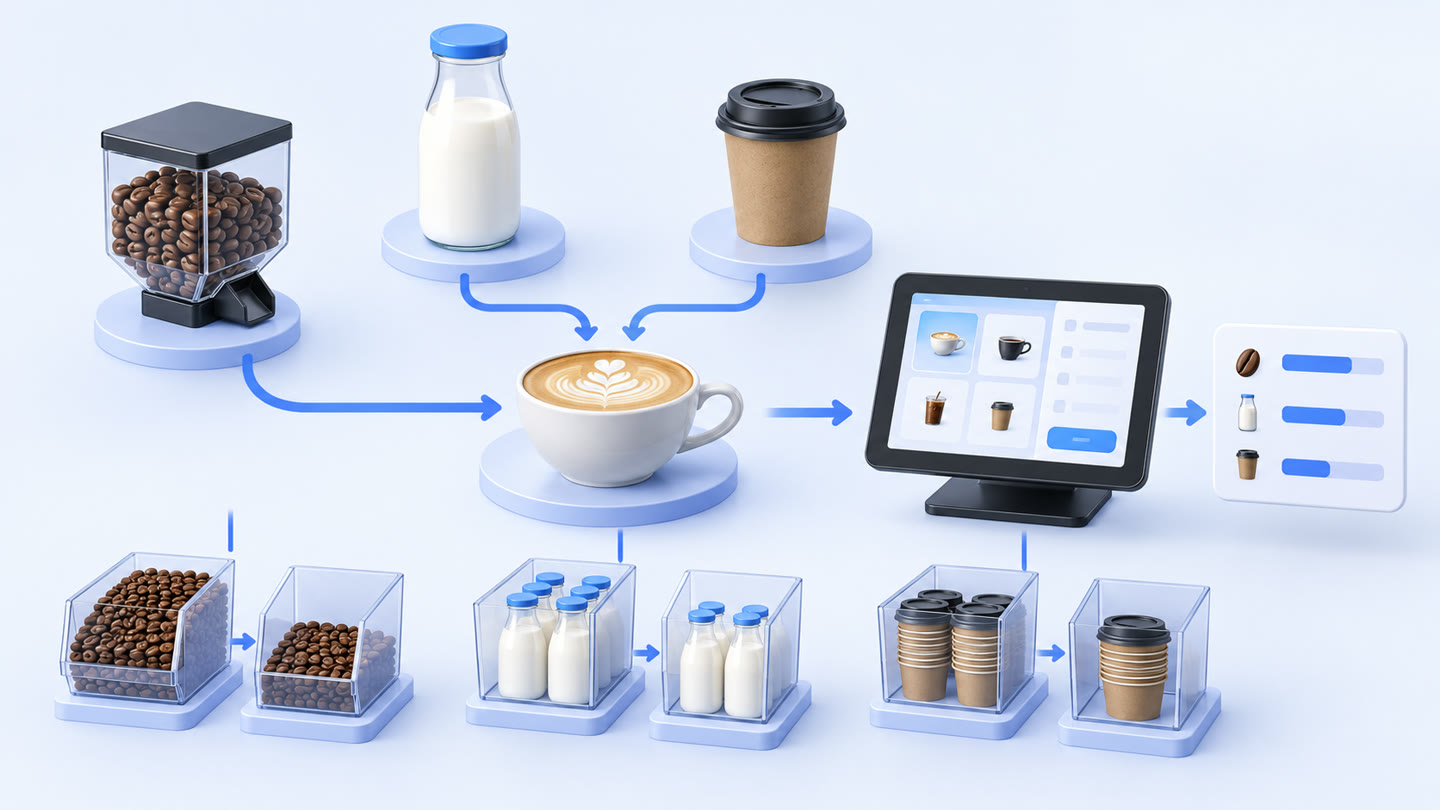
Many cafe owners review profit only through the cash drawer. But profit is also affected by coffee, milk, cups, lids, syrups, dessert ingredients, and packaging. If these materials are not measured, shortages appear suddenly and waste becomes hard to explain.
RA8M connects POS with inventory, purchases, and reports. That helps a cafe understand what was sold, what was consumed, and what should be purchased before the next rush period.
05
Worked example: milk usage in one day
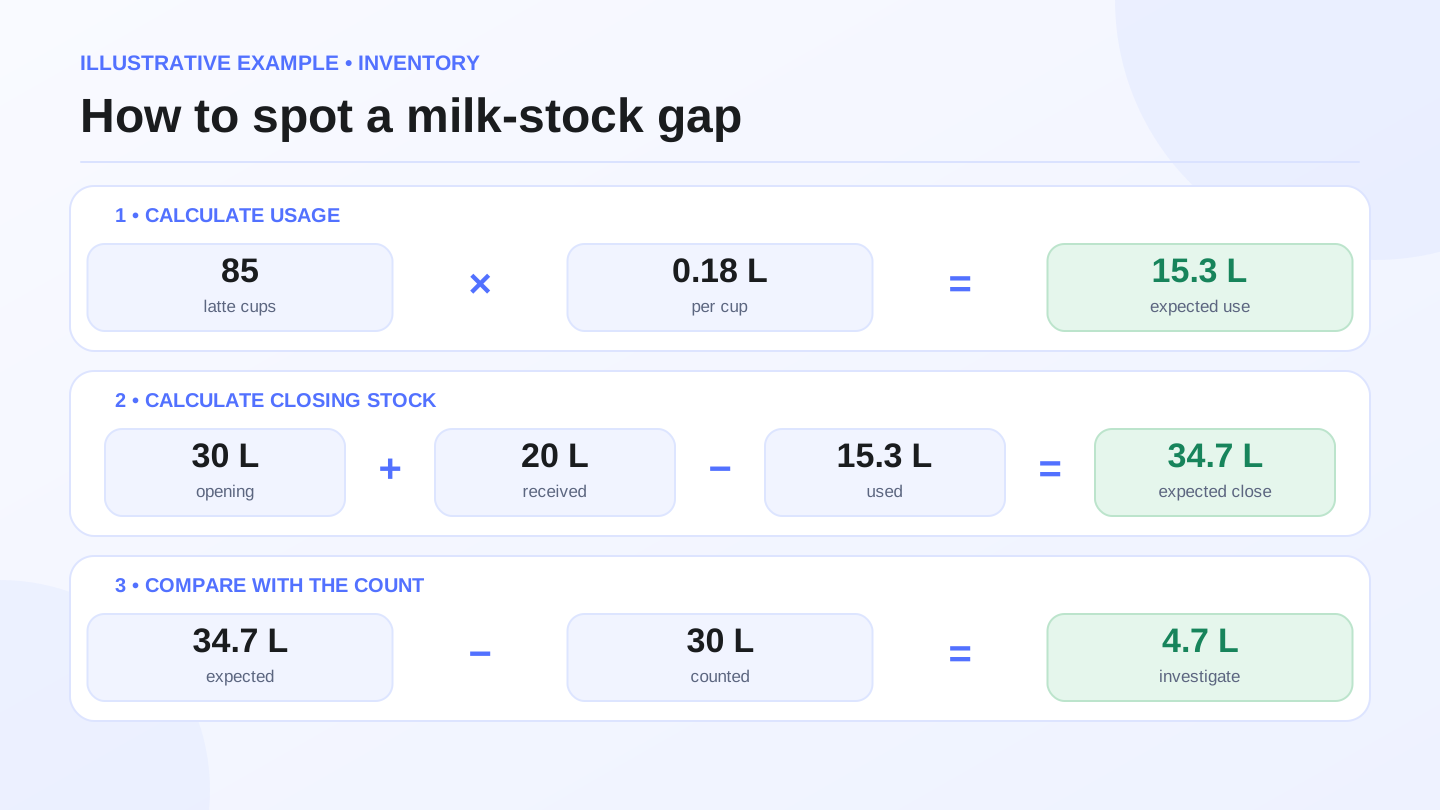
Assume a cafe in Baghdad sells 85 latte cups in one day, and each cup uses about 0.18 liters of milk. Expected usage = 85 × 0.18 = 15.3 liters.
If opening stock was 30 liters and a supplier delivered 20 liters, expected closing stock is 30 + 20 - 15.3 = 34.7 liters. If the physical count shows 30 liters, the 4.7-liter difference needs review. The recipe may be inaccurate, staff may be wasting milk, orders may not have been recorded, or the count may be wrong.
These figures are illustrative, not an official recipe. The point is the review method: POS-connected inventory gives the owner evidence instead of guessing.
06
Why does offline selling matter for Iraq cafes?
The queue does not wait for internet to return. If POS stops during a busy period, staff lose speed and accuracy and may return to paper notes that are difficult to enter later. The cashier should keep selling and printing receipts even when connectivity is weak.
RA8M public materials state that POS works offline and syncs when the internet returns. This matters for cafes that depend on fast morning or evening service, where orders arrive continuously and there is no time to re-enter missing tickets.
07
How should staff permissions work?
Not every staff member needs permission to delete an order, apply a discount, or open full reports. Split roles by responsibility: cashier, supervisor, and manager. This protects revenue and makes it easier to investigate cash or stock differences.
Permissions are not only about trust. They reduce accidental changes and give each person a clear workflow inside the system. That makes shift closing faster and cleaner.
08
Which reports should the owner watch?
Start with sales by item and hour. This shows best-selling drinks, busy service periods, items that need better visibility, and times when staffing should increase. Then review payment methods, discounts, voids, and stock differences.
If the cafe accepts online orders or delivery, separate reports by sales channel. Review RA8M industries to see how cafe requirements differ from restaurants, retail shops, and service businesses.
09
When does RA8M fit and when is a simpler tool enough?
If a cafe is very small, has a short menu, and is operated by one person without inventory or reporting needs, a simple cashier may be enough at first. As drink sizes, modifiers, staff, purchases, and reporting needs grow, integrated POS becomes more valuable than manual work.
RA8M fits cafes that need fast POS, inventory, reports, staff roles, and offline-ready selling. Review pricing before making a commercial decision because plans and pricing may change, then test the system with items close to your real menu.
10
Seven-day cafe POS rollout
Day one: enter the main menu items and drink sizes. Day two: add modifiers and preparation notes. Day three: add key ingredients and opening quantities. Day four: test fast orders during a simulated rush. Day five: train staff on permissions. Day six: review the end-of-day report. Day seven: adjust the menu and recipes based on what you learned.
Start with best-selling products, not every possible detail. The goal is for the team to feel that POS makes service faster, not that it adds another burden.
11
Conclusion and next step
Good cafe POS connects fast ordering with inventory, staff control, and management reports. In Iraq, it should also support Arabic and English teams, IQD payments, and offline service when internet connectivity is weak.
If you want to test cafe POS connected to stock, review RA8M POS or start with a sample menu and measure one real service period before rolling it out fully.
12
Frequently asked questions
What is cafe POS?
Cafe POS is a cashier system for entering drink and food orders, managing sizes and modifiers, issuing receipts, and connecting sales with inventory and reports.
What is the most important cafe POS feature?
Speed with accuracy. The cashier should record size, modifiers, payment, and receipt details quickly without losing inventory and report data.
Does a cafe need recipe inventory?
Yes if the owner wants to track coffee, milk, cups, syrups, and ingredients, reduce waste, and make better purchasing decisions.
Does RA8M work offline for cafes?
Yes. RA8M public sources state that POS works offline and syncs when the internet returns, which matters during busy service periods.
When is a simple cashier enough for a cafe?
A very small cafe with a short menu and no inventory or reporting needs may start simple. As orders and staff grow, integrated POS becomes more useful.
Frequently asked questions
What is cafe POS?
Cafe POS is a cashier system for entering drink and food orders, managing sizes and modifiers, issuing receipts, and connecting sales with inventory and reports.
What is the most important cafe POS feature?
Speed with accuracy. The cashier should record size, modifiers, payment, and receipt details quickly without losing inventory and report data.
Does a cafe need recipe inventory?
Yes if the owner wants to track coffee, milk, cups, syrups, and ingredients, reduce waste, and make better purchasing decisions.
Does RA8M work offline for cafes?
Yes. RA8M public sources state that POS works offline and syncs when the internet returns, which matters during busy service periods.
When is a simple cashier enough for a cafe?
A very small cafe with a short menu and no inventory or reporting needs may start simple. As orders and staff grow, integrated POS becomes more useful.
Written by
RA8M Team
Practical guides for restaurants, shops, and operations teams
Next step
Try RA8M with data close to your operation
Read next