ZainCash for Stores in Iraq: Preparing Your Online Store for Payments
A practical Iraq guide to ZainCash for stores: products, orders, payment methods, delivery, and daily reconciliation without unsupported claims.

ZainCash for stores means the merchant needs an organized way to accept or track customer payments, not only a payment button. Before any integration, prepare products, prices, inventory, order statuses, cash-on-delivery rules, and reconciliation between payments and invoices. Always verify currently supported payment methods with your provider and official pricing or settings pages.
01
ZainCash for Stores in Iraq: Preparing Your Online Store for Payments
ZainCash for stores is not only a way to collect money from a customer. If the store workflow is messy, payments create more questions instead of fewer: which order was paid, did stock move, was the order delivered, and does the amount match the invoice?
Quick answer: ZainCash for stores means the merchant needs an organized way to accept or track customer payments, not only a payment button. Before any integration, prepare products, prices, inventory, order statuses, cash-on-delivery rules, and reconciliation between payments and invoices. Always verify currently supported payment methods with your provider and official pricing or settings pages.
02
What does an owner usually mean by ZainCash for stores?
Most business owners are not only searching for the name of a payment method. They want customers to pay easily, staff to know the order is paid, and managers to reconcile money at the end of the day. That means the full order workflow matters more than the payment gateway alone.
In Iraq, many stores use a mix of online payment, cash on delivery, transfers, or payment in branch. A good system keeps those methods separate. The payment method should appear clearly on the order, invoice, and sales report.
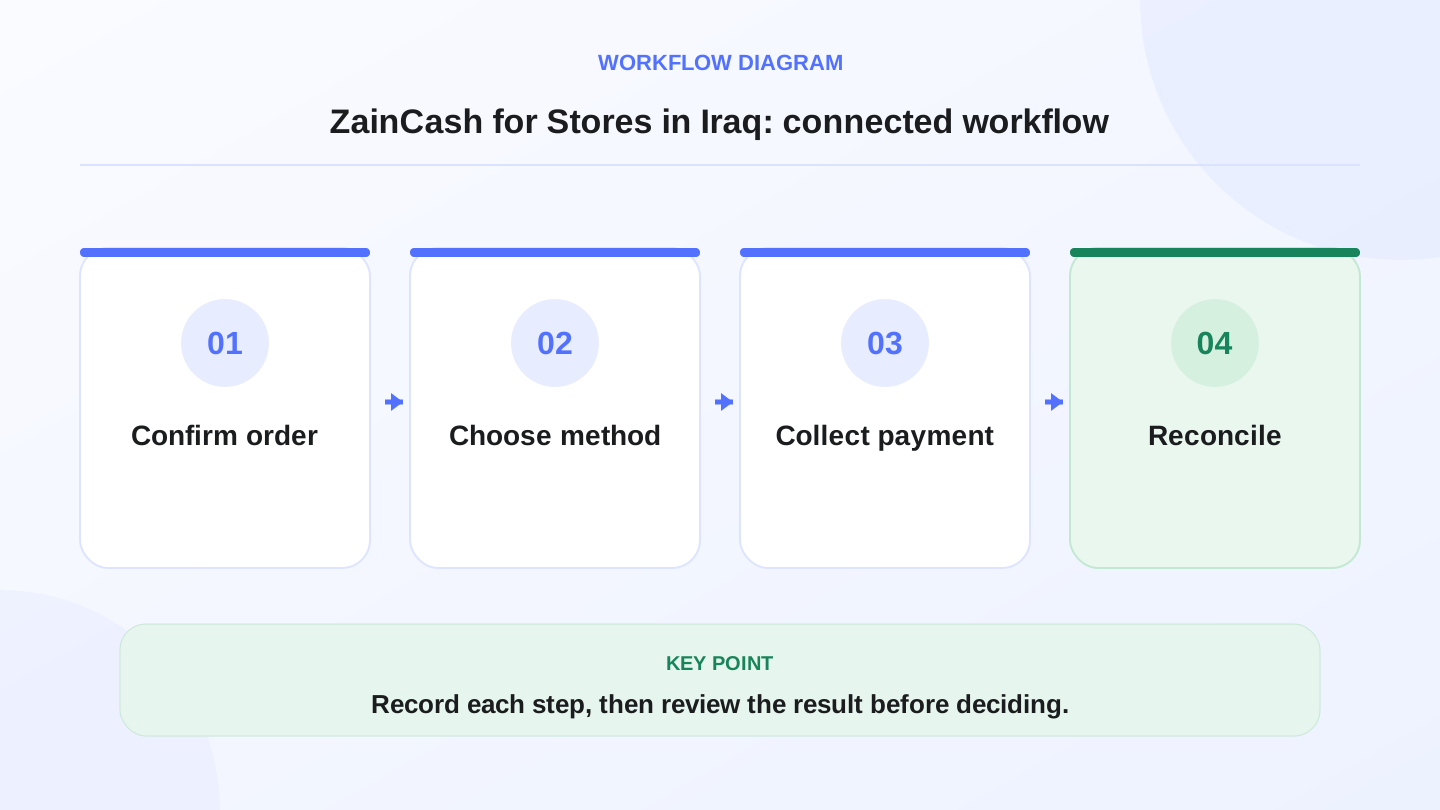
A practical sequence has four connected steps: Confirm order, Choose method, Collect payment, Reconcile. Recording each step makes the daily result easier to review.
03
Before payments: is your store ready?
Online payments expose weak data quickly. If the product name is unclear, the price is old, or inventory is not updated, the customer hits a problem before reaching payment. The first step is to clean the catalog.
Review Arabic product names, images, prices, size or color options, stock, and delivery rules. If you also sell in a physical branch, make sure ecommerce inventory is connected to the POS or updated frequently so you do not sell unavailable items.

| Area | What to prepare | Why it affects payments |
|---|---|---|
| Products | Name, price, image, options | Reduces order cancellation |
| Inventory | Real balance or fast updates | Prevents selling unavailable stock |
| Order statuses | New, paid, preparing, delivered | Helps staff follow the order |
| Delivery | Areas, cost, expected time | Reduces customer disputes |
| Reports | Payment method, amount, invoice | Makes daily reconciliation easier |
04
Online payment or cash on delivery?
There is no single best option for every store. Online payment can confirm intent before fulfillment, but it requires payment gateway tracking and reconciliation. Cash on delivery is familiar to many customers, but it carries cancellation and failed-delivery risk.
Many Iraq stores start with cash on delivery, then add online payment once order flow becomes more structured. The important point is not to treat both methods the same in reports. A prepaid order and a cash-on-delivery order carry different risks.
05
Worked example: reconciling paid orders and ZainCash-style payments
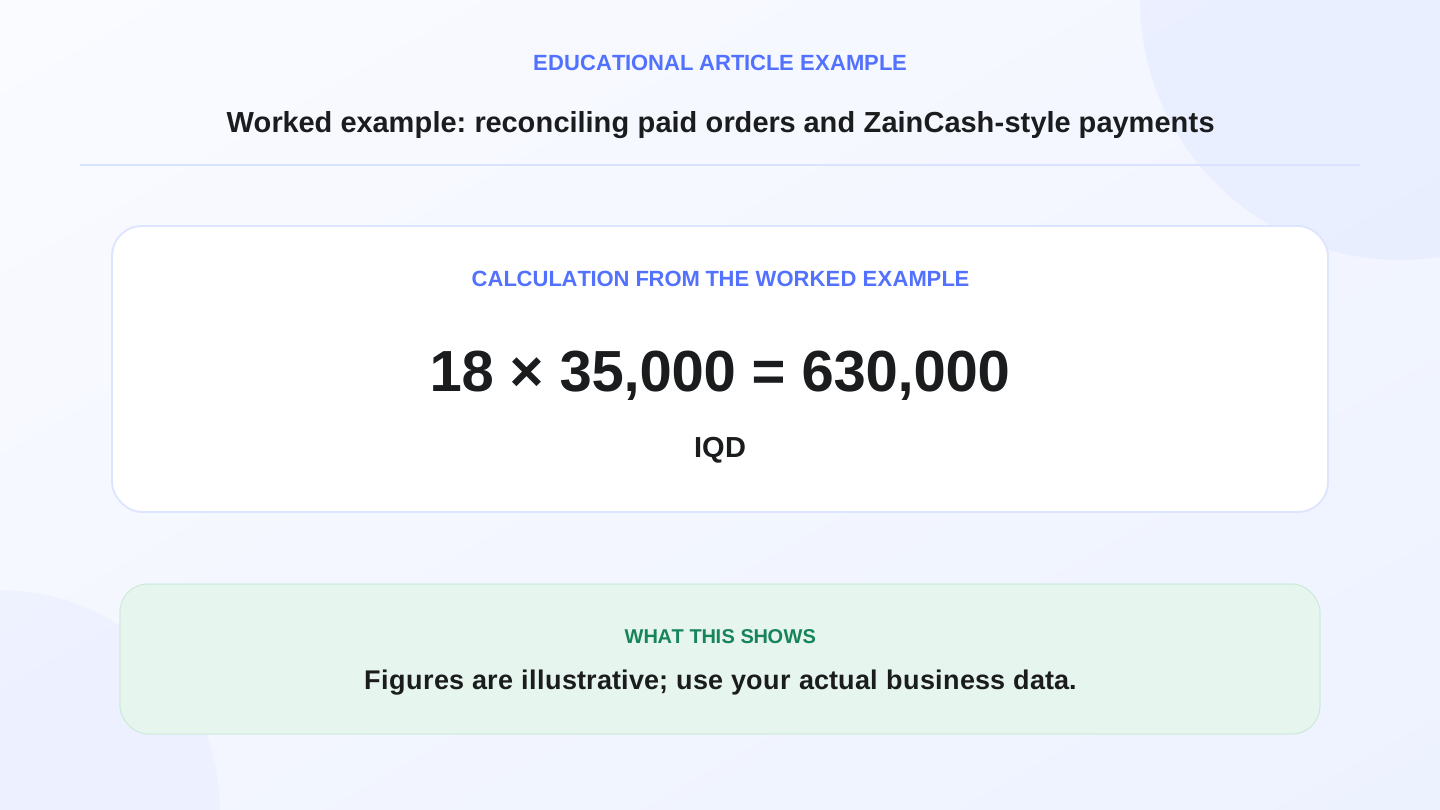
Assume an online store receives 40 orders in one day. Eighteen orders are paid electronically at an average of 35,000 IQD each, and 22 orders are cash on delivery at an average of 30,000 IQD each. Two electronic orders are cancelled before fulfillment, worth 70,000 IQD.
Gross electronic payments = 18 × 35,000 = 630,000 IQD. Net electronic payments after cancellation = 630,000 − 70,000 = 560,000 IQD. Expected cash-on-delivery collections = 22 × 30,000 = 660,000 IQD, but that money is not confirmed until delivery and collection are complete.
This example is illustrative. Use your real figures and actual gateway fees where applicable, and verify payment provider reports before relying on final financial reconciliation.
06
How should payments appear inside the store system?
For payment to be useful, it should appear in more than one place: the order page, invoice, sales report, and collection report. If it appears in only one place, staff will keep asking the manager or checking messages outside the system.
The order should show payment method, payment status, amount, payment date, delivery status, and any cancellation or return note. These fields make customer service easier and reduce disputes.

07
What happens to inventory when a customer pays?
A key question is when stock should decrease: when the order is created, when payment succeeds, or when fulfillment starts. There is no universal answer, but the business needs a clear rule. If stock decreases at order creation, you may reserve items for weak orders. If stock decreases only after delivery, you may oversell the same item.
For small stores, a practical rule is to reserve stock for confirmed orders and review cancellations quickly. For stores selling through both POS and ecommerce, connecting the POS and online store reduces conflict between shelf stock and online orders.
08
Where RA8M fits, and what should be verified
RA8M Ecommerce adds an online storefront connected to POS products and inventory, with order, payment, and delivery workflows described in public site materials. This fits stores that do not want ecommerce separated from cashier and stock operations.
But no article should be treated as a guarantee of a specific payment method or official integration unless it is clearly stated in current product pages. Before buying, check the ecommerce page, review pricing, and ask support about currently available payment methods if ZainCash is a requirement.
09
When is a simpler setup enough?
If you receive very few WhatsApp orders and sell a small number of products, a temporary manual workflow with cash on delivery may be enough. But as orders grow, problems appear: duplicate orders, inaccurate stock, unclear paid status, and slow cash matching.
At that point, a store connected to POS becomes more useful. Not because online payment alone solves everything, but because order, payment, inventory, and reporting become part of one workflow.
10
Useful internal links
Start with the ecommerce page if your goal is selling products online while connecting inventory. Review POS if you also sell in branch, and check pricing because prices and options may change. For related guides, read the RA8M blog.
11
Checklist before adding a new payment method
Before announcing a new payment method to customers, run a test order from start to finish: choose a product, pay or record payment method, prepare the order, change status, deliver it, then reconcile the report.
| Question | Pass mark |
|---|---|
| Does payment method appear on the order? | Yes, clearly |
| Is payment status separate from delivery status? | Yes |
| Does inventory change by a clear rule? | Yes |
| Can you reconcile the amount with a report? | Yes, daily |
| Does staff know what to do after cancellation? | Yes, documented |
12
Conclusion
ZainCash for stores, or any online payment method, should be part of a clear operating system. Organize products, connect inventory, separate payment status from delivery status, and reconcile money daily. Do not start with the button; start with the full order journey.
RA8M fits Iraq stores that want POS, inventory, and ecommerce in one connected system. If ZainCash or any payment provider is a key requirement, verify current support before relying on it.
13
FAQs
Is enabling ZainCash enough for an online store?
No. Payment matters, but the store also needs clean products, accurate inventory, clear order statuses, delivery rules, and daily reconciliation.
Does RA8M guarantee ZainCash support?
Do not treat this article as a guarantee of a specific integration. Verify currently supported payment methods in RA8M settings, support, or official pages before buying.
What is the difference between online payment and cash on delivery?
Online payment records the amount digitally before or during fulfillment. Cash on delivery collects money at delivery and then matches that collection to the order and invoice.
How do I reconcile online store payments?
Review the day’s orders, group payments by method, subtract returns and cancellations, then compare the net amount with payment gateway or cash collection records.
Which RA8M page should I check for ecommerce?
Start with the ecommerce page to understand product and inventory connections, then check pricing because options and prices may change.
Frequently asked questions
Is enabling ZainCash enough for an online store?
No. Payment matters, but the store also needs clean products, accurate inventory, clear order statuses, delivery rules, and daily reconciliation.
Does RA8M guarantee ZainCash support?
Do not treat this article as a guarantee of a specific integration. Verify currently supported payment methods in RA8M settings, support, or official pages before buying.
What is the difference between online payment and cash on delivery?
Online payment records the amount digitally before or during fulfillment. Cash on delivery collects money at delivery and then matches that collection to the order and invoice.
How do I reconcile online store payments?
Review the day’s orders, group payments by method, subtract returns and cancellations, then compare the net amount with payment gateway or cash collection records.
Which RA8M page should I check for ecommerce?
Start with the ecommerce page to understand product and inventory connections, then check pricing because options and prices may change.
Written by
RA8M Team
Practical guides for restaurants, shops, and operations teams
Next step
Try RA8M with data close to your operation
Read next