Shoe Store Software in Iraq: POS, Sizes, Stock and Reports
A practical guide to shoe store software for Iraq retailers: size and color variants, barcode sales, branch stock, returns, purchase planning, math example, and checklist.
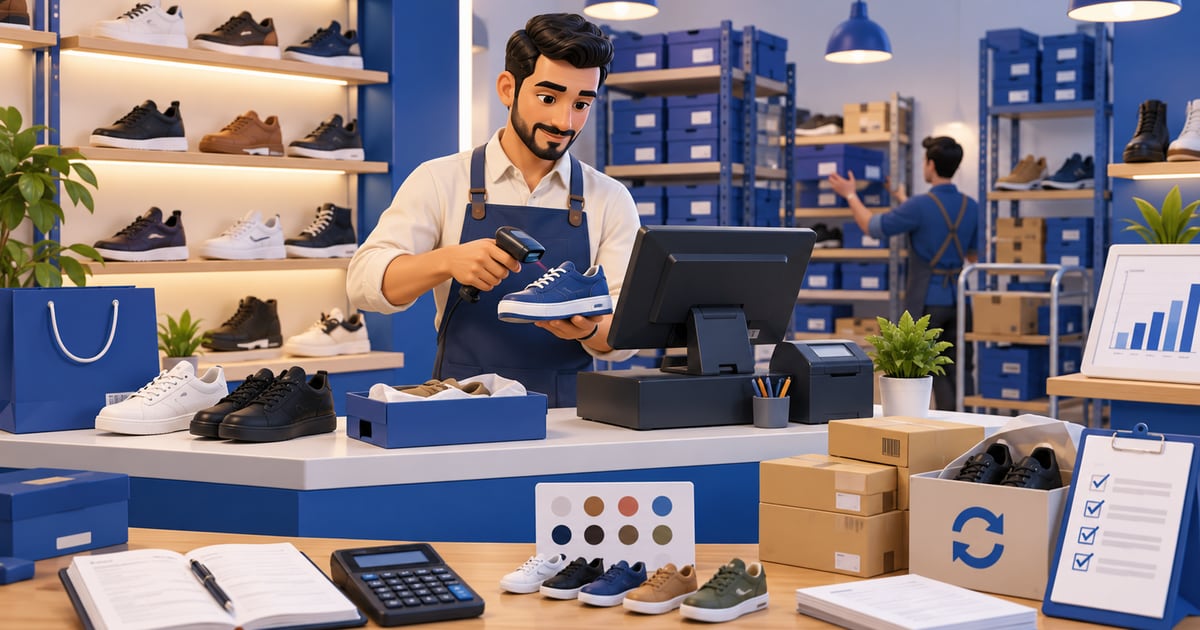
Shoe store software helps Iraq retailers sell by size, color, model, barcode, branch, and customer while keeping inventory accurate after each sale, return, transfer, or purchase. The right system should connect POS checkout with variant-level stock, staff roles, discounts, supplier buying, daily reports, and offline-ready selling so owners know which sizes sell and what to reorder.
01
Shoe Store Software in Iraq: POS, Sizes, Stock and Reports
A shoe shop does not only sell products; it sells exact sizes, colors, models, and seasonal choices. If the system only says “12 shoes in stock” but cannot tell which sizes are available, the owner still has a stock problem.
Quick answer: Shoe store software helps Iraq retailers sell by size, color, model, barcode, branch, and customer while keeping inventory accurate after each sale, return, transfer, or purchase. The right system should connect POS checkout with variant-level stock, staff roles, discounts, supplier buying, daily reports, and offline-ready selling so owners know which sizes sell and what to reorder.
02
What shoe store software should manage
Shoe store software is retail POS and inventory software built around variants. A single model may have several sizes, colors, price rules, branches, and barcode labels. The system should let staff sell the correct variant quickly and let the owner see what remains.
This is different from a simple cashier that only records a sale amount. A shoe store needs answers: Which sizes are selling? Which colors are slow? Which branch has size 42? Did returns change stock? Which supplier models should we reorder?
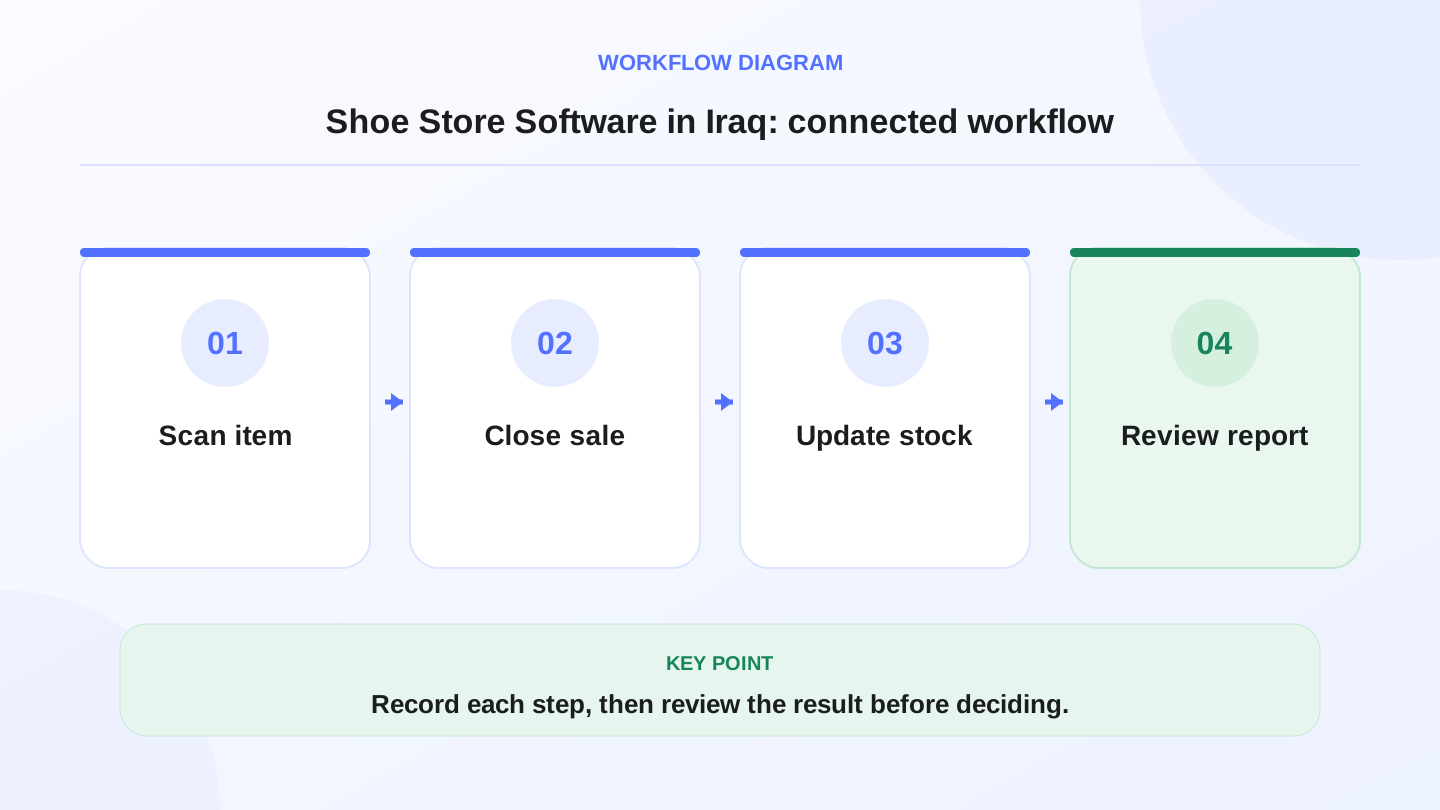
A practical sequence has four connected steps: Scan item, Close sale, Update stock, Review report. Recording each step makes the daily result easier to review.
03
Why shoe inventory is harder than it looks
Shoe inventory becomes confusing because total quantity hides the real problem. A model may show 20 pairs available, but most could be small sizes that do not sell in that area. Another branch may have the size a customer wants, but the cashier cannot see it.
The second challenge is seasonal buying. Iraq retailers may buy ahead for Eid, school season, winter, summer, or a new collection. Without accurate variant reports, the next purchase order becomes guesswork.

04
Features to look for in shoe store software
During a demo, do not only ask whether the system has inventory. Ask it to show one model by size, color, branch, sold quantity, returned quantity, and remaining stock.
| Feature | Why it matters | Practical test |
|---|---|---|
| Size and color variants | Shows real availability | Check one model across 5 sizes |
| Barcode labels | Speeds checkout and returns | Scan a shoe box barcode |
| Branch stock | Finds stock in another location | Search size 42 in two branches |
| Return workflow | Restores or separates returned stock | Process an exchange |
| Discount rules | Controls seasonal offers | Apply a manager-approved discount |
| Purchase records | Tracks supplier buying | Receive a new model by sizes |
| Sales reports | Guides reorder decisions | Review top sizes and slow colors |
05
Worked example: size-level stock after sales
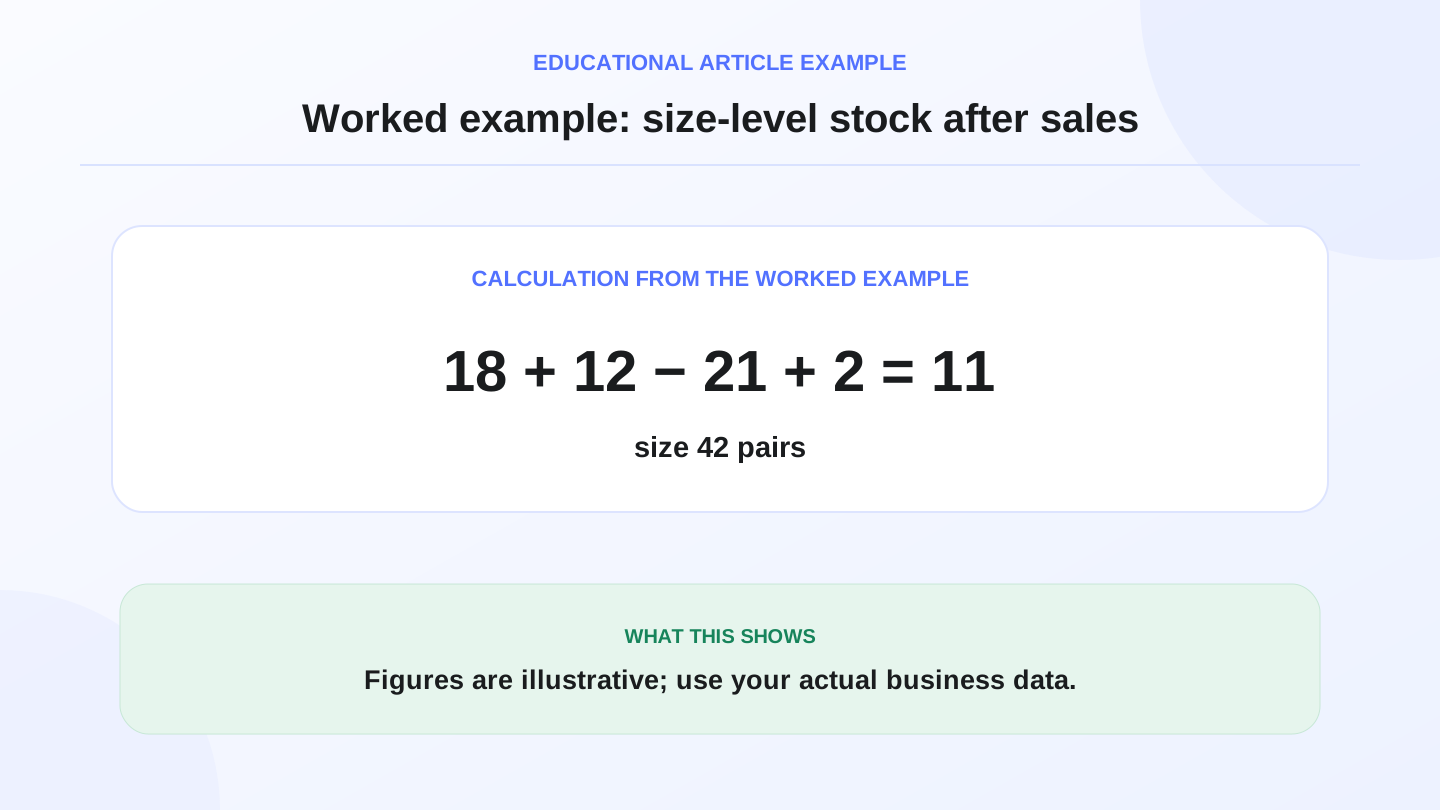
Assume a shoe shop starts with 18 pairs of one sneaker model in size 42. It buys 12 more pairs from a supplier. During the week, it sells 21 pairs and receives 2 returns, both suitable for resale.
Expected stock is: 18 opening + 12 purchases - 21 sales + 2 returns = 11 pairs of size 42.
If the shelf count shows 9 pairs, the variance is 9 counted - 11 expected = -2 pairs. The owner should investigate wrong size scanning, a return not entered correctly, supplier quantity mistake, transfer to another branch, damage, or counting error. This example is illustrative; each store should use its real stock movements and IQD costs.
06
Barcode and labels for shoes
Barcode labels are useful because shoe boxes can look similar. The cashier should not guess from the box design or price sticker. The barcode should identify the exact model, size, color, and price record.
If supplier barcodes are inconsistent, the store can create internal labels. The rule should be clear: who prints labels, who can edit product records, and how returns are checked. This discipline prevents size 41 from being sold as size 42 just because the boxes are next to each other.
07
Branches, transfers, and customer service
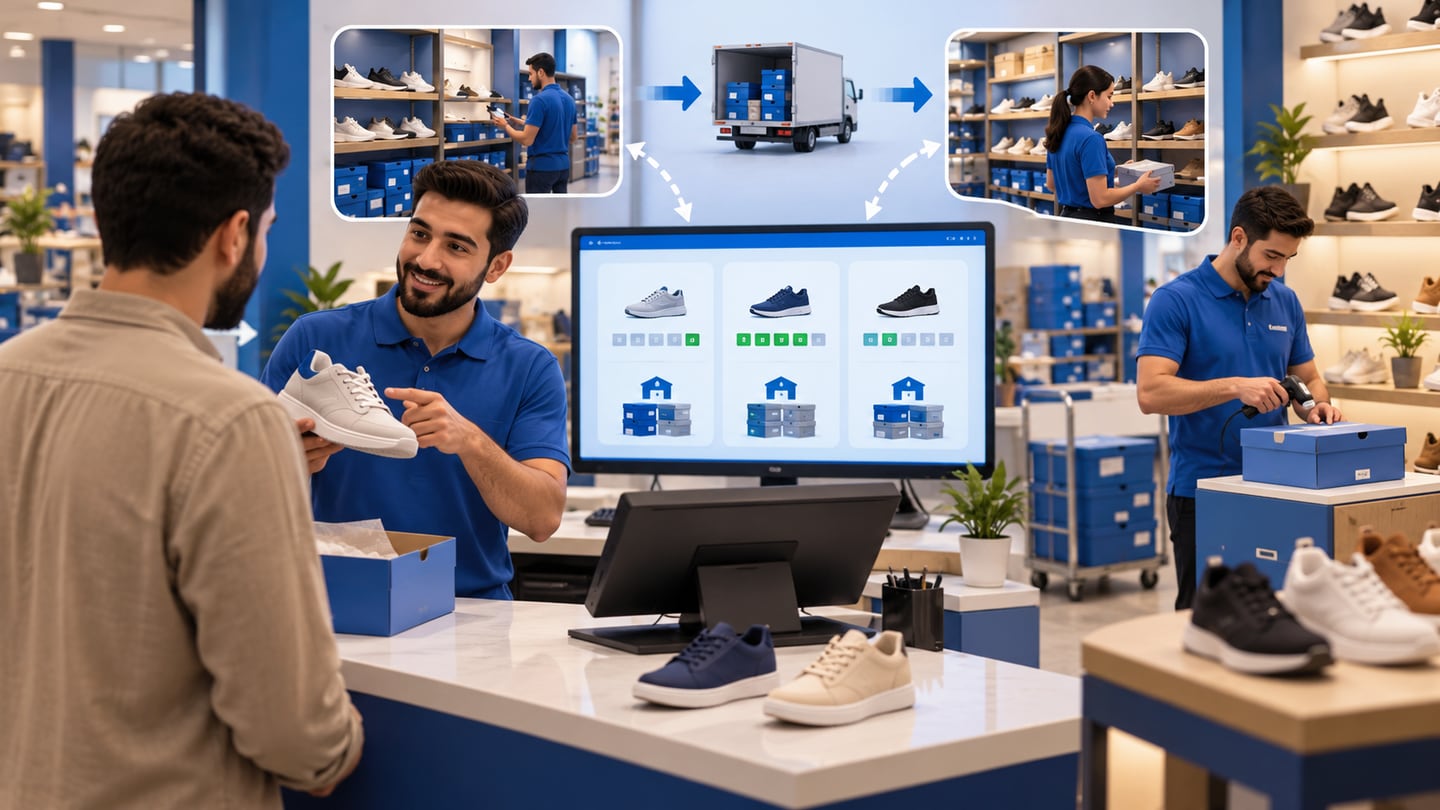
A shoe retailer with more than one branch needs branch visibility. If a customer in Baghdad asks for a size that is not available in the current branch, staff should know whether another branch has it before losing the sale.
Transfers must be recorded clearly: branch A decreases, branch B increases, and the movement appears in reports. Informal transfers create missing stock and arguments later. Good software makes transfers visible and controlled.
08
Discounts, returns, and exchanges
Shoe shops often use discounts for old collections, seasonal campaigns, pair bundles, or customer negotiations. The POS should show who applied the discount and how it affected margin. Not every cashier should be able to change prices freely.
Returns and exchanges need equal discipline. A returned pair may go back to sellable stock, need inspection, or be marked damaged. The system should make this choice visible so the stock number does not become inflated.
09
When a simple cashier is enough
A simple cashier may be enough for a very small shop with few models, one owner, and low daily sales. If the owner personally controls purchases, sales, and returns, a basic setup can work for a while.
Upgrade when the store adds staff, models, sizes, colors, barcodes, branches, supplier bills, ecommerce orders, or frequent discounts. At that point, the cost of wrong stock includes lost sales, overbuying slow sizes, customer disappointment, and unclear daily cash reports.
10
How RA8M fits shoe retailers
RA8M fits Iraq retail shops that need POS, barcode sales, variants, inventory, purchases, customers, roles, branches, finance, reports, Arabic, English, and offline-ready selling. Shoe stores can evaluate RA8M industries, RA8M POS, and pricing to compare the workflow. Pricing may change, so verify the current plan before buying.
For a shop that also sells online, connected ecommerce can help keep online and in-store stock aligned. The key is not just launching a storefront; it is avoiding overselling a size that was already sold at the cashier.
This is especially important for shoe stores because availability is specific. If an online customer orders size 43 in black and the physical branch has just sold that exact pair, the issue is not total stock; it is variant-level sync. A connected system reduces that risk by treating the cashier, inventory, branch transfer, and online order as one stock record instead of separate lists.
11
Reports owners should review weekly
A shoe store owner should review sales by model, size, color, branch, cashier, discount, return reason, and supplier. These reports turn daily sales into buying decisions.
For example, if size 42 sells quickly but size 39 stays on shelves, the next purchase should change. If one branch sells sports shoes faster while another sells formal shoes, the transfer and buying plan should reflect that. Software should make these patterns visible without rebuilding spreadsheets every week.
12
Conclusion
Shoe store software should help the owner see the business at the level where decisions happen: size, color, model, branch, sale, return, and purchase. A generic cash register can record money, but it cannot explain why the right size is missing.
For Iraq shoe shops, the best system connects cashier sales, barcode labels, variant inventory, returns, transfers, purchases, and reports. If your store is growing beyond one owner and a small shelf, choose software that keeps stock accurate before the next busy season.
Frequently asked questions
What is shoe store software?
Shoe store software is retail POS and inventory software that tracks shoes by model, size, color, barcode, price, supplier, branch, sale, return, and stock level.
Why do shoe shops need variant-level inventory?
A shoe model can look available in total while the needed size is out of stock. Variant-level inventory shows the exact size and color available in each branch.
Can a shoe store use the same POS as a clothing shop?
Often yes, if the POS supports variants, barcodes, discounts, returns, customers, purchases, reports, and branch-level inventory. The setup must be disciplined by size and color.
Does RA8M fit shoe and accessories shops?
RA8M fits retail shops that need POS, barcode sales, variants, inventory, customers, purchases, reports, roles, branches, Arabic and English workflows, and offline-ready selling.
Written by
RA8M Team
Practical guides for restaurants, shops, and operations teams
Next step
Try RA8M with data close to your operation
Read next