Sales and Purchase Reconciliation in Iraq: Close the Money Trail
A practical guide for Iraq businesses to reconcile sales, purchases, payments, stock movement, customer credit, and daily reports without duplicate work.
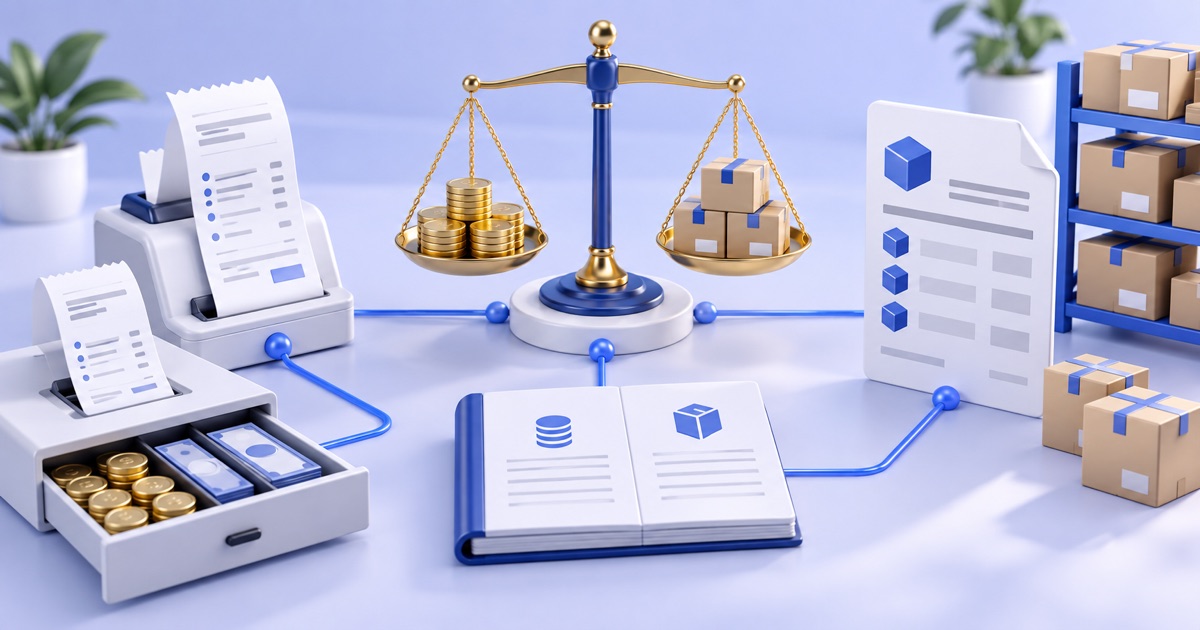
Sales and purchase reconciliation means checking that what the business sold, bought, paid, received, and still owes all tells the same story. For Iraq shops and SMBs, the goal is to connect POS sales, purchases, supplier bills, customer credit, inventory movements, and reports so owners can close each day without duplicated spreadsheets.
01
Sales and Purchase Reconciliation in Iraq: Close the Money Trail
This is not another billing or invoicing article. Billing asks whether a sale document was issued. Sales and purchase reconciliation asks a wider question: do sales, purchases, payments, customer balances, supplier bills, and stock movements all tell the same story?
Quick answer: Sales and purchase reconciliation means checking that what the business sold, bought, paid, received, and still owes all tells the same story. For Iraq shops and SMBs, the goal is to connect POS sales, purchases, supplier bills, customer credit, inventory movements, and reports so owners can close each day without duplicated spreadsheets.
02
Why reconciliation is its own planned intent
Many Iraq businesses have sales recorded in the cashier, supplier bills in WhatsApp or paper, customer credit in a notebook, and inventory differences in a spreadsheet. Each record may look acceptable alone, but the owner still cannot answer a simple question: where did the money and stock go?
Reconciliation is the operating discipline that connects those records. It is part of the planned money-trail topic because it sits between POS, purchasing, inventory, finance, and reporting. The goal is not formal accounting advice; it is day-to-day control.
RA8M helps because POS, purchases, inventory, customers, reports, roles, branches, and ecommerce can work from connected records instead of isolated notes.
03
What should be reconciled?
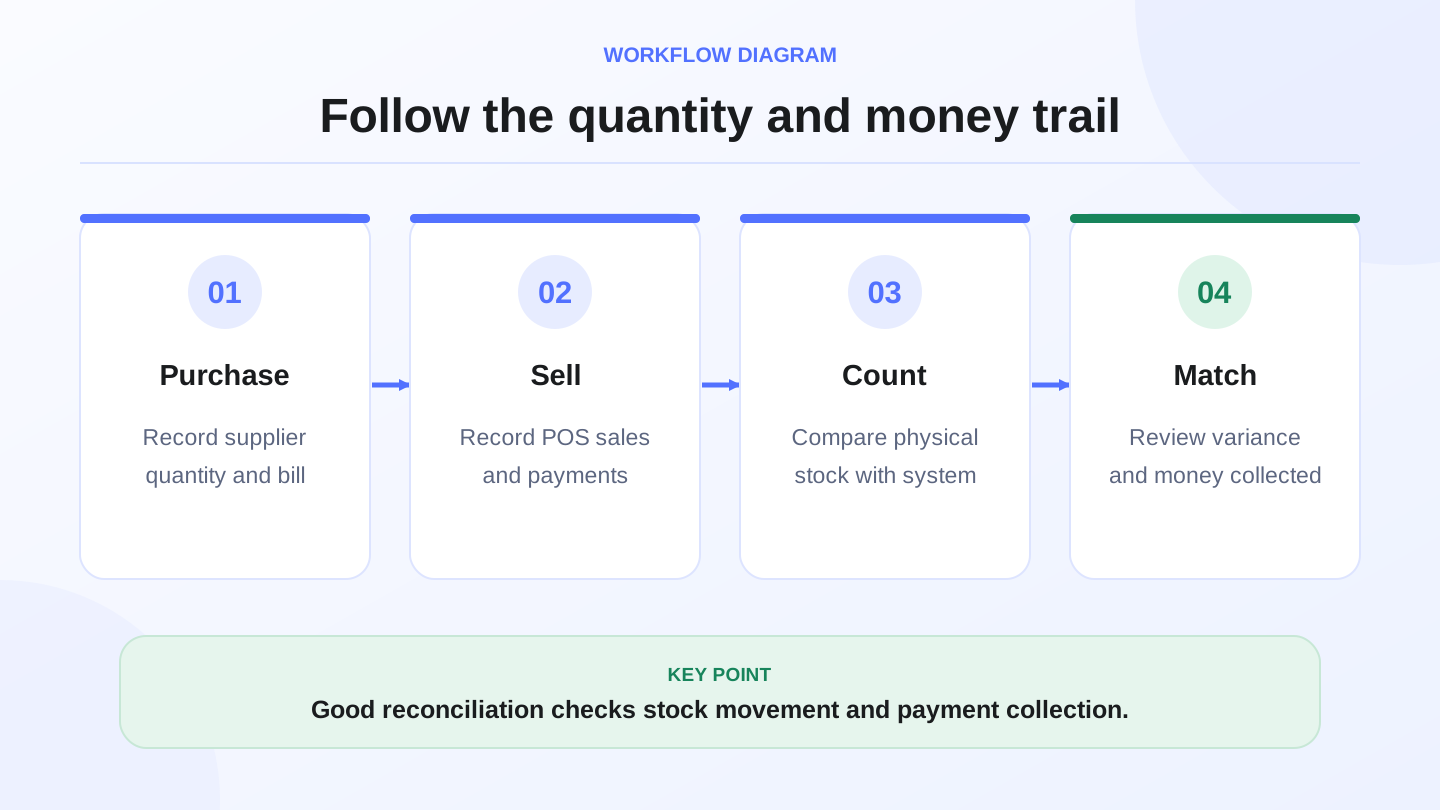
A practical reconciliation routine checks six areas. Sales totals should match cashier reports. Payments should match cash, card, transfer, or delivery collection. Purchases should match received stock. Customer credit should match unpaid balances. Supplier bills should match what was received and paid. Inventory should match expected movement.
This is different from creating an invoice. It is about matching the full chain.
| Area | Question to answer | Example signal |
|---|---|---|
| Sales | What did we sell today? | POS daily sales report |
| Payments | What money was collected? | Cash, card, transfer, COD |
| Purchases | What stock did we receive? | Supplier bill and receiving record |
| Customer credit | Who still owes us? | Unpaid customer balance |
| Supplier balance | What do we still owe? | Unpaid purchase bill |
| Inventory | Does stock match movement? | Expected vs counted quantity |
04
Worked example: checking margin and stock movement
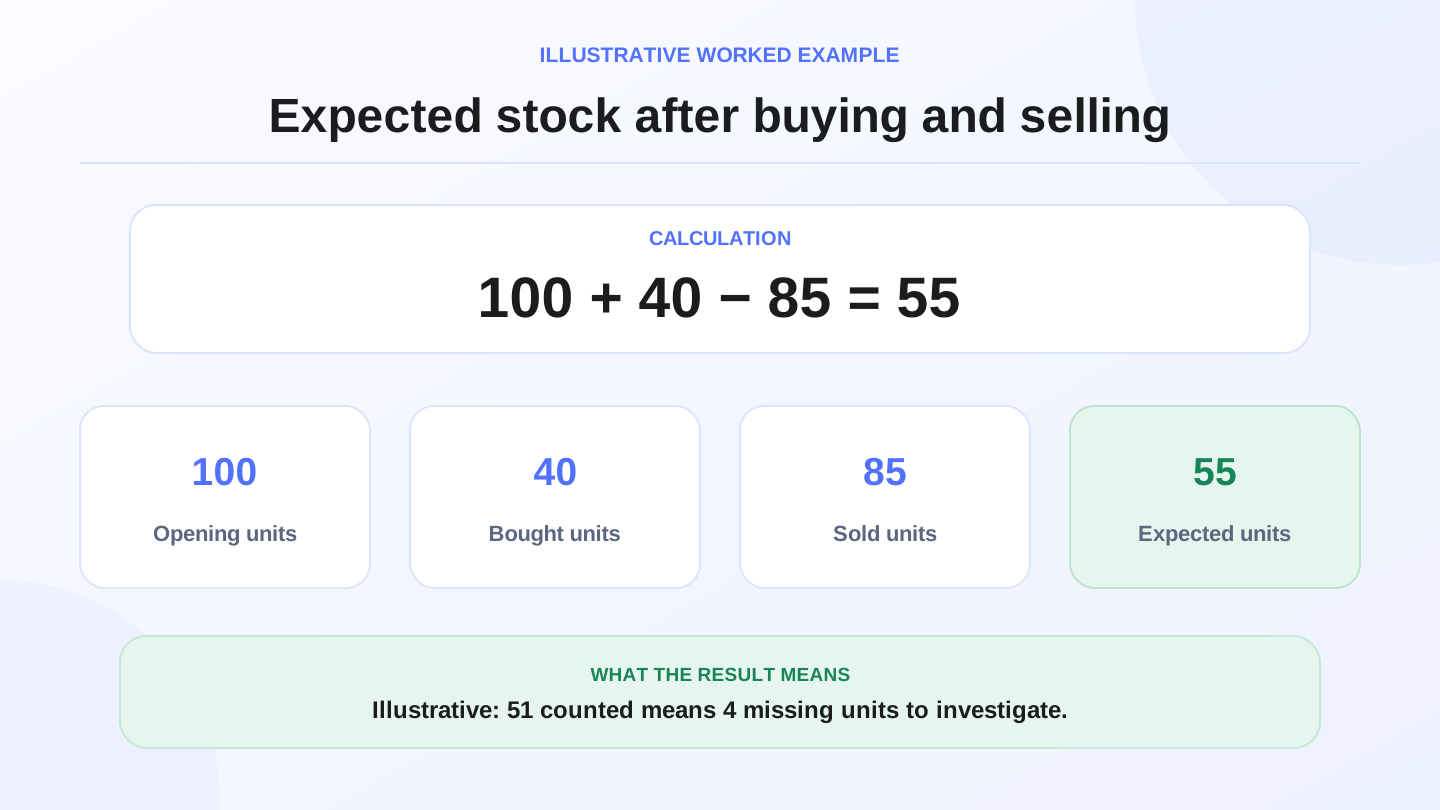
Assume a shop starts with 100 units of a product. During the week it buys 40 units from a supplier and sells 85 units through POS.
Expected stock is:
`100 opening stock + 40 purchased - 85 sold = 55 expected units`
If the counted stock is 51 units, the variance is:
`55 expected - 51 counted = 4 missing units`
Now add money: if each sold unit was 8,000 IQD, total sales are:
`85 units × 8,000 IQD = 680,000 IQD sales`
The owner should review both stock variance and payment collection. Good reconciliation checks quantity and money together.
05
Daily cashier close vs weekly money trail review
A cashier close should happen daily. It answers: sales total, discounts, returns, payment methods, and cash drawer difference. A wider money-trail review can happen weekly. It answers: supplier bills, customer credit, purchase receiving, stock variance, and branch movement.
Do not overload the cashier with accountant-level work. The cashier should close the shift clearly. The owner or manager should review exceptions and trends. This separation keeps the process practical for busy Iraq shops.
06
Customer credit and supplier bills
Customer credit is a common reason money trails become unclear. A customer buys today and pays later. Another customer pays part of an old balance. A supplier delivers goods but is paid next week. If those events live in separate notebooks, the owner loses visibility.
A connected workflow should show customer balance, supplier balance, payments received, payments made, and related stock movement. It should also show who recorded each event. This reduces arguments and makes review easier.
07
Inventory reconciliation is part of the money trail
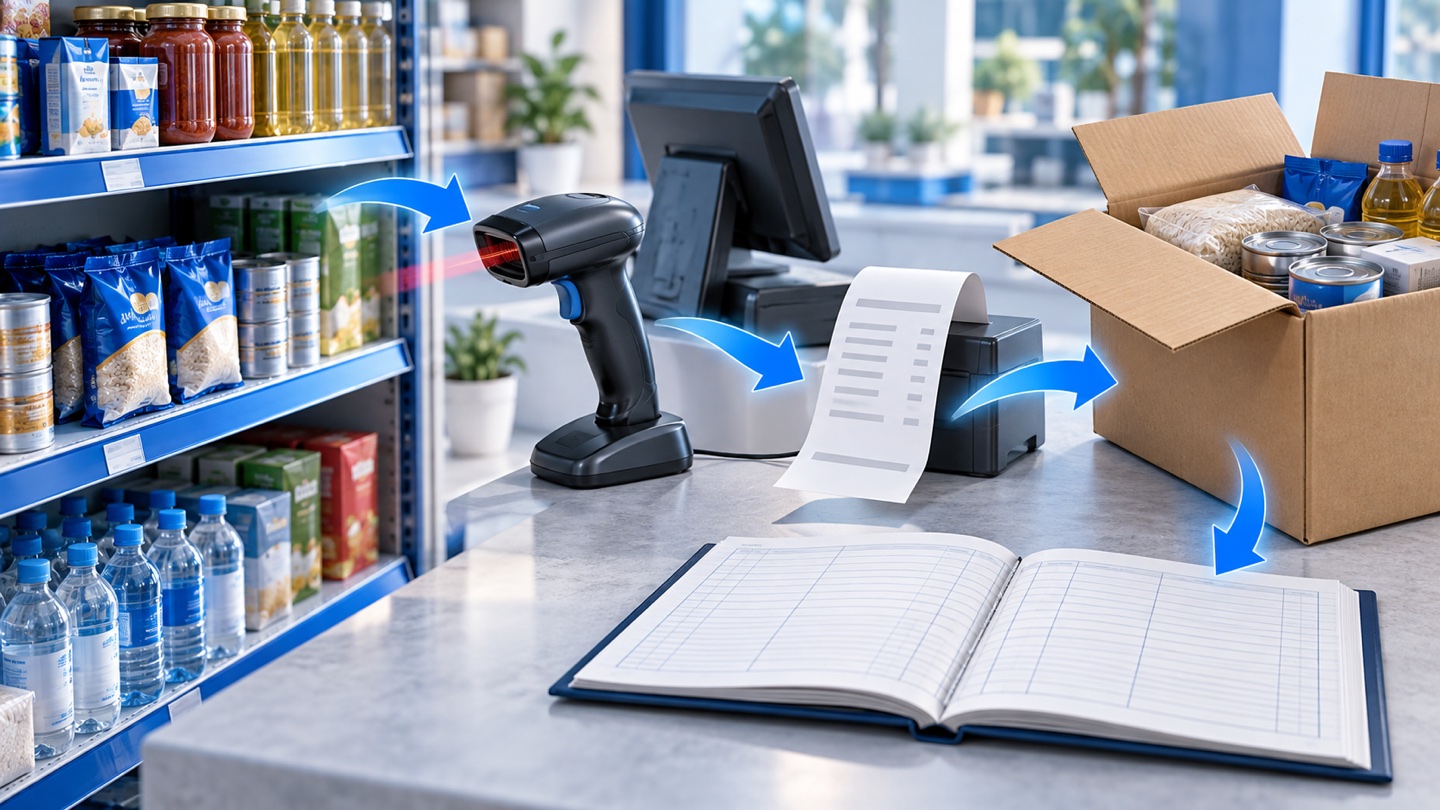
Inventory is money sitting on shelves. If stock records are wrong, profit reports are weaker. A sale should reduce stock. A purchase should increase stock. A return or adjustment should have a reason. Branch transfers should be visible from both sides.
This is why reconciliation belongs with inventory and purchases, not only finance. A business can collect cash correctly and still lose money through stock variance, waste, wrong receiving, or unreviewed credit.
08
Controls and roles
Staff roles matter. The person who sells may not be the person who approves adjustments. The person who receives stock may not be the person who approves supplier payment. The system should support this separation so one mistake does not silently affect sales, stock, and finance.
RA8M supports role-based operational workflows across POS, inventory, purchases, and reports. For teams with Arabic and English users, consistent records also reduce misunderstandings between staff and managers.
09
Legal and accounting caveat
Reconciliation improves operational records, but it is not a substitute for formal accounting, tax, or legal advice. Use cleaner records to support review, then confirm formal requirements with a qualified professional when needed.
This matters because the goal here is practical control, not a guarantee of compliance. Avoid systems or articles that promise legal outcomes without context.
10
When RA8M fits and when a spreadsheet may be enough
A spreadsheet may be enough for a very small business with low volume, no credit, and simple stock. RA8M fits better when the business has daily cashier activity, purchases, customer balances, stock movement, branches, staff roles, or ecommerce orders.
Review RA8M pricing before deciding because prices and plan details may change. The return should be measured in fewer mistakes, faster daily close, clearer credit, and better stock visibility.
11
Implementation checklist
1. Close cashier totals daily.
2. Match payments by method, not only by total.
3. Record purchases when stock is received.
4. Review unpaid customer and supplier balances weekly.
5. Compare expected stock with counted stock for key items.
6. Investigate adjustments and negative stock quickly.
7. Keep tax and formal accounting decisions with qualified professionals.
12
Common reconciliation mistakes
The first mistake is matching only the final cash number. A cash total can look correct while customer credit, supplier bills, or stock movement are still wrong. Reconciliation should separate payment method, sale type, and inventory movement so the owner can see where the issue started.
The second mistake is waiting until month end. By then, employees may not remember why a discount, return, transfer, or partial payment happened. A short daily close and a weekly money-trail review are easier than a long emergency cleanup.
The third mistake is editing old records without notes. Corrections are sometimes necessary, but they should leave a reason and responsible user. Otherwise reconciliation becomes another source of confusion.
13
Conclusion
Sales and purchase reconciliation in Iraq is the practical habit of closing the money trail. It connects POS sales, payments, purchases, customer credit, supplier bills, inventory movement, and reports. When those records agree, owners can make decisions with less guesswork.
Frequently asked questions
What is sales and purchase reconciliation?
It is the process of checking that sales, purchases, payments, supplier bills, customer balances, and inventory movements match the business records.
How is this different from billing software?
Billing focuses on invoices or receipts. Reconciliation checks the full money trail across POS sales, purchases, payments, stock, customers, and suppliers.
How often should a small business reconcile?
Daily cashier totals should be reviewed every day, while supplier bills, stock variance, and customer credit can be reviewed weekly or by cycle.
Can RA8M help with reconciliation?
RA8M connects POS, purchases, inventory, customers, finance, reports, roles, branches, and ecommerce, which gives owners a cleaner base for reconciliation.
Written by
RA8M Team
Practical guides for restaurants, shops, and operations teams
Next step
Try RA8M with data close to your operation
Read next