Qi Card in Iraq: Shop Counter, COD, Recording Sales, and Ra8m Reports
A practical Iraq guide for shop owners on Qi Card habits at the counter, how card acceptance differs from cash on delivery, merchant workflows, honest Ra8m payment settings, and sales reporting.
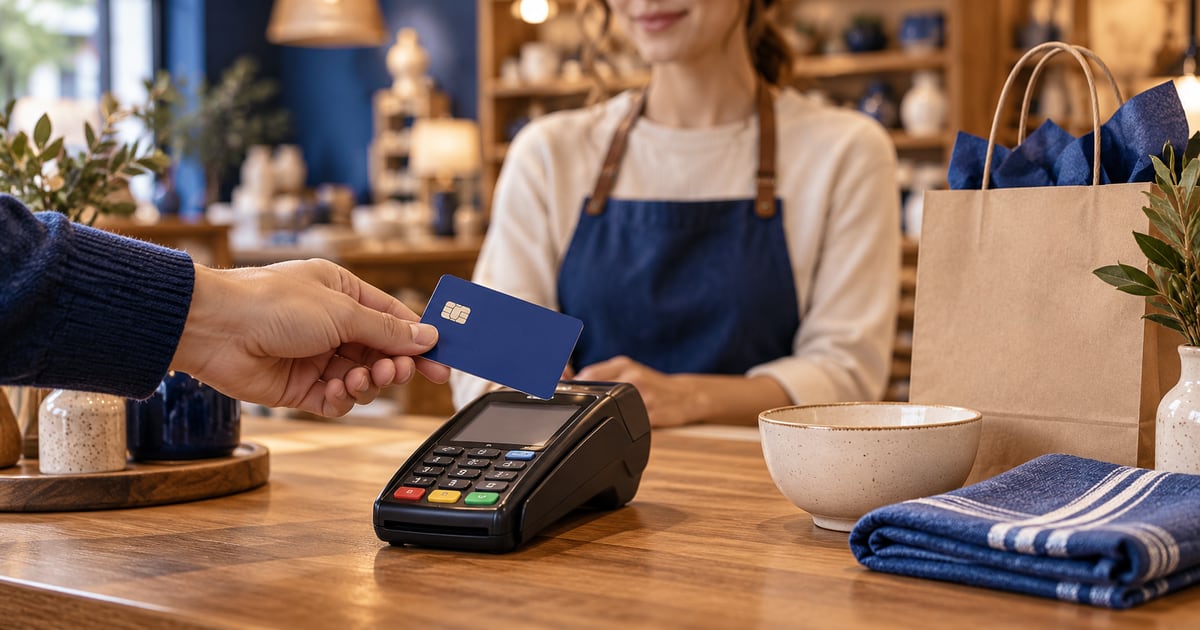
Qi Card is a widely recognized Iraqi payment card brand customers use at shops, ATMs, and some online checkouts. Shop owners should treat counter Qi payments like any card tender—verify approval, record the method in POS, and reconcile separately from cash on delivery. Ra8m legal text says storefront orders may be paid by Visa, Mastercard, Qi Card, ZainCash, or COD depending on merchant enablement; the TabletPOS demo shows Qi among tenders but Ra8m does not ship a dedicated Qi-only integration in public codebase claims—confirm live settings and provider rules.
01
Qi Card in Iraq: Shop Counter, COD, Recording Sales, and Ra8m Reports
Qi Card is one of the payment names Iraqi customers say at the counter when they do not want to pay with thick bundles of dinar notes. For a shop owner in Baghdad, Basra, Erbil, or a provincial high street, Qi Card habits matter because card volume can spike on salary weekends, during back-to-school shopping, and when younger customers treat tap-and-PIN as normal. This guide explains what Qi Card means operationally—not as bank marketing, but as tender discipline: verify the payment, record the method, reconcile against statements, and keep online promises honest.
You will compare Qi Card with cash on delivery, see how merchants generally accept cards with terminals or platform checkouts, and connect recording to sales reports from POS in Iraq. For wallet overlap, read ZainCash in Iraq. For ecommerce depth, use Qi Card payment for online stores in Iraq, online payment in Iraq, cash on delivery for online stores, and POS and online store system in Iraq.
Quick answer: Treat Qi Card like any verified card tender at the shop—approve the amount, complete the POS sale with the correct payment type, and reconcile card totals separately from cash and COD. Online, Ra8m legalContent says orders may be paid by Visa, Mastercard, Qi Card, ZainCash, or COD depending on what the merchant enabled—not a guarantee for every account. The public TabletPOS demo shows Qi among payment tiles; confirm production settings before advertising. POS 7,500 / 15,000 / 30,000 IQD/month; ecommerce from 50,000 on pricing.
02
What is Qi Card—and what should Iraqi shop owners expect?
Customers often say “Qi” when they mean a local debit or prepaid card linked to Iraq’s card ecosystem rather than a foreign scheme alone. Issuers, limits, and ATM habits vary, but the merchant-facing pattern is stable: the buyer inserts or taps, enters a PIN when required, waits for approval, and expects a receipt that matches the basket total.
Shop owners should separate three ideas that get blurred in busy hours:
Qi Card does not remove your obligation to match stock, prices, and returns policy. A declined card is a service moment, not an invitation to hand over goods “on trust” unless you have a written credit policy.
Iraq’s supervised financial environment is framed publicly by the Central Bank of Iraq. Your acquirer, bank, or payment service provider—not a blog article—owns fees, chargebacks, and settlement calendars. Use CBI pages for context; use your contract for numbers.
| Concept | What the customer experiences | What the owner must control |
|---|---|---|
| **Qi Card at POS** | Card approved on your terminal or bank device | Tender recorded; receipt archived |
| **Other cards** | Visa or Mastercard rails on the same terminal | Same discipline; may settle on different statements |
| **COD or cash** | No card authorization at checkout | Driver or drawer risk; different report column |
03
How does Qi Card at the counter differ from cash on delivery?
Cash on delivery dominates many ecommerce conversations in Iraq because buyers want to see the parcel before they pay. Qi Card and other prepaid card flows usually move money before or during checkout, which changes risk: less driver cash to lose, more refund and chargeback process to learn.
Many healthy Iraq retailers keep COD while adding cards for repeat buyers. The mistake is advertising “cards only” on Instagram while drivers still carry change for mixed neighborhoods. Read cash on delivery for online stores in Iraq before you remove COD to chase card volume.
Worked habit: If Friday in-store sales are 60% cash and 40% cards including Qi, your cash drawer should not absorb card totals. If Saturday ecommerce is 70% COD, your card settlement report should not expect that cash on Monday morning.

| Dimension | Qi Card / card at counter or prepaid online | Cash on delivery |
|---|---|---|
| **When money moves** | Typically at sale or authorized checkout | When driver collects at the door |
| **Primary risk** | Wrong tender recording; refund disputes | Non-collection, fake cancellations, returns |
| **Staff skill** | Terminal prompts, partial approvals | Driver sheets, change making, proof of delivery |
| **Reporting** | Match POS card lines to acquirer | Separate COD pipeline from card settlement |
| **Customer trust** | Familiar for salary-card shoppers | Familiar for first-time online buyers |
04
How do merchants generally accept Qi Card and other cards?
Acceptance usually flows through a bank merchant account, POS terminal, or payment gateway on a website—not through a shopkeeper typing card numbers into a personal phone app. Exact onboarding depends on your category, documentation, and provider rules; do not copy a neighbor’s terminal sticker without matching your own MID.
1. Customer presents Qi or co-badged card.
2. Cashier enters total on terminal or integrated POS.
3. Customer inserts, taps, or swipes per device rules.
4. Terminal shows approved or declined.
5. Cashier completes POS sale and prints or emails receipt.
6. End of day: batch settlement per acquirer instructions.
Online path differs: checkout captures method status on the order object. That is why Qi Card payment for online stores in Iraq focuses on workflow, not a logo. Compare gateways in online payment in Iraq.
Ra8m’s role is not to replace your acquirer. Ra8m helps you run the shop: products, orders, tenders in reports, and ecommerce when enabled. Public TabletPOS marketing shows Qi Card as a tender icon beside cash, ZainCash, Visa, and Mastercard—that is demo UI on the landing experience. Your live POS menu may differ until you configure and verify it with Ra8m support.

| Setup style | Owner advantage | Owner risk if sloppy |
|---|---|---|
| **Standalone terminal** | Fast counter rollout | POS tender not updated |
| **Integrated POS** | One receipt narrative | Integration downtime |
| **Manual “card by phone”** | None for compliance | Chargeback and fraud exposure |
| **Marketplace checkout** | Provider handles capture | Less control over stock sync |
05
How should you record Qi Card sales in POS and daily close?
Recording is where good Fridays become clean Mondays. Every approved card sale should produce:
A POS line with correct payment method when the product supports it.
A receipt the customer can photograph for warranties.
A manager checkpoint comparing terminal batch to POS card subtotal.
Link discipline to sales reports from POS in Iraq: payment method dimensions only help when cashiers choose tenders at sale time, not when a manager edits notes at midnight.
Partial payments still happen: 50,000 IQD cash plus balance on card. Put both portions on one invoice with two tender lines. Never mark the order fully paid on card when only a deposit cleared.
For stores that sell online and in-store, unify SKU truth via POS and online store system in Iraq. Card prepaid orders should reduce the same stock pool COD orders use.

| Check | Question | If mismatch |
|---|---|---|
| Terminal batch | Does approved IQD match POS card total? | Find missing voids or unposted sales |
| Qi vs other cards | Are local rails separated if finance requires? | Retrain tender selection |
| Refunds | Did staff refund to card per policy? | Log order ID and approval code |
| COD sheet | Are driver collections out of card columns? | Fix before paying suppliers |
| Inventory | Did completed sales reduce stock? | Investigate open tickets |
06
What does Ra8m honestly claim about Qi Card online?
Ra8m legalContent (storefront payments section) states that orders may be paid by Visa, Mastercard, Qi Card, ZainCash, or cash on delivery depending on what the merchant has enabled, with settlement to the merchant through each provider’s rules. That wording is permission language, not a promise that every signup includes every method on day one.
Separate marketing layers exist:
Ra8m records payment methods on orders and exposes reports so owners can filter tenders when staff classify sales correctly. Ra8m does not publicly market a dedicated Qi-only integration module in the codebase sense—capture still depends on which payment arrangements you enable with providers and support. Do not tell customers “Ra8m integrates Qi automatically” without opening your live payment settings.
Before toggling online methods, stabilize catalog, stock, and order statuses—same prep mindset as ZainCash in Iraq wallet guides. When Qi online is live, reconcile storefront payment status with POS inventory the way Qi Card payment for online stores in Iraq describes.
| Source | What it implies | What it does **not** imply |
|---|---|---|
| **legalContent** | Methods vary by merchant enablement | Automatic Qi activation |
| **Raqm public FAQ snippets** | Cash, Qi, Visa, Mastercard mentioned on some pages | Identical list on every locale |
| **TabletPOS demo** | Qi tender button in visual demo | Your tenant’s live button order |
| **This article** | Operational guidance | Legal or tax advice |
07
Reports, reconciliation, and finance habits for card-heavy weeks
When card share rises, accountants ask for evidence, not vibes. Build a lightweight weekly pack:
Cross-check gross sales with net settlement. Fees belong in margin models, not surprise deductions on Tuesday. If you also accept ZainCash in Iraq, wallet transfers must never be labeled Qi on the receipt just because both are “electronic.”
Seasonal spikes—Ramadan evenings, school uniform weeks, electronics launches—often increase card before they increase wallet. Staff should expect longer queues at the terminal and still perform declined-card scripts politely: offer another method, never shame the buyer.
Multi-branch owners should publish one official merchant identity per legal entity. Branch B should not run personal terminals while Branch A uses company settlement accounts. Internal transfer notes fix honest mistakes when a customer pays the wrong branch MID.
Card acceptance also introduces social engineering. Train cashiers to never type customer PINs, ignore transfer screenshots that are not terminal approvals for card sales, match receipt totals before bagging, and call a manager for manual overrides or offline limits. Customer communication should be bilingual and literal: if Qi works at the terminal but not on the website yet, say so on Instagram. Pair payment education with online payment in Iraq so phone staff explain COD, Qi, international cards, and wallets without inventing settlement speed.
| Document | Purpose |
|---|---|
| POS tender export | Proves staff classification |
| Acquirer settlement report | Proves bank deposit timing |
| Refund log | Links order IDs to money returned |
| COD driver summary | Prevents double-count with prepaid |
| Ecommerce payment status export | Catches “paid” orders still packing |
08
Conclusion, sources, and what to do next
Qi Card in Iraq is everyday commerce language for millions of shoppers, but shop success still rests on verify-record-reconcile habits at the counter, honest online method lists, and reports that separate card, cash, wallet, and COD. Ra8m can connect POS, inventory, ecommerce orders, and payment method reporting when you configure tenders and enabled checkout options—always confirm what your tenant actually supports before you print Qi stickers on every bag.
Start with terminal approval discipline, teach tenders at sale time, then expand online using the workflow articles linked above. Payment rails change; your daily close should still answer one question: did we record what we actually collected?
Central Bank of Iraq — supervised payments and banking context (not a substitute for your contract).
Zain Cash Iraq — wallet and card ecosystem comparisons when customers ask ZainCash versus Qi.
Ra8m storefront legal wording on payment methods (Visa, Mastercard, Qi Card, ZainCash, COD by merchant enablement).
Related Ra8m guides: Qi Card payment online store Iraq, online payment Iraq, sales reports POS Iraq.
Product pages: POS, ecommerce, pricing.
Google Search Central documentation — optional background when publishing payment claims on landing pages.
09
Frequently Asked Questions
What is Qi Card for Iraqi shop owners?
Qi Card is a domestic payment card program associated with Iraq’s card and electronic payment infrastructure, used by customers for in-store purchases, ATM access, and some digital payments depending on issuer and merchant setup. For a retailer, it is primarily a tender type your staff must recognize at the counter and classify correctly in sales reports—not a substitute for inventory control or delivery proof.
Does Ra8m include a dedicated Qi Card integration in the product codebase?
Ra8m public legal copy states storefront orders may be paid by Visa, Mastercard, Qi Card, ZainCash, or cash on delivery depending on what the merchant has enabled. Marketing TabletPOS visuals include a Qi tender button in the demo overlay. That is not the same as promising every tenant has Qi capture live or that Ra8m maintains a standalone Qi-only integration module you can audit in marketing claims—verify your account, support, and payment provider arrangement.
How is Qi Card different from cash on delivery for online orders?
Qi Card and other prepaid card flows usually mean money is collected or authorized before fulfillment, which can reduce driver cash risk. Cash on delivery means the customer pays when the parcel arrives, which many Iraq buyers still prefer. Operations differ: COD needs collection tracking and return handling; card orders need payment status, refund rules, and settlement timing from the provider.
Should I record Qi Card separately from Visa and Mastercard in POS?
Yes, if your POS or reports support distinct tenders. Finance teams often want local card rails separated from international schemes for reconciliation with acquirer statements. Even when all cards use one physical terminal, your end-of-day report should not lump card totals with cash drawer or COD driver sheets.
Which Ra8m articles cover Qi online workflows?
Read Qi Card payment for online stores in Iraq for checkout and stock sync, plus online payment in Iraq, cash on delivery for online stores in Iraq, POS and online store system in Iraq, and sales reports from POS in Iraq for daily close habits.
What official sources should I verify for card acceptance rules?
Start with the Central Bank of Iraq for the supervised payments environment, your acquiring bank or payment service provider for merchant fees and settlement, and your own contract. Compare wallet habits with Zain Cash Iraq if customers ask about ZainCash versus Qi at checkout.
What do Ra8m POS plans cost while I improve payment recording?
Public pricing lists POS Basic at 7,500 IQD per month, POS Advanced at 15,000 IQD, POS Manufacture at 30,000 IQD, and ecommerce from 50,000 IQD monthly—confirm current tiers on pricing before budgeting.
Frequently asked questions
What is Qi Card for Iraqi shop owners?
Qi Card is a domestic payment card program associated with Iraq’s card and electronic payment infrastructure, used by customers for in-store purchases, ATM access, and some digital payments depending on issuer and merchant setup. For a retailer, it is primarily a tender type your staff must recognize at the counter and classify correctly in sales reports—not a substitute for inventory control or delivery proof.
Does Ra8m include a dedicated Qi Card integration in the product codebase?
Ra8m public legal copy states storefront orders may be paid by Visa, Mastercard, Qi Card, ZainCash, or cash on delivery depending on what the merchant has enabled. Marketing TabletPOS visuals include a Qi tender button in the demo overlay. That is not the same as promising every tenant has Qi capture live or that Ra8m maintains a standalone Qi-only integration module you can audit in marketing claims—verify your account, support, and payment provider arrangement.
How is Qi Card different from cash on delivery for online orders?
Qi Card and other prepaid card flows usually mean money is collected or authorized before fulfillment, which can reduce driver cash risk. Cash on delivery means the customer pays when the parcel arrives, which many Iraq buyers still prefer. Operations differ: COD needs collection tracking and return handling; card orders need payment status, refund rules, and settlement timing from the provider.
Should I record Qi Card separately from Visa and Mastercard in POS?
Yes, if your POS or reports support distinct tenders. Finance teams often want local card rails separated from international schemes for reconciliation with acquirer statements. Even when all cards use one physical terminal, your end-of-day report should not lump card totals with cash drawer or COD driver sheets.
Which Ra8m articles cover Qi online workflows?
Read Qi Card payment for online stores in Iraq for checkout and stock sync, plus online payment in Iraq, cash on delivery for online stores, POS and online store system in Iraq, and sales reports from POS for daily close habits.
What official sources should I verify for card acceptance rules?
Start with the Central Bank of Iraq for the supervised payments environment, your acquiring bank or payment service provider for merchant fees and settlement, and your own contract. Compare wallet habits with Zain Cash Iraq if customers ask about ZainCash versus Qi at checkout.
What do Ra8m POS plans cost while I improve payment recording?
Public pricing lists POS Basic at 7,500 IQD per month, POS Advanced at 15,000 IQD, POS Manufacture at 30,000 IQD, and ecommerce from 50,000 IQD monthly—confirm current tiers on the pricing page before budgeting.
Written by
RA8M Team
Practical guides for restaurants, shops, and operations teams
Next step
Try RA8M with data close to your operation
Read next
Related RA8M guides
Payments and Ecommerce
ZainCash in Iraq: Wallet, Agents, Card, Shop Counter, and Online Store
Read article
Payments and Ecommerce
Qi Card Payment for Online Stores in Iraq: POS Workflow Guide
Read article
Payments and Ecommerce
Visa and Mastercard Payments in Iraq: Online Store Guide
Read article
Payments and Ecommerce
AsiaHawala Payment for Online Stores in Iraq: Workflow Guide
Read article
Payments and Ecommerce
Payment Gateway Iraq: Online Store Checklist for Merchants
Read article