AsiaHawala Payment for Online Stores in Iraq: Workflow Guide
A practical guide for Iraq merchants planning AsiaHawala payment workflows for online stores: checkout, reconciliation, COD, stock, reports, and POS connection.

AsiaHawala payment for an online store in Iraq should be planned as a full operating workflow, not only as a checkout button. The merchant needs to confirm gateway availability, connect order status to inventory, record payment references, prepare cash-on-delivery backup, reconcile paid orders, and review reports. RA8M helps by connecting ecommerce orders with POS products, stock, payments, and daily operations.
01
AsiaHawala Payment for Online Stores in Iraq: Workflow Guide
Quick answer: AsiaHawala payment should be planned as part of the full online order workflow, not as a standalone checkout option. An Iraq merchant needs to confirm availability and requirements, connect payment status to orders, keep inventory synchronized with POS, prepare cash-on-delivery backup, reconcile references, and review daily reports.
Online payment in Iraq is improving, but store owners still need practical operations around every payment method. A customer may pay online, choose cash on delivery, cancel before dispatch, ask for a refund, or place an order while the same item is being sold in-store. The payment method is only one piece of the workflow.
This guide explains how to plan AsiaHawala payment for an online store, what to ask before launch, how to connect payments with inventory and reports, and where RA8M Ecommerce fits for merchants who want POS and online orders in one connected system.
02
What does AsiaHawala payment mean for an online store?
For a merchant, AsiaHawala payment means giving customers a way to pay through an AsiaHawala-related payment flow if it is available for the store and configured correctly. The important phrase is if it is available and configured. Do not assume every gateway, wallet, or payment method is automatically ready for every ecommerce platform.
The business should confirm merchant onboarding requirements, technical integration options, fees, settlement timing, refund handling, and support channels directly with the payment provider or qualified implementation partner. This article focuses on the operating workflow, not on making unsupported claims about provider availability.
In practice, the owner needs to know whether the order is unpaid, paid, failed, cancelled, refunded, or partially handled. Those statuses should be visible to the team before packing and delivery.
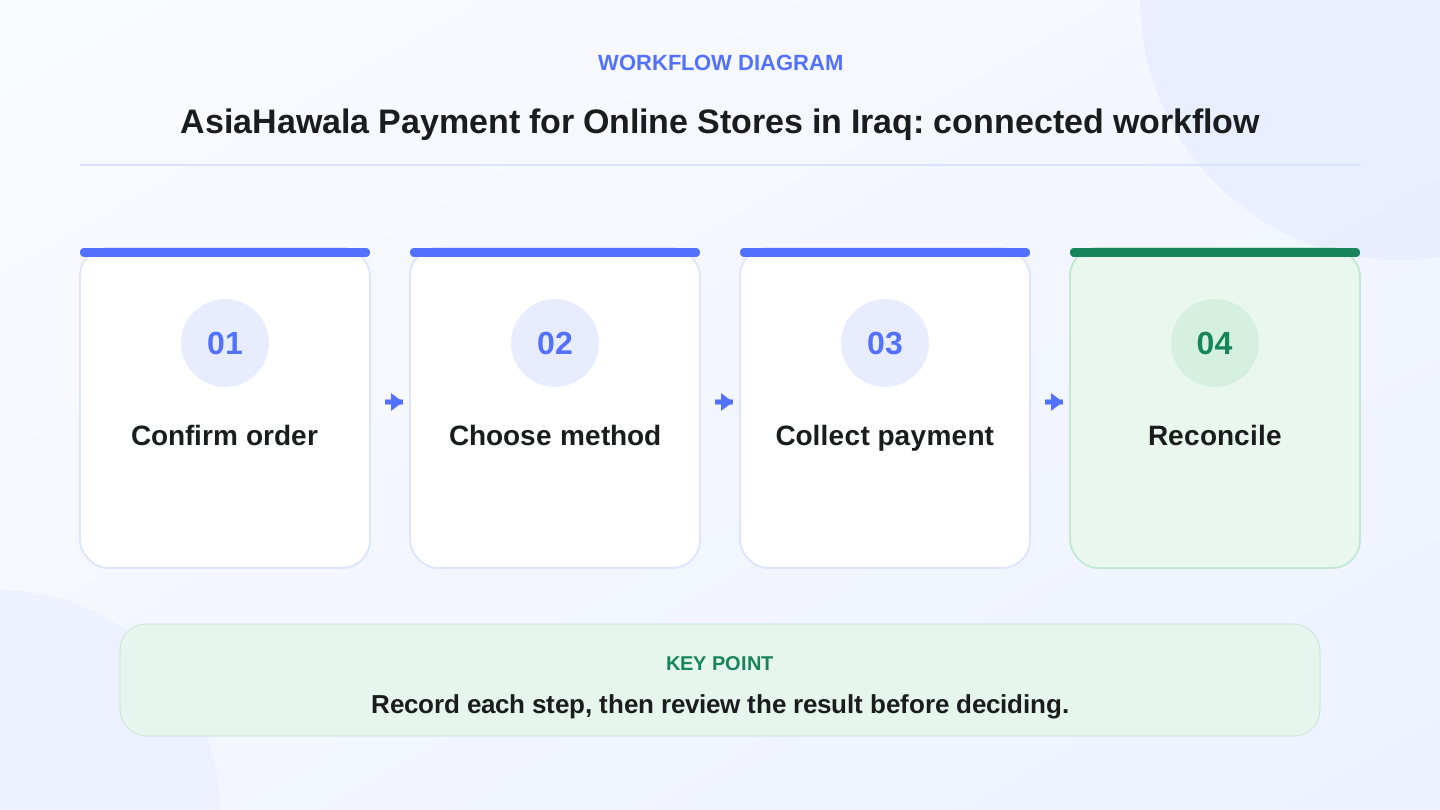
A practical sequence has four connected steps: Confirm order, Choose method, Collect payment, Reconcile. Recording each step makes the daily result easier to review.
03
Why payment workflow matters more than the button
A payment button can look simple on the storefront, but the back office must answer harder questions. Did the payment succeed? Which order does the reference belong to? Was stock reduced? Did the customer choose delivery or pickup? Who checks failed payments? How are refunds and cancelled orders recorded?
If those answers live in separate places, staff waste time on screenshots and manual confirmation. Worse, a store may ship an unpaid order or keep stock reserved for an order that failed. This is why payment planning must include ecommerce, POS, stock, accounting review, and delivery steps.
A connected workflow helps the team see the same order from checkout to collection. It also makes daily reports more useful because payment method, order status, and stock movement are not separated.

04
AsiaHawala, cards, COD, and delivery: how to compare methods
Most Iraq online stores should compare payment options by customer trust, operational effort, settlement timing, and reconciliation clarity. AsiaHawala may be relevant for customers who prefer that channel, while cards, cash on delivery, and other gateways may serve different buyers.
No single method is perfect. The best setup is the one your customers trust and your team can reconcile every day.
| Method | Useful when | Operational risk to manage |
|---|---|---|
| AsiaHawala payment | Customers want that wallet or payment channel | Confirm availability, references, settlement, and refunds |
| Visa or Mastercard | Customers prefer card checkout | Failed payments, chargebacks, and gateway settlement review |
| Cash on delivery | Customers want to inspect or pay at delivery | Returns, no-shows, courier cash reconciliation |
| Manual transfer or confirmation | Low volume or early testing | Staff time, screenshots, mistakes, slow confirmation |
| Mixed payment options | Store serves different customer preferences | Clear reporting by method and order status |
05
How should payment connect to POS and stock?
Payment and inventory must be connected because the same product can be sold in-store and online. If the online store has its own stock list and the POS has another list, overselling becomes likely. This is especially risky for small product quantities, high-demand items, electronics, shoes, cosmetics, and groceries.
A better workflow uses one product and stock source. When an online order is placed, the system should reserve or deduct stock according to the merchant workflow. When an in-store POS sale happens, stock should also update. If the order is cancelled, the stock should return based on the cancellation rule.
With RA8M POS and ecommerce workflows, merchants can plan around connected products, inventory, orders, payment methods, delivery workflows, and reports instead of managing online and in-store sales as separate businesses.

06
Worked example: reconcile paid orders and COD orders
Suppose an Iraq online store receives 60 orders in one day. The order mix is illustrative:
18 orders paid through an online payment option.
32 orders are cash on delivery.
10 orders failed, cancelled, or were not confirmed.
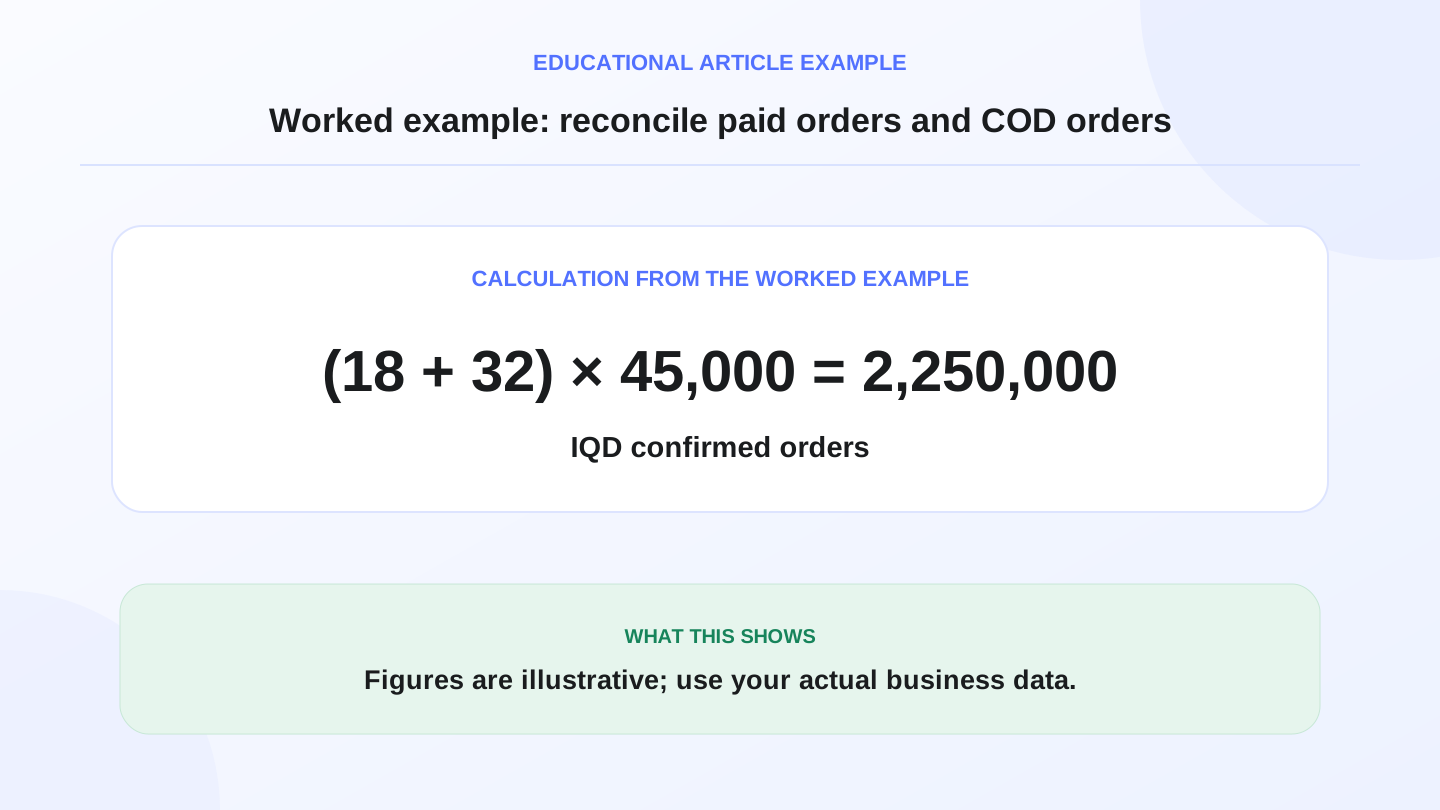
If the average confirmed order value is 45,000 IQD, confirmed revenue before returns is:
(18 + 32) × 45,000 IQD = 50 × 45,000 IQD = 2,250,000 IQD.
If 4 COD orders are returned before collection, the adjusted expected collected amount is:
(50 − 4) × 45,000 IQD = 46 × 45,000 IQD = 2,070,000 IQD.
The owner should compare this with payment references, courier cash, cancellations, and stock returned. The example shows why order status and payment method must be reportable, not hidden in chat messages.
07
Checklist before launching AsiaHawala payment
Before turning on any new payment method, prepare a written checklist. Confirm whether the store is eligible, what documents are needed, who owns the merchant account, how fees are calculated, when settlement arrives, and how refunds are handled.
Then test the customer flow: product page, cart, checkout, payment redirect or confirmation, order success page, customer notification, admin order view, payment reference, stock effect, cancellation, refund, and report. Test in Arabic and English if the store serves bilingual customers.
Finally, train the team. Cashiers, packers, delivery coordinators, and managers should know which statuses mean pack, hold, call customer, cancel, refund, or reconcile.
08
Where does RA8M Ecommerce fit?
RA8M Ecommerce creates a branded online storefront connected to POS products and inventory. For merchants in Iraq, this matters because online orders should not be isolated from the cashier and stock system. The same business may sell from a shop, branch, or online store during the same day.
RA8M is Arabic-first and bilingual, supports POS workflows, inventory, purchases, finance, reports, roles, branches, and ecommerce. Its ecommerce workflow can connect online orders with products, stock, payments, and delivery processes where configured for the business. That makes it useful for owners who want to manage checkout and operations together rather than bolt payment onto a disconnected store.
Review current plan details on RA8M pricing, because pricing and available add-ons may change.
09
When is COD still enough?
Cash on delivery may still be enough for a new store with low volume, local delivery, and customers who strongly prefer paying on receipt. COD is also useful as a backup if online payment fails or if a buyer is not comfortable paying ahead.
However, COD has its own costs: failed deliveries, courier cash handling, delayed collection, and stock tied to orders that may not complete. As order volume grows, the owner should compare COD-only operations with mixed payment methods and stronger reconciliation.
A practical path is to launch with COD and one online payment method when available, then use reports to decide which method customers actually use and which method creates fewer operational problems.
10
Final operating model
Treat AsiaHawala payment as one part of a payment system: checkout, order status, stock, delivery, reconciliation, refunds, and reports. If one piece is missing, the store may still sell, but the owner will not have clean control.
For Iraq merchants, the strongest setup is an Arabic and English online store connected to POS inventory and daily reports. If that is the goal, evaluate RA8M Ecommerce with RA8M POS so online orders, in-store sales, stock, payments, and reporting can work from the same operating base.
Frequently asked questions
What should merchants check before offering AsiaHawala payment?
They should confirm current gateway availability, required merchant documents, fees, settlement timing, refund process, technical setup, and how payment status will appear in order reports.
Does payment integration replace cash on delivery?
Not always. Many Iraq stores should keep cash on delivery as a backup or customer preference while adding online payment options where available.
How should online payment connect to inventory?
The online order should reserve or deduct stock from the same product list used by POS so the business does not oversell between online and in-store orders.
Can RA8M help with online store payment workflows?
RA8M Ecommerce connects a branded online storefront with POS products, inventory, orders, payments, and delivery workflows where configured for the business.
What report matters most for payments?
A useful report compares order total, payment method, payment reference, delivery status, refunds or cancellations, and final collected amount.
Written by
RA8M Team
Practical guides for restaurants, shops, and operations teams
Next step
Try RA8M with data close to your operation
Read next