POS Software Comparison in Iraq: Features, Cost and Fit
A practical POS software comparison for Iraq business owners evaluating cashier speed, offline selling, inventory, invoices, ecommerce, reports, branches, and cost.

A POS software comparison in Iraq should compare cashier speed, Arabic and English usability, offline selling, inventory accuracy, purchases, invoices, payment methods, ecommerce sync, reports, branches, support, and total cost. The best choice is the system that matches the business workflow, not the longest feature list.
01
POS Software Comparison in Iraq: Features, Cost and Fit
This page is for comparing vendors and buying criteria. An “offline” tick in a feature table is not enough; use the repeatable sale-and-sync scenario with each vendor.
A POS software comparison should begin with the way the business actually sells. A restaurant, supermarket, clothing shop, pharmacy, salon, and online seller do not need the same checkout flow. For Iraq owners, the right POS is the one that keeps cashier work fast, stock accurate, reports useful, and the team operating even when internet is weak.
Quick answer: A POS software comparison in Iraq should compare cashier speed, Arabic and English usability, offline selling, inventory accuracy, purchases, invoices, payment methods, ecommerce sync, reports, branches, support, and total cost. The best choice is the system that matches the business workflow, not the longest feature list.
02
Start with workflow, not feature lists
Many POS comparisons fail because they compare software like a checklist of logos. The real question is different: can the system handle your normal day without forcing staff into side spreadsheets and manual fixes? A café needs modifiers, fast touch ordering, receipts, and ingredient discipline. A retail shop needs barcode sales, variants, discounts, customers, and stock movements. A supermarket needs speed, categories, low-stock awareness, and reliable closing reports.
Before talking about price, map one full day. How are products created? Who sells? How are discounts approved? What happens when internet drops? How are purchases entered? How are returns handled? Which report does the owner read at night? A POS that fits this daily path is more valuable than a tool with many unused features.
RA8M is positioned as an Arabic-first POS and ecommerce platform for Iraq businesses that need POS, inventory, purchases, finance, reports, roles, branches, and offline-ready cashier workflows in one connected system.
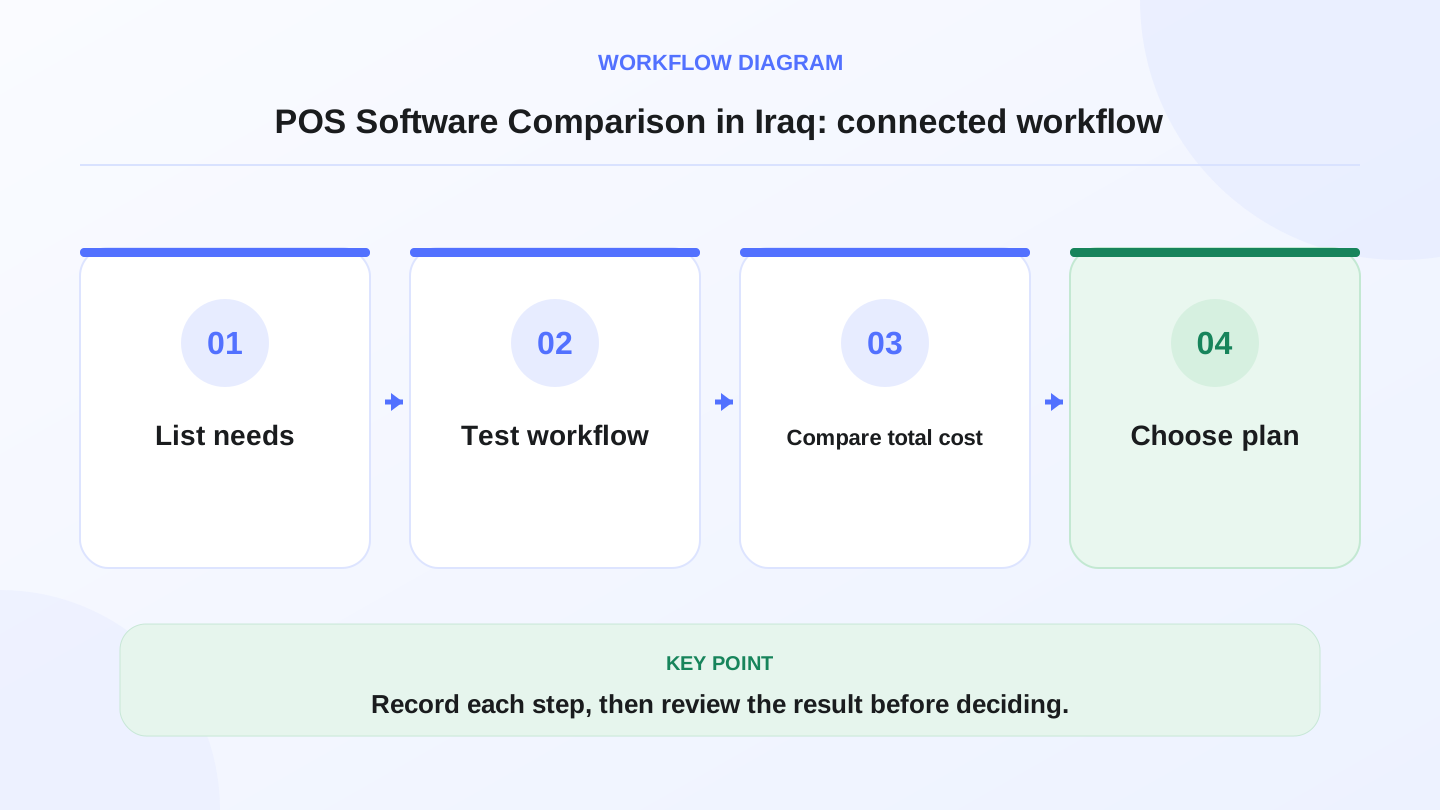
A practical sequence has four connected steps: List needs, Test workflow, Compare total cost, Choose plan. Recording each step makes the daily result easier to review.
03
The core comparison criteria
Use practical criteria that affect operations. If a system cannot pass these, it may still be useful for a small setup, but it may not support growth.
| Criterion | What to test | Why it matters in Iraq |
|---|---|---|
| Cashier speed | Add items, discounts, customers, and receipt quickly | Long queues hurt restaurants, supermarkets, and retail shops |
| Arabic and English | RTL Arabic screens plus English where needed | Many teams are Arabic-first but managers may use both languages |
| Offline selling | Sell and print during internet interruption | The cashier should not stop when connectivity drops |
| Inventory | Deduct sold items, variants, raw materials, or stock | Prevents overselling and reorder mistakes |
| Purchases | Enter supplier bills and received quantities | Connects buying with stock and costs |
| Invoices and payments | Separate cash, card, wallet, COD, unpaid, or partial payment | Helps daily reconciliation |
| Reports | Review products, revenue, expenses, branches, and staff | Turns checkout data into decisions |
| Ecommerce | Sync online store products and stock | Important when selling online and in-store |
| Support and training | Help staff adopt the system | A good system fails if the team cannot use it |
04
Worked example: cheap POS versus connected POS
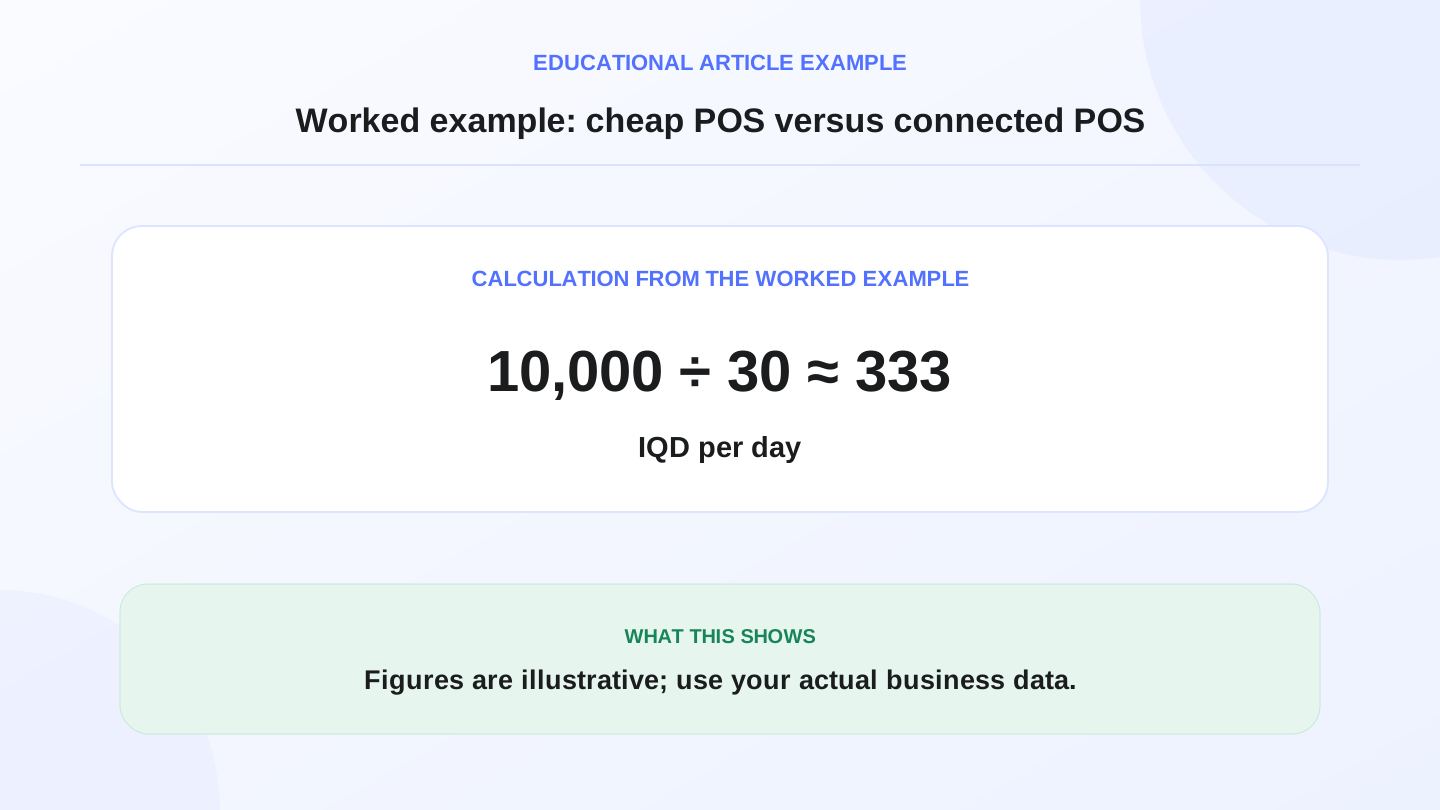
Assume a shop compares two systems. System A costs an illustrative 10,000 IQD per month and only records cashier totals. System B costs 20,000 IQD per month and connects POS with inventory and reports. The difference is 10,000 IQD per month, or about 10,000 ÷ 30 = 333 IQD per day.
If manual stock mistakes cause just one missing item worth 15,000 IQD each week, the monthly loss can be 15,000 × 4 = 60,000 IQD. In that case, the cheaper tool may cost more operationally than the connected system. These numbers are illustrative only. Actual pricing, losses, taxes, and accounting effects must be verified by the owner and qualified professionals.
The lesson is not that expensive software is always better. The lesson is that total cost includes time, mistakes, support, training, and missed stock control.
05
Compare by business type
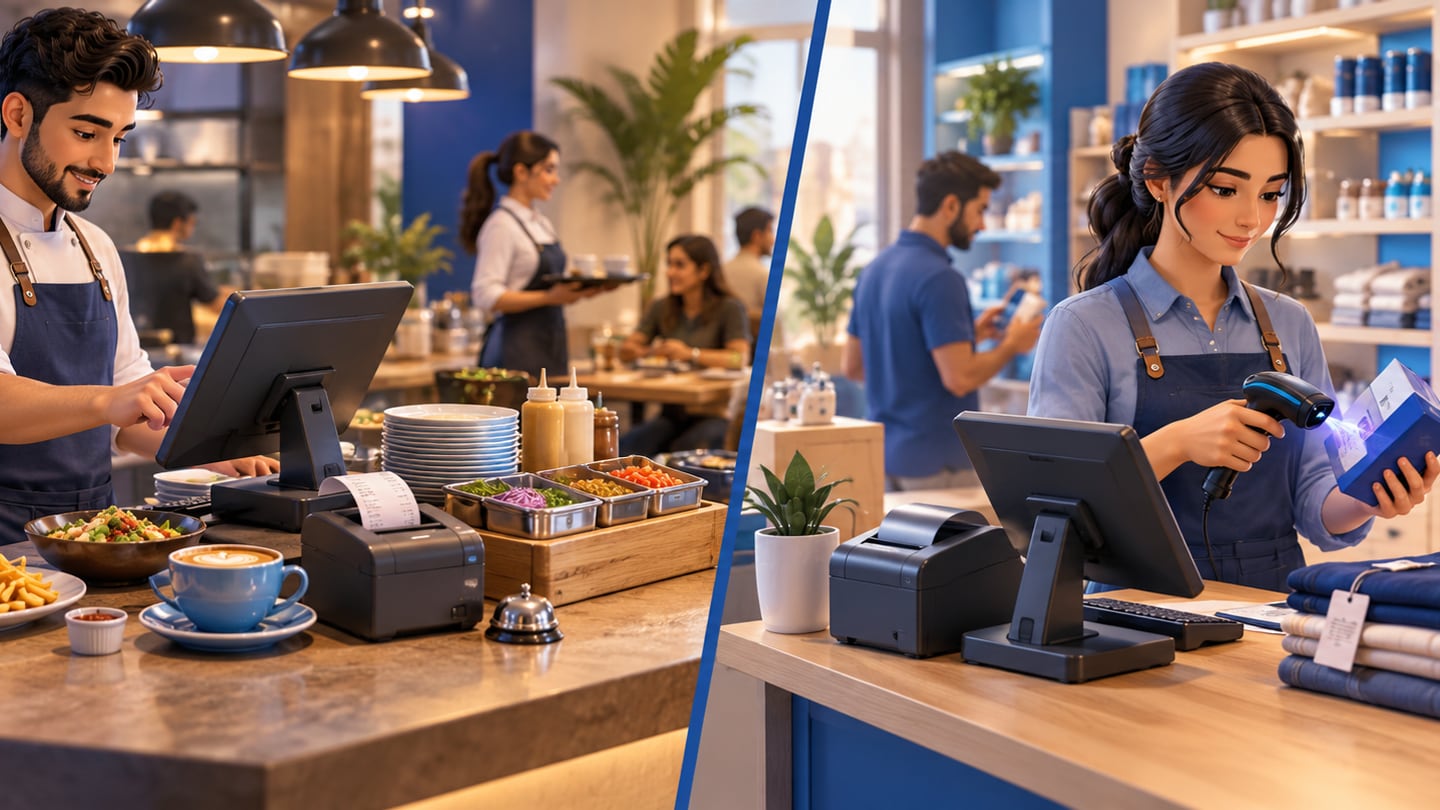
Restaurants and cafés should test order entry, modifiers, notes, receipts, recipe or ingredient deduction where needed, kitchen-style workflows if relevant, staff permissions, and end-of-day reports. Offline selling matters because a busy cashier cannot pause service every time internet is unstable.
Retail shops should test barcode scanning, variants such as size and color, discounts, customer records, invoices, returns, and ecommerce stock sync. Supermarkets and mini-markets should test speed with many items, category organization, low-stock tracking, purchases, and daily cash closing.
Pharmacies, salons, service businesses, bakeries, and manufacturers have additional needs. Pharmacies may need disciplined inventory and expiry awareness where relevant. Salons need services, staff workflows, and invoices. Bakeries and cafés may need raw materials, recipes, finished goods, and cost calculation.
06
Compare offline-ready POS carefully
Offline POS is not only a marketing phrase. Ask what works offline: adding items, completing sales, printing receipts, recording payments, and syncing later. Ask what happens if two devices sell the same product while disconnected. Ask how conflicts are handled after internet returns.
For many Iraq businesses, offline readiness is a foundation. Customers still expect service when the connection is weak. Staff need a simple flow that does not create duplicate orders or lost receipts. RA8M POS is described as offline-ready and syncs when internet returns, which is a strong fit for cashier-heavy businesses.
07
Compare inventory and purchases together
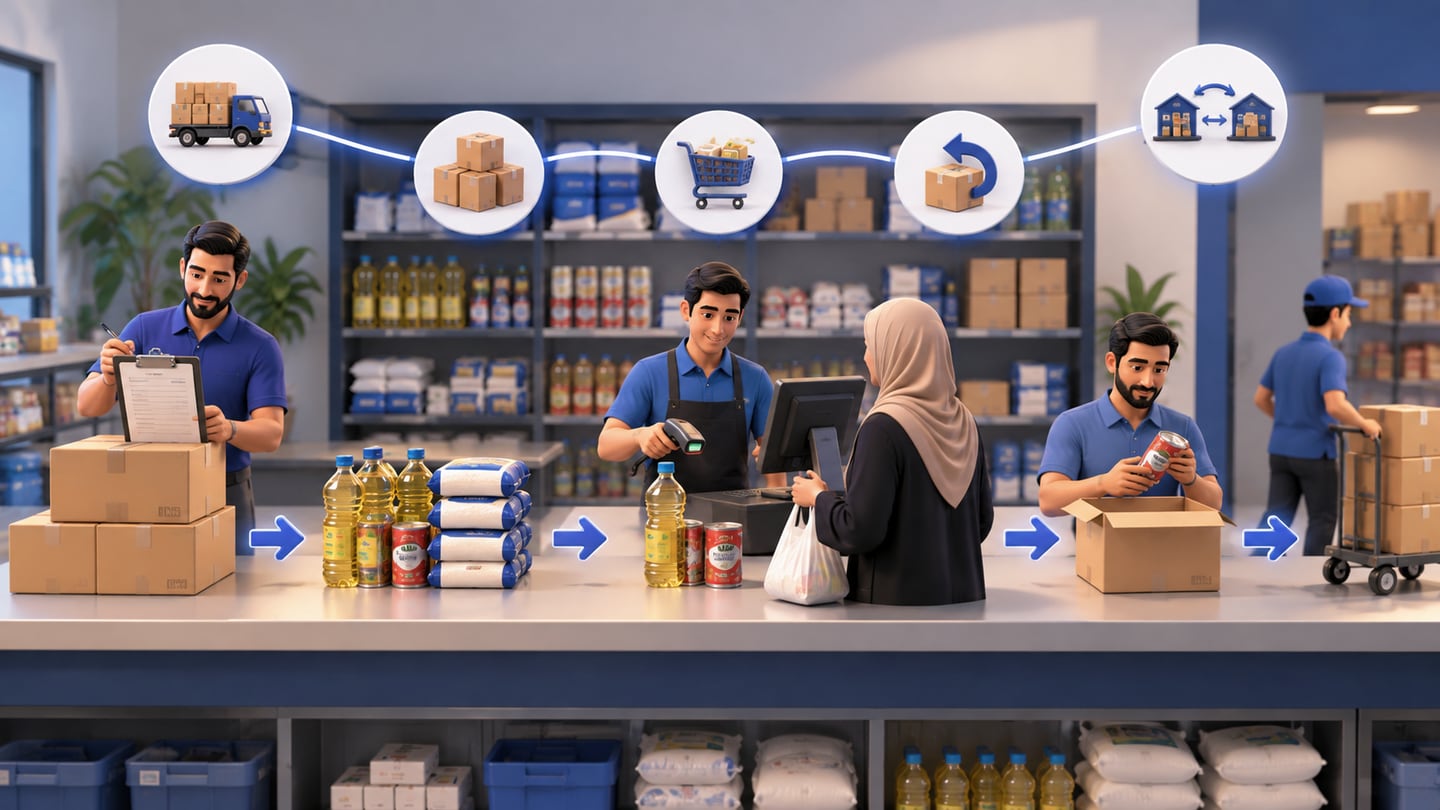
Inventory should not be a separate afterthought. A sale reduces stock. A purchase increases stock. A return adjusts stock. A transfer moves stock between branches. If these events are disconnected, reports become unreliable.
During a demo, enter a supplier purchase, sell part of the quantity, process a return, and check expected stock. If the POS cannot explain why quantity changed, the owner will still need manual reconciliation.
For ecommerce sellers, inventory sync is even more important. An online order and an in-store POS sale may compete for the same quantity. A connected system helps protect the customer experience by reducing overselling.
08
Compare reporting quality
Reports should help the owner decide what to do next. A basic daily total is useful, but stronger reports show top products, category performance, payment methods, expenses, branches, staff activity, customers, and inventory trends.
Ask whether reports are understandable for the owner, not only for the vendor. Can the owner read sales by day, branch, item, and payment method? Can low-stock items be found quickly? Can purchases and expenses be reviewed with sales? If the answer requires exporting to multiple files, the POS comparison is not complete.
09
Compare price with clear caveats
Pricing should be checked on the current pricing page before buying. Public RA8M materials currently describe Basic, Advanced, Manufacture, and Ecommerce add-on options, but prices and plan details can change. The right comparison includes subscription cost, setup effort, hardware, training, support, ecommerce add-ons, and the cost of manual work.
Do not choose software only because it is free or cheap. Free cashier software can be useful for learning, but it may lack offline behavior, inventory depth, purchase management, support, reporting, roles, or ecommerce integration. Paid software should justify itself through better control and saved effort.
Review Pricing and test the plan against your daily workflow before deciding.
10
When RA8M fits and when another setup may be enough
RA8M fits Iraq businesses that want Arabic-first POS, inventory, purchases, finance, reports, roles, branches, and ecommerce in one connected system. It is relevant for restaurants, cafés, retail shops, supermarkets, pharmacies, salons, manufacturers, service businesses, ecommerce sellers, and multi-branch operators.
A simpler cashier may be enough for a very small business with one employee, few items, no complex inventory, and no online store. If the owner only needs a receipt and daily total, a lightweight setup can be acceptable. But once the business needs stock accuracy, supplier tracking, branch visibility, ecommerce sync, or better reports, a connected platform is safer.
Review RA8M POS, Industries, and Ecommerce when comparing the fit.
11
A practical demo script
Do not accept a generic demo. Bring a real example from your business. Create products, sell three items, apply one discount, process one return, enter one purchase bill, check stock, close cash, and read the report. If you have branches, test branch access and transfers. If you sell online, test an online order and verify stock sync.
Also let the actual cashier test the screen. The owner may like a dashboard, but the cashier must use the POS under pressure. Arabic labels, button size, speed, receipt clarity, and error handling matter during real work.
12
Conclusion: compare the system against your real day
The best POS software comparison is not about finding the tool with the most features. It is about finding the system that matches how the business sells, buys, counts, reports, and grows. Iraq businesses should prioritize Arabic usability, offline-ready selling, inventory discipline, invoices, reports, ecommerce sync, support, and total operating cost.
Start with one full-day workflow and test it honestly. If the POS can handle that day cleanly, it is worth deeper consideration. If the workflow breaks into notebooks and spreadsheets, keep comparing.
Frequently asked questions
How should I compare POS software in Iraq?
Compare real workflows: cashier speed, Arabic interface, offline sales, inventory, purchases, invoices, reports, ecommerce, branches, support, training, and total cost.
Is the cheapest POS always better?
No. A cheap POS can become expensive if it creates stock errors, slow checkout, manual reports, weak support, or separate ecommerce work.
Why does offline POS matter in Iraq?
Offline-ready POS helps teams keep selling and printing receipts during internet interruptions, then sync data when the connection returns.
Does RA8M fit restaurants and retail shops?
Yes. RA8M is relevant for restaurants, cafés, retail shops, supermarkets, pharmacies, salons, ecommerce sellers, and multi-branch operators in Iraq.
Should I compare POS and ecommerce together?
Yes if you sell online or plan to. POS and ecommerce should share products, stock, orders, payments, and reports to avoid overselling and manual updates.
Written by
RA8M Team
Practical guides for restaurants, shops, and operations teams
Next step
Try RA8M with data close to your operation
Read next
Related RA8M guides
Best-in-Iraq Comparisons
Best POS System in Iraq: Features, Cost and Checklist
Read article
Ra8m Blog
Offline POS System in Iraq 2026 — Complete Guide
Read article
Retail Shops
Shoe Store Software in Iraq: POS, Sizes, Stock and Reports
Read article
Restaurant and Cafe POS
Cafe POS in Iraq: Faster Orders, Stock and Reports
Read article
Pricing and Subscription
Cashier Software Price in Iraq: How to Compare Real Cost
Read article