Foodics and Loyverse Alternatives in Iraq: POS Checklist
Compare Foodics and Loyverse alternatives for Iraq businesses by workflow fit, Arabic cashier needs, offline selling, inventory, branches, reports, and ecommerce.
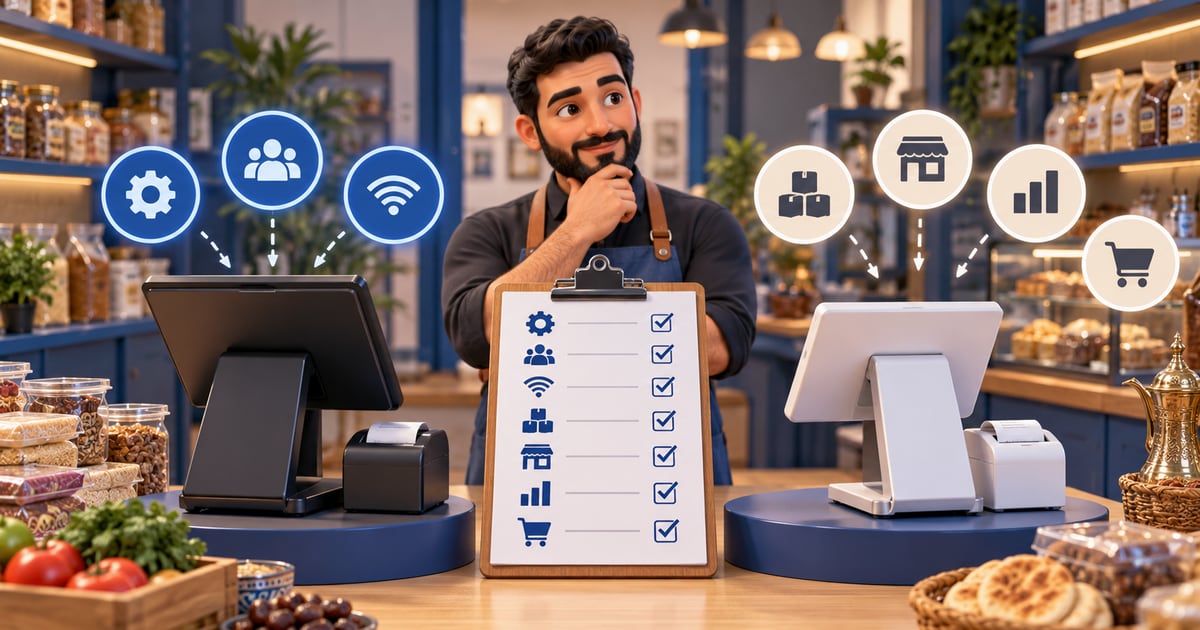
A good Foodics or Loyverse alternative in Iraq should be judged by daily operating fit: Arabic cashier screens, offline selling, inventory deduction, reports, roles, branches, and whether ecommerce orders share the same stock. RA8M is relevant when a business wants POS, inventory, purchases, finance, reports, and ecommerce connected in one Arabic-first system instead of running separate tools.
01
Foodics and Loyverse Alternatives in Iraq: POS Checklist
Choosing between POS tools is not only a software comparison. For a restaurant, café, shop, supermarket, salon, or online seller in Iraq, the better question is: which system will make daily selling, stock, staff control, reports, and online orders easier for your team?
Quick answer: A good Foodics or Loyverse alternative in Iraq should be judged by daily operating fit: Arabic cashier screens, offline selling, inventory deduction, reports, roles, branches, and whether ecommerce orders share the same stock. RA8M is relevant when a business wants POS, inventory, purchases, finance, reports, and ecommerce connected in one Arabic-first system instead of running separate tools.
02
What does “alternative” really mean?
A Foodics alternative or Loyverse alternative does not mean a copy of the same product. It means a POS option that can solve the same buying problem for your business: taking orders, recording sales, managing staff, tracking stock, and giving the owner usable reports.
For an Iraq business, the comparison should include local operating realities. Does the cashier flow work naturally in Arabic and English? Can the team continue selling when the internet drops? Are prices and totals clear in IQD? Can the owner see stock, payments, branches, and reports without rebuilding numbers in spreadsheets?
Use the competitor name only as the starting point. The final decision should be based on the workflow you need, not the brand you heard first.
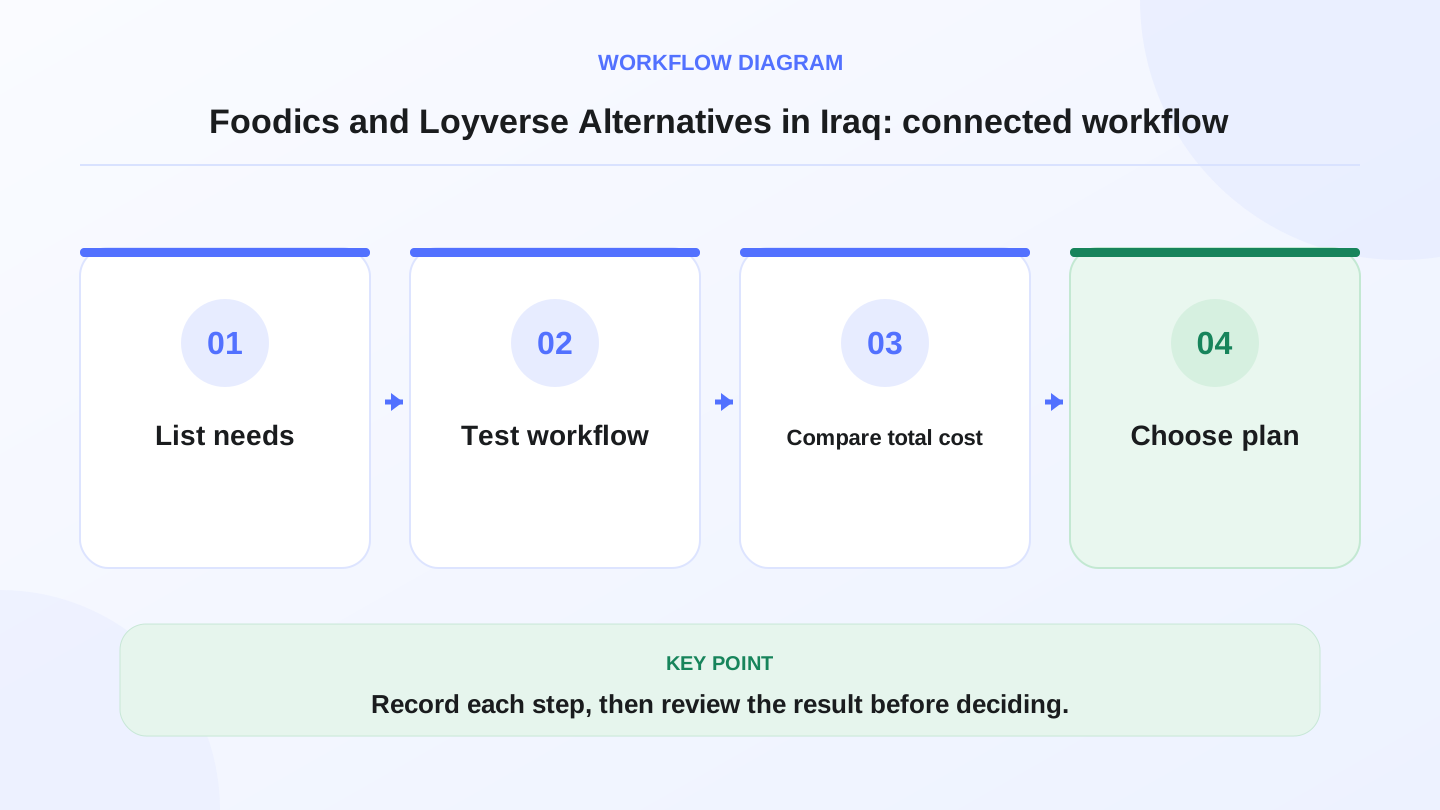
A practical sequence has four connected steps: List needs, Test workflow, Compare total cost, Choose plan. Recording each step makes the daily result easier to review.
03
Start with your business type, not the software name
A café has different pressure from an electronics shop. A restaurant needs fast order entry, modifiers, receipts, table or delivery routines, and ingredient or item deduction where used. A retail shop needs barcode sales, variants, discounts, customers, returns, and stock movement. A multi-branch operator needs branch visibility and role control.
Before comparing platforms, write your top five daily workflows. For example: morning stock check, cashier sale, discount approval, purchase from supplier, and end-of-day report. Then test every POS option against those workflows.
If you sell both in-store and online, include ecommerce from the beginning. A POS that handles counter sales but leaves online orders in a separate sheet may create overselling and weak reporting later.
04
Comparison checklist for Iraq POS buyers
The best checklist is practical. Do not compare only feature names; compare the outcome each feature creates.
This table is a buying filter, not a ranking. Vendor features, availability, and pricing can change, so verify current pages before buying.
| Decision area | What to check | Why it matters in Iraq |
|---|---|---|
| Arabic cashier | RTL screens, Arabic item names, readable receipts | Cashiers and customers need clear daily flow |
| Offline selling | Can sales continue without internet and sync later? | Internet interruptions should not stop the cashier |
| Inventory | Sales, purchases, transfers, adjustments, low stock | Owners need trusted stock numbers |
| Restaurants | Modifiers, orders, receipts, recipes or item deduction | Busy cafés and restaurants need fast service |
| Retail | Barcode, variants, discounts, customers, returns | Shops need speed and stock accuracy |
| Branches and roles | Staff permissions, branch-level visibility | Protects money, inventory, and reports |
| Ecommerce | Online storefront and stock sync | Prevents separate online and in-store records |
| Reports | Daily sales, items, payments, inventory, finance | Turns POS data into management decisions |
05
Why Arabic-first matters more than translation
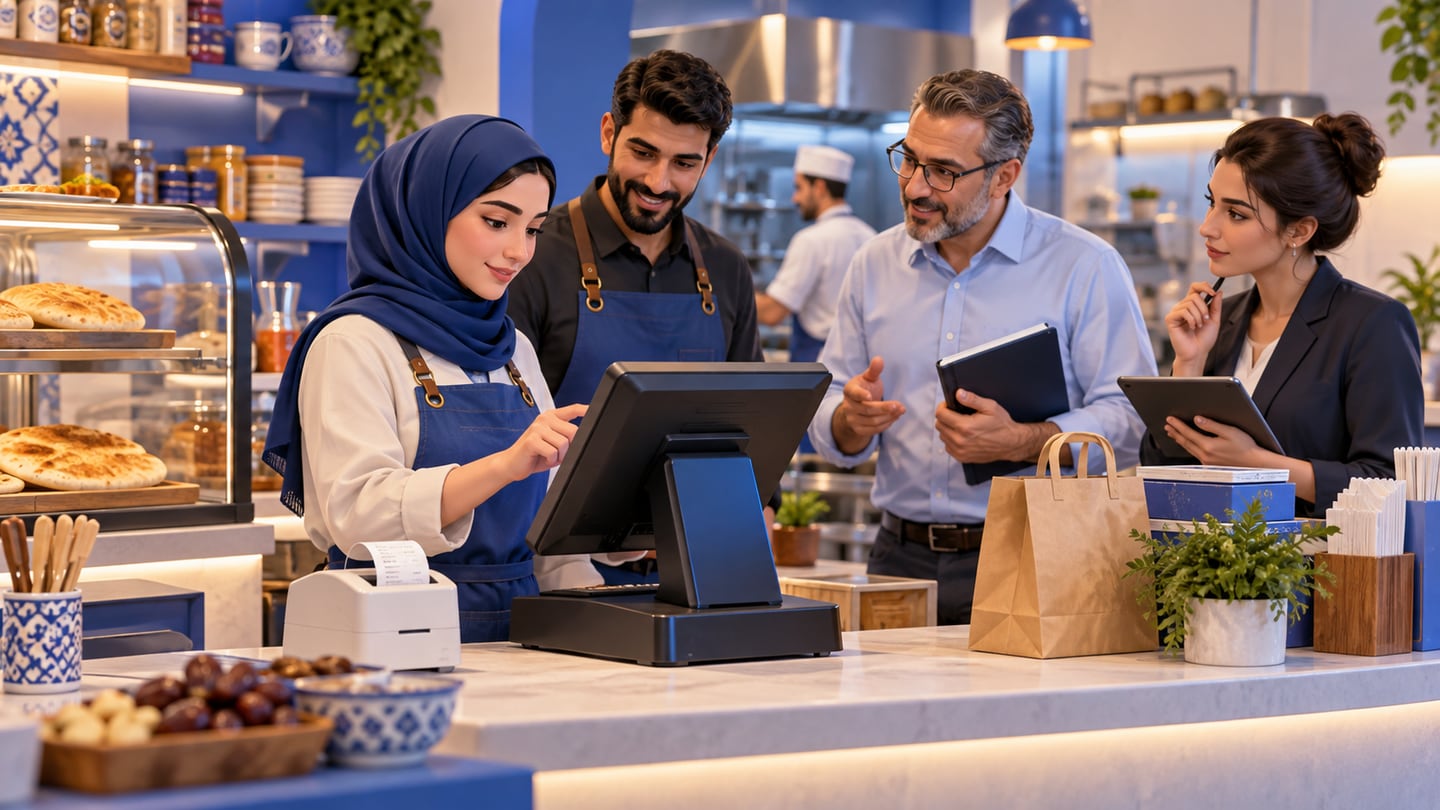
Arabic-first POS is not just a translated menu. It means the cashier, receipt, product names, categories, totals, and staff habits make sense for Arabic teams. In Iraq, many businesses operate with Arabic-speaking cashiers, English-speaking managers, suppliers, and sometimes mixed reporting needs.
A bilingual system should support both sides without forcing the daily cashier to work in awkward language. RA8M is Arabic-first and bilingual, with RTL Arabic workflows and English support. That fit matters when training staff, handling returns, checking receipts, or explaining reports to owners.
If the team avoids the software because the language flow feels wrong, even a strong feature list will fail in practice.
06
Offline POS is a business continuity feature
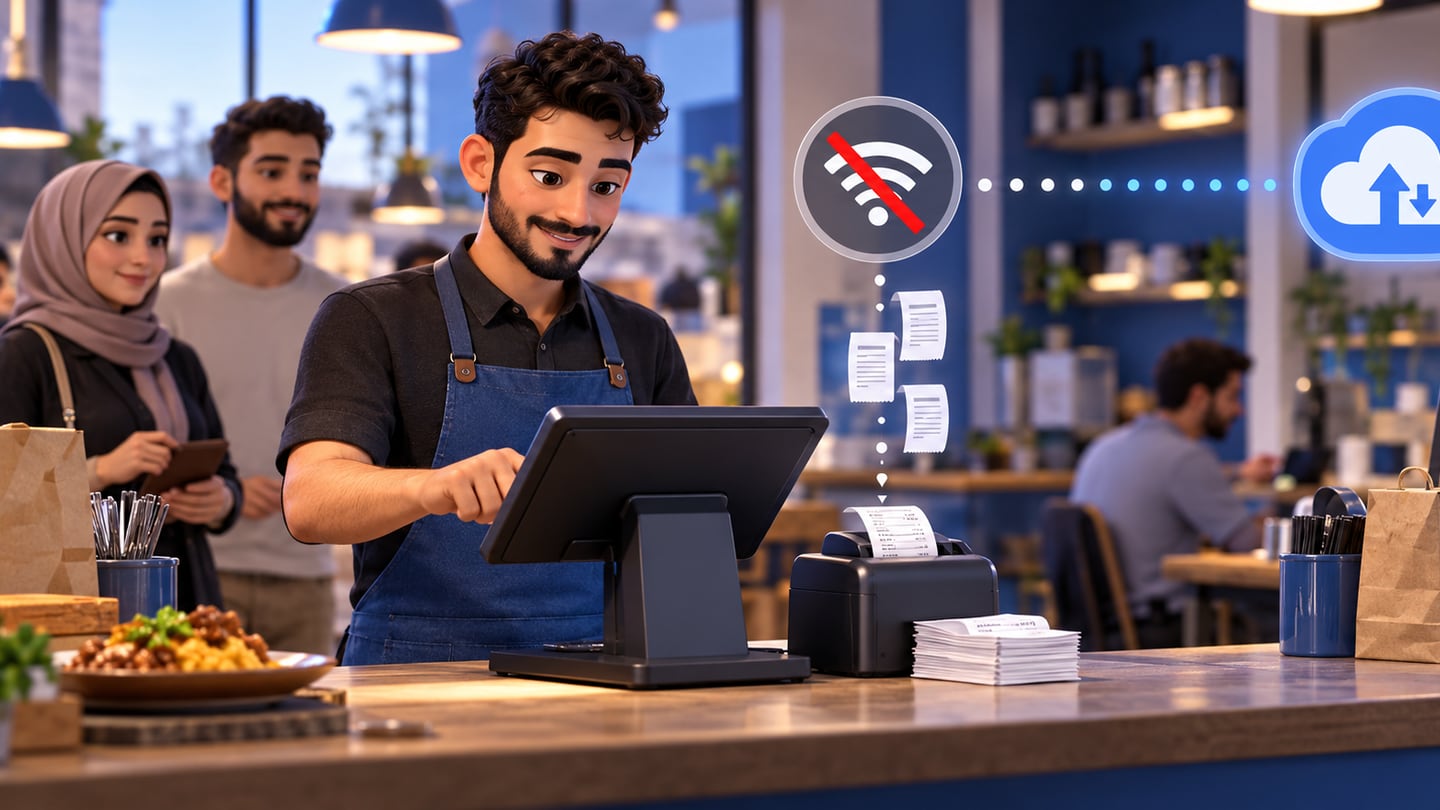
Restaurants and shops cannot pause sales every time the internet becomes unstable. A practical POS in Iraq should keep the cashier selling, recording transactions, and printing receipts offline, then sync when the connection returns.
Offline support is not only technical comfort. It protects the sales line, customer experience, and end-of-day records. If staff write orders on paper during outages, someone must re-enter them later. That creates missing items, wrong totals, and stock differences.
RA8M POS is offline-ready and syncs later. When comparing alternatives, test this directly: disconnect the internet, create a sale, print or record the receipt, reconnect, and verify the report.
07
Worked example: compare manual cost, not only subscription
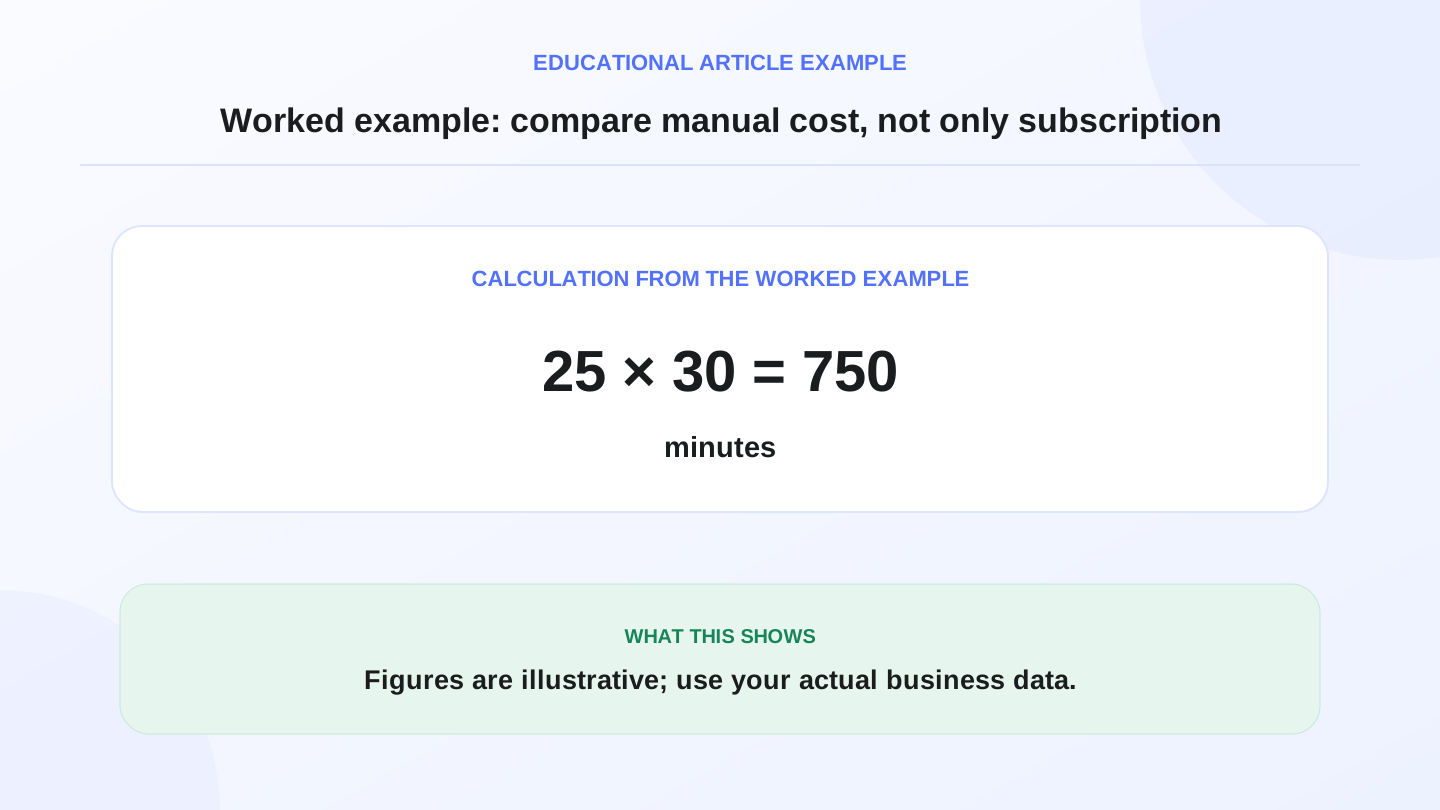
Assume a café spends 25 minutes every day fixing separate POS, inventory, and online order records. That is 25 × 30 = 750 minutes per month, or 12.5 hours.
If the staff hour is estimated at 6,000 IQD, the hidden monthly work cost is 12.5 × 6,000 = 75,000 IQD. If the same workflow also causes two stock mistakes worth 15,000 IQD each, the total hidden cost becomes 75,000 + 30,000 = 105,000 IQD.
These numbers are illustrative, not official pricing. The point is simple: compare the full operating cost. A tool with a lower subscription can still be expensive if it leaves your team correcting stock, reports, and orders manually.
08
When RA8M fits as an alternative
RA8M fits when you want POS connected to inventory, customers, purchases, finance, reports, roles, branches, and ecommerce. It is especially relevant for Iraq restaurants, cafés, retail shops, supermarkets, pharmacies, salons, service businesses, and multi-branch operators that need Arabic-first workflows and offline-ready selling.
For restaurant and café operators, start with RA8M POS and the industries page. For businesses selling through a website, Instagram, WhatsApp, or delivery workflows, review RA8M Ecommerce because the strongest value comes from connecting online orders to the same stock record.
RA8M is not the right fit if you only need a temporary calculator-style cash register and have no stock, no staff, no reporting needs, and no plan to sell online.
09
How to test a POS alternative before switching
Build a small test using real data. Add 20 products, three categories, two staff roles, one discount rule, one supplier purchase, and one return. Then run a normal day: sell with barcode or touch, apply a discount, record payment, close the register, and check inventory.
If you are a restaurant, test modifiers and order changes. If you are retail, test variants and returns. If you sell online, test one online order and make sure stock changes in the same system.
Do not skip staff testing. A POS that looks good to the owner but confuses the cashier will create workarounds.
10
Pricing and contract questions to ask
Before buying any POS alternative, ask what is included, what costs extra, whether ecommerce is an add-on, whether custom domains or integrations cost more, and what training or setup support is available. Also ask how data export works if you later move systems.
For RA8M, public pages currently show Basic, Advanced, and Manufacture plans, plus an Ecommerce add-on. Pricing may change, so verify the current details on pricing before making a buying decision.
11
Conclusion: choose the workflow, not the logo
Foodics and Loyverse alternatives should be judged by fit, not by a checklist copied from another business. For Iraq operators, the strongest POS choice is usually the one your cashier can use in Arabic, that keeps selling offline, connects stock and reports, protects roles, and supports ecommerce when you need it. Explore RA8M POS, industries, and pricing to compare the workflow against your real day.
Frequently asked questions
What should I compare when looking for a Foodics alternative?
Compare the actual workflow: cashier speed, Arabic support, offline selling, inventory, branches, reports, roles, payments, ecommerce, and the total time your team spends around the system.
Is Loyverse enough for every small business?
A simple POS may be enough for a very small operation, but growing Iraq businesses often need stronger Arabic workflows, connected inventory, purchases, finance reports, branches, and ecommerce.
Why does offline POS matter in Iraq?
Offline POS matters because sales should continue during internet interruptions. The cashier should keep selling and printing, then sync transactions when the connection returns.
Does RA8M replace restaurant, retail, and ecommerce tools?
RA8M can connect POS, inventory, purchases, finance, reports, roles, branches, customers, and ecommerce in one system, which reduces duplicate entry for many Iraq businesses.
Should I choose the cheapest POS alternative?
Not automatically. A cheaper tool can become expensive if it creates manual stock fixes, missing reports, weak Arabic workflows, or separate online and in-store records.
Written by
RA8M Team
Practical guides for restaurants, shops, and operations teams
Next step
Try RA8M with data close to your operation
Read next