Daftra and Odoo Alternatives in Iraq: POS, Accounting and Inventory
A practical guide for Iraq SMBs comparing Daftra and Odoo alternatives by POS, Arabic workflows, inventory, invoices, finance, branches, and ecommerce.

A good Daftra or Odoo alternative in Iraq should match the business workflow, not only the software category. Compare POS speed, Arabic and English usability, offline cashier selling, inventory, purchases, invoices, finance, reports, roles, branches, ecommerce, setup effort, and total operating cost. RA8M fits SMBs that want POS-led operations connected to stock, finance, and ecommerce.
01
Daftra and Odoo Alternatives in Iraq: POS, Accounting and Inventory
This comparison is about migrating from Daftra or Odoo and switching costs. If you are choosing a first system for a small Iraq business, start with the daily accounting test, then return to migration details.
Businesses searching for a Daftra alternative or Odoo alternative are usually not only comparing brand names. They are asking a practical question: which system will help the team sell, track stock, issue invoices, review money, and manage daily operations with less friction?
Quick answer: A good Daftra or Odoo alternative in Iraq should match the business workflow, not only the software category. Compare POS speed, Arabic and English usability, offline cashier selling, inventory, purchases, invoices, finance, reports, roles, branches, ecommerce, setup effort, and total operating cost. RA8M fits SMBs that want POS-led operations connected to stock, finance, and ecommerce.
02
What is the real job behind a Daftra or Odoo alternative?
The real job is operational control. A restaurant wants fast cashier sales and ingredient deduction. A retail shop wants barcode selling, variants, discounts, and inventory. A supermarket wants high-volume checkout, supplier purchasing, low-stock signals, and daily reports. A multi-branch operator wants staff roles and branch visibility.
Accounting and ERP features matter, but they should not slow the front line. If the cashier screen is hard to use, if Arabic labels are unclear, or if staff need many manual steps after every sale, the owner will not get reliable data. Good reports depend on clean daily behavior.
RA8M should be evaluated as an Arabic-first POS and ecommerce platform with inventory, purchases, finance, invoices, reports, roles, and branches connected around daily selling. It is not positioned as a generic global ERP for every possible industry; it is built for Iraq businesses that need sales and operations in one practical system.
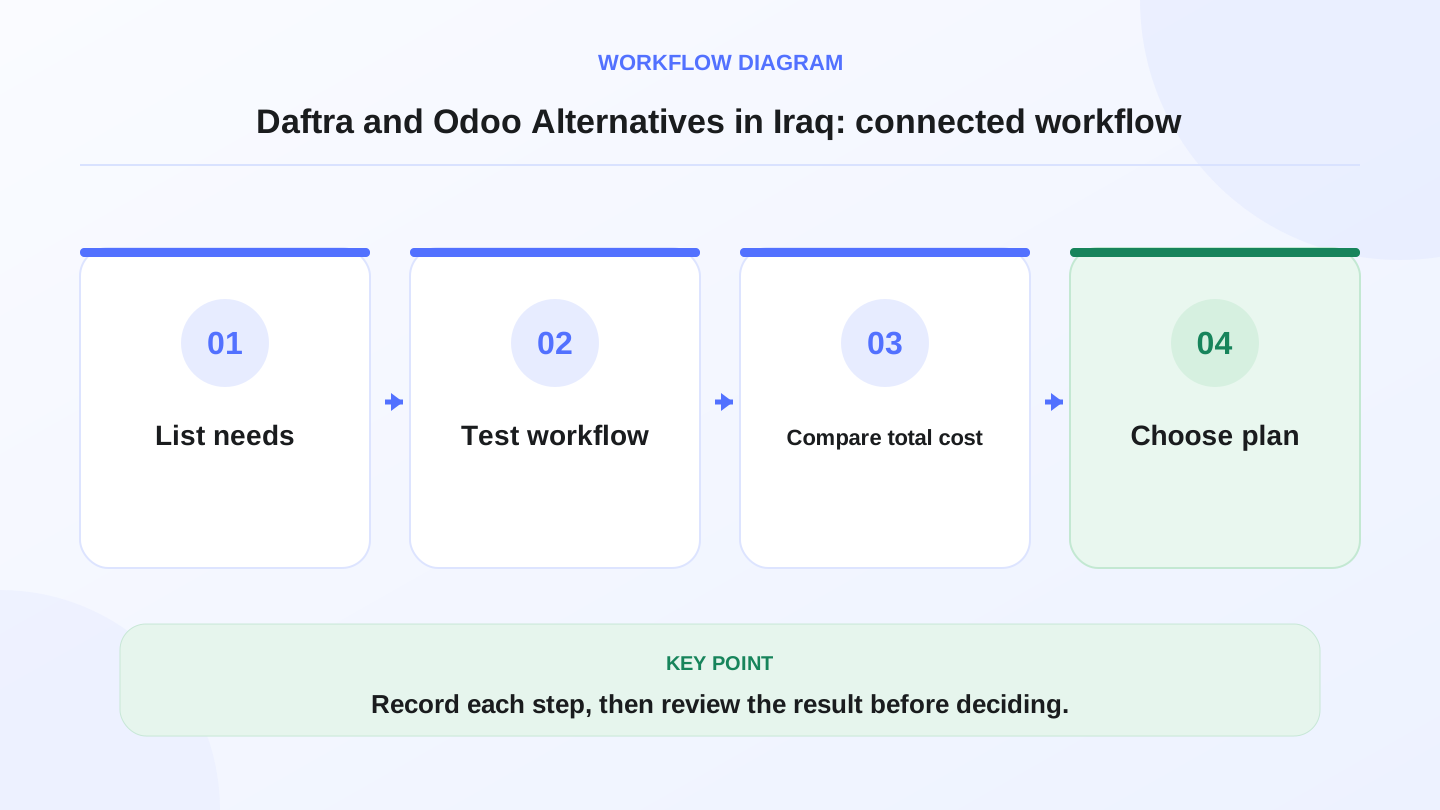
A practical sequence has four connected steps: List needs, Test workflow, Compare total cost, Choose plan. Recording each step makes the daily result easier to review.
03
Comparison table: what to check before switching
Use this table to compare alternatives fairly. It is not a claim that one provider is always better. Features, pricing, and availability can change, so verify current details with each provider before buying.
| Decision area | What to check | Why it matters in Iraq |
|---|---|---|
| POS workflow | Touch screen, barcode, discounts, receipts, returns | Cashiers need speed during busy hours |
| Arabic usability | RTL screens, Arabic labels, bilingual teams | Staff may operate mainly in Arabic |
| Offline selling | Can the cashier continue without internet? | Connectivity interruptions should not stop sales |
| Inventory | Sales deduction, purchases, adjustments, low stock | Stock errors affect cash and customer trust |
| Finance and invoices | Payments, expenses, invoices, reports | Owners need a clean money trail |
| Branches and roles | Permissions and branch visibility | Growing teams need control without micromanagement |
| Ecommerce | Online orders connected to POS stock | Prevents disconnected online and in-store inventory |
04
POS-first or ERP-first: which approach fits?
An ERP-first setup may be useful for businesses with many departments, custom approval flows, complex finance rules, and a dedicated person to configure and maintain the system. But many Iraq SMBs do not start there. They start with the cashier, the stockroom, supplier bills, payments, and daily reports.
A POS-first system fits when sales are the center of the operation. The cashier records the transaction, inventory changes automatically, purchases replenish stock, finance records payments and expenses, and reports give the owner enough visibility to act. For restaurants, cafés, shops, supermarkets, salons, and pharmacies, this can be more practical than forcing staff through an overly complex setup.

05
Worked example: manual work after disconnected sales
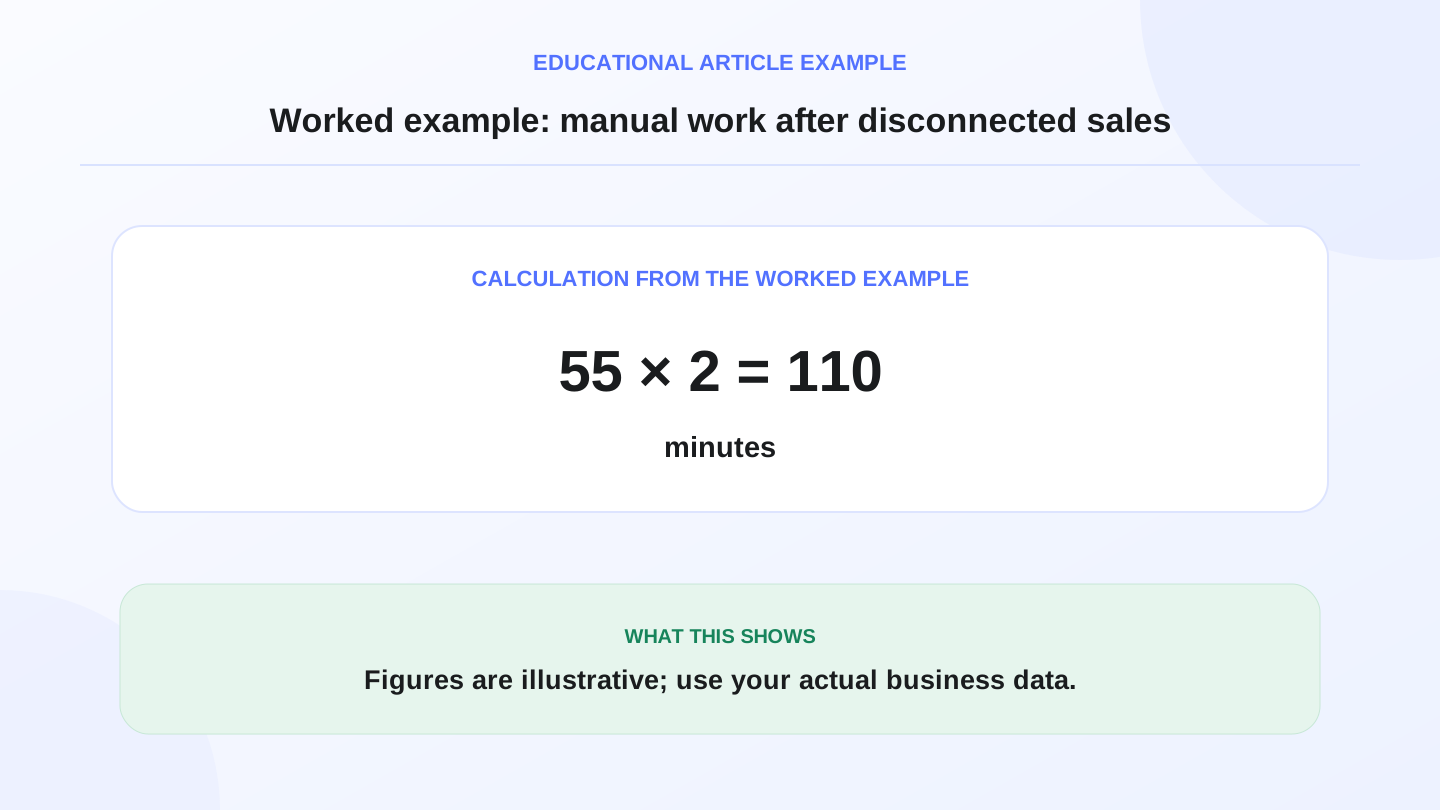
Assume a shop has 55 sales per day. If each sale requires 2 extra minutes after checkout to update a spreadsheet, check inventory, or re-enter invoice data, that is 55 × 2 = 110 minutes per day.
Across 30 days, the hidden operating time becomes 110 × 30 = 3,300 minutes, or 55 hours per month. If one employee hour is valued at 5,000 IQD for planning purposes, that manual time represents 55 × 5,000 = 275,000 IQD per month.
These numbers are illustrative. Replace them with your actual sales count, staff time, and cost. The point is to compare total operating effort, not only subscription price.
06
Inventory and purchases should not be separate from sales
Many software problems appear as inventory problems. The system may show stock that does not exist, purchases may be entered late, or branch transfers may be recorded in messages instead of the system. When POS, purchases, inventory, and reports are disconnected, the owner spends time reconciling instead of deciding.
A practical alternative should record supplier purchases, increase stock, reduce stock through POS, explain adjustments, and show reports. For multi-branch operators, the system should also show which branch owns the stock and who can approve changes.

07
Finance workflows: useful control, not legal advice
Software can make finance cleaner by connecting invoices, payments, expenses, purchases, cash register logs, and reports. That helps the owner see money movement more clearly. However, software should not be treated as a substitute for qualified accounting, tax, or legal advice.
If your decision depends on formal compliance, tax filing, or accounting treatment, confirm requirements with a qualified professional or the relevant authority. In the software comparison, focus on whether the system can keep records clean enough for your team and advisors to review.
08
Ecommerce is part of the operating system
For many Iraq businesses, ecommerce is not a separate website project. A clothing shop, supermarket, restaurant, or pharmacy may receive online orders while the physical store is still selling. If the ecommerce system does not connect with POS inventory, the business risks overselling, delayed confirmation, and manual stock checking.
RA8M Ecommerce is described as a branded storefront connected to POS products, stock, orders, payment and delivery workflows. Review RA8M Ecommerce if online and in-store selling should share the same product record.
09
When does RA8M fit, and when might another alternative fit?
RA8M fits businesses that want Arabic-first and bilingual software for POS, inventory, purchases, finance, reports, roles, branches, and ecommerce. It is especially relevant for Iraq shops, restaurants, cafés, supermarkets, pharmacies, salons, service businesses, manufacturers, and multi-branch operators.
Another system may fit better if the business needs heavy custom ERP development, unusual industry workflows, or a dedicated implementation team managing complex modules. A simple invoicing tool may also be enough if the business has no cashier, no stock, no branches, and very few daily transactions.
10
Implementation checklist before moving systems
Before switching from any current tool, list the workflows you must preserve: product names, units, barcodes, customer accounts, supplier bills, invoices, payment methods, opening stock, staff roles, branches, and existing reports. Then decide what must migrate immediately and what can start fresh.
Test the new system with one week of realistic operations before fully switching. Run sample sales, purchases, returns, stock adjustments, and reports. If the team cannot complete the daily routine, fix the workflow before adding more features.
11
Conclusion: choose the alternative that fits daily work
The best Daftra or Odoo alternative for an Iraq business is the one your team can use correctly every day. Prioritize POS speed, Arabic workflows, offline continuity, inventory accuracy, finance visibility, branch control, ecommerce sync, and clear reports.
Review RA8M POS, industries, and pricing. Pricing can change, so verify current plan details before buying.
Frequently asked questions
What should I compare in a Daftra or Odoo alternative?
Compare POS speed, Arabic usability, inventory, purchases, invoices, finance, branch controls, ecommerce, setup effort, support, reporting, and the time your team spends maintaining the system.
Is RA8M an accounting-only system?
No. RA8M is POS-led business software that connects cashier sales with inventory, purchases, finance, invoices, reports, branches, roles, and ecommerce workflows.
When is a larger ERP better than a simpler POS platform?
A larger ERP may fit companies with complex customization, many departments, and dedicated implementation teams. A POS-led platform may fit shops and restaurants that need faster daily operation.
Does offline POS matter when comparing alternatives?
Yes. In Iraq, cashier work should continue during internet interruptions. Offline-ready POS helps staff keep selling and sync later when the connection returns.
Should I verify accounting or tax rules separately?
Yes. Software can organize invoices and finance workflows, but formal tax, legal, and accounting decisions should be checked with qualified professionals or authorities.
Written by
RA8M Team
Practical guides for restaurants, shops, and operations teams
Next step