Best Online Store in Iraq: What Shoppers and Owners Should Look For
What makes the best online store in Iraq trustworthy for customers and practical for owners: COD, delivery, ZainCash and FIB, Arabic UX, returns, reviews, and unified stock on Ra8m.

The best online store in Iraq is not a single brand ranking—it is a store that shows real prices in Iraqi Dinar, offers cash on delivery and trusted electronic wallets, explains delivery areas and timing honestly, supports clear Arabic browsing, handles returns without hiding policy, and connects online orders to the same stock the shop sells from. For owners, the best setup is a platform like Ra8m that links ecommerce to POS inventory, payments, and reports without inventing fake popularity lists.
01
Best Online Store in Iraq: What Shoppers and Owners Should Look For
Iraqi customers shop on Instagram, WhatsApp, and dedicated storefronts every day. Owners want more orders without losing control of stock or delivery promises. The phrase best online store in Iraq often appears in ads, but it is rarely defined: shoppers mean “I will get what I paid for,” while owners mean “I can fulfill orders without chaos.” This guide explains those signals on both sides—and how to build them on a connected platform like Ra8m Ecommerce—without ranking unrelated third-party shops or inventing market statistics.
Short answer: The best online store in Iraq is one that shows honest prices in IQD, supports cash on delivery plus trusted wallets such as Zain Cash and First Iraqi Bank (FIB), explains delivery clearly, works well in Arabic with RTL layout, publishes a fair return policy, and keeps online stock aligned with the physical shop. Owners reach that standard faster when ecommerce shares POS inventory, orders, and reports on Ra8m.
02
What Does “Best Online Store in Iraq” Mean for Shoppers?
For a customer in Baghdad, Basra, Erbil, or a smaller city, “best” is operational trust, not a trophy logo. Shoppers ask practical questions before they tap “confirm order”: Is the total in Iraqi Dinar final? Will delivery reach my neighborhood? Can I pay cash when the parcel arrives? If something is wrong, can I return it or reach a human?
A strong Iraqi storefront answers those questions on the product page and checkout, not only in fine print. Contact details should include a working phone or WhatsApp line, business hours in local time, and realistic delivery windows. Photos should match what ships—especially for clothing sizes, phone models, and grocery weights.
Shoppers also watch for consistency. If yesterday’s price was 25,000 IQD and checkout suddenly shows 30,000 IQD without explanation, trust drops. If the store promises “free delivery” but the driver asks for an extra fee, the customer remembers—and tells friends. The best online store in Iraq treats checkout totals, delivery fees, and payment method as part of the product promise, not as surprises at the door.

03
What Does “Best” Mean for the Business Owner?
Owners define quality differently. They need fewer canceled orders, less time copying WhatsApp messages into notebooks, and inventory that does not sell the same unit twice—once online and once in the shop. The best online store in Iraq for an owner is therefore a system: catalog, stock, payments, delivery status, and reports in one place.
Disconnected workflows create the problems customers feel. A popular item sells out at the counter while the website still shows “available.” Staff accept COD orders for products that were never reserved. Finance discovers electronic wallet payments only when someone manually checks a phone app at month end. Fixing those issues is what separates a hobby page from a store you can scale.
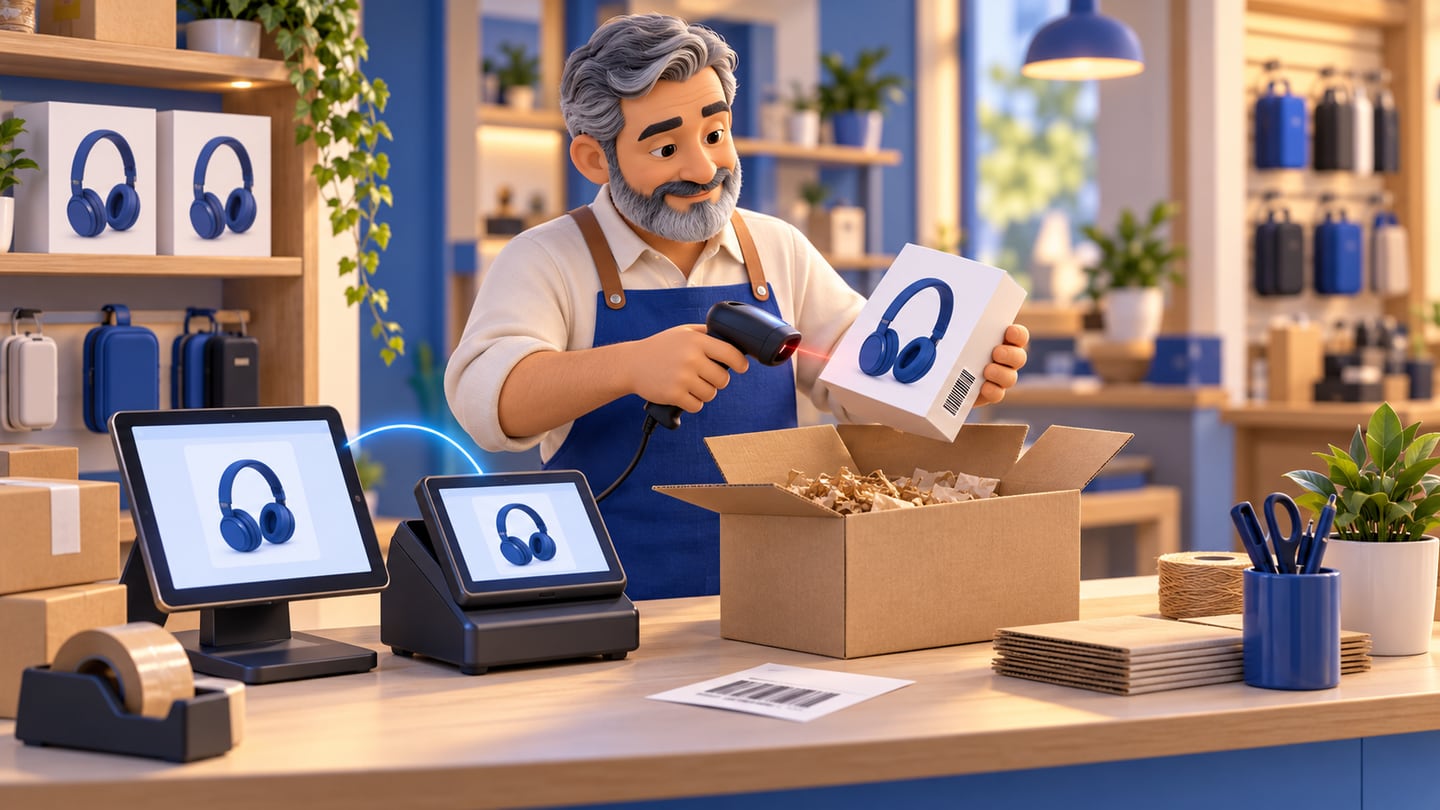
Connecting POS and ecommerce is the operational heart. When every sale—whether scanned at the register or confirmed online—updates the same quantity field, owners can promise availability with confidence. Ra8m is built around that idea: ecommerce is an add-on on top of POS plans, not a separate universe of spreadsheets.
04
Cash on Delivery: Still the Default, Still the Test of Honesty
Cash on delivery (COD) remains the default payment method for online shopping in Iraq because it reduces buyer risk. Customers pay when they receive the parcel, which fits local habits and builds confidence for first-time orders. For the store, COD is not “free”—it adds delivery cost, return trips, and cash handling—but it is often necessary to win market share.
The best online store in Iraq handles COD with clear rules:
Show the full payable amount on the confirmation screen, including delivery.
Train drivers or delivery partners to carry exact change expectations when possible.
Mark orders as delivered only when payment is collected, so reports stay accurate.
Define what happens if the customer refuses the parcel (restocking fee, who pays return delivery).
COD should appear as a first-class payment option in checkout, not as “message us on WhatsApp to arrange.” Electronic options can sit beside COD; they should not hide it if most of your buyers expect it.
05
Electronic Wallets and Cards: ZainCash, FIB, and Beyond
More Iraqi shoppers now pay electronically for convenience, especially for repeat orders or higher-value items. Zain Cash is widely recognized for mobile wallet payments. First Iraqi Bank (FIB) and other licensed institutions offer banking and payment services that businesses integrate when they outgrow cash-only workflows.
For shoppers, the best online store in Iraq labels wallet payments clearly: which provider, whether fees are included, and what proof they receive (SMS, in-app notification, receipt). For owners, integration means the order status updates when payment succeeds—reducing “I paid but you did not ship” disputes.
Card acceptance depends on gateway availability and business setup; the Central Bank of Iraq supervises the banking and payment environment. Regardless of method, reconcile wallet and card settlements against order reports weekly, not only at year end.
| Method | Shopper benefit | Owner responsibility |
|---|---|---|
| Cash on delivery | Pay after seeing the product | Accurate totals, trained delivery, clear refused-delivery policy |
| Zain Cash / mobile wallet | Fast payment from phone | Confirm payment before shipping; match app ledger to orders |
| Bank / FIB workflows | Suitable for larger transfers | Document reference numbers on the order |
| Card (when enabled) | Familiar for some buyers | Understand gateway fees and settlement timing |
06
Delivery: Areas, Timing, and Status Customers Can See
Delivery makes or breaks ecommerce in Iraq. Cities differ by neighborhood access, traffic, and courier habits. The best online store in Iraq states where it delivers, how long preparation usually takes, and how the customer tracks status—from “confirmed” to “out for delivery” to “delivered.”
Owners should avoid promising “same day everywhere” unless operations can prove it. Better to under-promise and over-deliver than the opposite. Define cut-off times (“orders before 4 p.m. ship today”) and peak-day exceptions (holidays, sandstorms, curfew-like disruptions).
Integration with a delivery company or an in-house driver team still needs software support: address fields that accept Iraqi landmarks, phone numbers with leading zero, and notes for building or alley instructions. When ecommerce connects to POS, warehouse staff see online orders in the same queue as phone orders—reducing missed parcels.
If you also sell from a physical location, link delivery policy to inventory accuracy: nothing erodes trust faster than accepting an order the shop cannot pack.
07
Arabic UX, RTL, and Why Translation Alone Fails
Iraqi customers expect Arabic interfaces that read naturally—not stiff literal translations. The best online store in Iraq implements right-to-left (RTL) layout correctly: menus, product cards, and checkout fields mirror properly; numbers and phone codes remain readable; buttons do not clip long Arabic product names.
Google’s guidance on internationalization and RTL styling reminds teams that locale is more than language strings: dates, currency labels, and typography matter. Show prices as IQD or د.ع consistently. Use product titles shoppers actually search for in Arabic, while keeping SKUs or model numbers in Latin characters where needed.
Admin panels should be Arabic-friendly too. If staff enter orders and adjust stock in Arabic during busy hours, forcing English-only back office tools slows fulfillment. Ra8m supports Arabic and English workflows across POS and ecommerce so the team and the storefront speak the same language.

08
Returns, Exchanges, and Policies That Build Long-Term Trust
Returns are sensitive in COD markets. Customers worry they will lose money if size or color is wrong. Owners worry about abuse. The best online store in Iraq publishes a short, visible return policy: how many days, which products are excluded (cosmetics, perishables), who pays return delivery, and how refunds work for wallet versus COD orders.
Train customer service to apply the policy consistently. A single unfair refusal becomes a social media screenshot; a fair exchange turns a one-time buyer into a repeat customer. Document return reasons in your system—patterns reveal sizing charts that need fixing or products with quality issues.
For electronic payments, clarify whether refunds go back to the wallet or as store credit. For COD, define whether the customer receives cash on return pickup or credit for the next order. Ambiguity here is more expensive than a clear paragraph on the website.
09
Reviews, Social Proof, and What to Trust
Reviews help shoppers when they are specific: delivery time to a named area, product condition, whether COD total matched the site. Vague five-star blocks without detail are less useful. Owners should invite reviews after successful delivery—not before—and respond professionally to complaints.
This article does not rank “top stores” or cite unverifiable sales numbers. Instead, use reviews as one signal among many: policy clarity, stock honesty, and payment transparency matter more than a banner claiming “#1 in Iraq.”
Shoppers can cross-check: Does the store link to the same phone number on Instagram and the website? Do product photos look like independent customer shots or only studio marketing? Owners can earn better reviews by fixing operational failures first—late delivery and wrong items generate negative comments faster than any marketing campaign can remove them.
10
Security, Data, and Respect for Customer Information
Online stores collect names, phone numbers, addresses, and sometimes payment references. The best online store in Iraq uses HTTPS, limits staff access to customer data, and avoids sharing buyer phone lists with unrelated marketers. Owners should know where data is hosted and who can export it.
Customers should be cautious about stores that ask for card details in chat apps without a secure checkout page. Prefer checkout flows that use recognized wallet apps or encrypted card fields from licensed gateways.
Ra8m manages platform security, backups, and access controls as part of the service—reducing the burden on small teams that cannot hire dedicated security engineers. Custom-built storefronts can be excellent but only if someone maintains patches and monitors abuse.
11
How Owners Can Launch a Trustworthy Store on Ra8m (Without Coding)
Building the best online store in Iraq for your own business is a sequence, not a one-day design task. Ra8m connects ecommerce to your existing POS system so products and stock stay unified.
1. Clean your POS catalog — accurate names, barcodes, prices, and quantities.
2. Enable ecommerce — add the ecommerce module (from 50,000 IQD per month on top of your POS plan; see pricing).
3. Configure payments — enable COD; add ZainCash, FIB, or card options your business actually supports.
4. Set delivery rules — zones, fees, and preparation time in plain Arabic.
5. Publish policies — returns, contact hours, and privacy basics on the storefront.
6. Run a real test order — place an order from a friend’s phone, fulfill it like a paying customer, and fix every friction point.
7. Open accounts for staff — permissions so only trusted roles change prices or cancel paid orders.
Start with a 14-day trial on plans to validate workflow before you scale ads. If you are still comparing development paths, read ecommerce store development in Iraq for platform versus custom trade-offs.

12
Common Mistakes That Make Good Products Look Untrustworthy
Even honest businesses lose sales through fixable errors:
Mistake one: ghost inventory. The site shows stock because nobody connected online channels to the shop count. Fix with unified POS ecommerce stock.
Mistake two: hidden delivery fees. Advertising a low product price then adding a large delivery charge at checkout feels deceptive. Show all-in estimates early.
Mistake three: English-only checkout for Arabic ads. If marketing is Arabic, the purchase path must be Arabic too.
Mistake four: no order status. Customers call repeatedly because the system never updates “shipped.” Status fields protect your team’s time.
Mistake five: policies only in screenshots. Returns and privacy belong on stable pages customers can link to—not disappearing Instagram stories.
13
Measuring Whether Your Store Is “Best” for Your Market
Forget vanity metrics. Track numbers you can act on:
Review these weekly with whoever handles delivery and customer messages. The best online store in Iraq for your niche is the one that improves these figures month over month—not the one with the loudest advertisement.
| Metric | Why it matters |
|---|---|
| Cart completion rate | Reveals checkout friction |
| COD refusal rate | Signals wrong items, timing, or pricing surprises |
| Average delivery time by zone | Sets honest promises on the website |
| Return rate by product | Highlights listing or quality issues |
| Repeat purchase rate | Stronger than any one-time viral post |
| Stock mismatch incidents | Should trend toward zero with POS integration |
14
Conclusion
The best online store in Iraq is defined by trust earned in daily operations: truthful IQD pricing, COD and wallet payments that match checkout, delivery promises staff can keep, Arabic experiences that feel native, return rules that are fair, and inventory that reflects reality. Shoppers should demand those signals; owners should build them with connected tools instead of disconnected chats and spreadsheets.
Ra8m helps Iraqi businesses run that connected model—ecommerce on the same stock and reports as POS—so you compete on service and reliability rather than on unverifiable “top store” claims. Define what “best” means for your customers, launch with a tested order flow, and improve with real metrics.
15
Frequently Asked Questions
What should I check before ordering from an online store in Iraq?
Confirm the price in Iraqi Dinar, delivery fee and area, payment method (COD, ZainCash, FIB, or card), return policy, and a way to reach the seller. Prefer stores that show order status and do not change the total at the door without notice.
Is cash on delivery still the main payment for online stores in Iraq?
Yes. Cash on delivery remains the most common choice because customers want to see the product before paying. Many serious stores also add ZainCash, FIB, or card options for customers who prefer electronic payment.
What makes an online store trustworthy for the owner?
Unified inventory with the physical shop, automatic stock deduction, clear order workflow, Arabic admin tools, payment reconciliation, and reports that match what was sold online and in store.
Do I need a separate app to run the best online store in Iraq?
Not necessarily. A connected platform like Ra8m lets you manage products, orders, and stock from the same system as POS, with a web storefront customers open on mobile browsers.
How can I launch a trustworthy Iraqi online store without coding?
Choose a ready ecommerce add-on connected to your POS, add real products and photos, set COD and wallet payments, define delivery rules, publish policies in Arabic, and test a full order before advertising.
Frequently asked questions
What should I check before ordering from an online store in Iraq?
Confirm the price in Iraqi Dinar, delivery fee and area, payment method (COD, ZainCash, FIB, or card), return policy, and a way to reach the seller. Prefer stores that show order status and do not change the total at the door without notice.
Is cash on delivery still the main payment for online stores in Iraq?
Yes. Cash on delivery remains the most common choice because customers want to see the product before paying. Many serious stores also add ZainCash, FIB, or card options for customers who prefer electronic payment.
What makes an online store trustworthy for the owner?
Unified inventory with the physical shop, automatic stock deduction, clear order workflow, Arabic admin tools, payment reconciliation, and reports that match what was sold online and in store.
Do I need a separate app to run the best online store in Iraq?
Not necessarily. A connected platform like Ra8m lets you manage products, orders, and stock from the same system as POS, with a web storefront customers open on mobile browsers.
How can I launch a trustworthy Iraqi online store without coding?
Choose a ready ecommerce add-on connected to your POS, add real products and photos, set COD and wallet payments, define delivery rules, publish policies in Arabic, and test a full order before advertising.
Written by
RA8M Team
Practical guides for restaurants, shops, and operations teams
Next step
Try RA8M with data close to your operation
Read next
Related RA8M guides
Ecommerce
Cost of Building an Online Store in Iraq: From Platform to App
Read article
Ecommerce
Ecommerce Store Development in Iraq: Platform or Custom Build?
Read article
Ecommerce
How to Open Online Store in Iraq: Practical Launch Guide
Read article
Ecommerce
Create Online Store in Iraq: A Practical Launch Guide
Read article
Ecommerce
Product photography for Iraq online stores: a practical phone workflow
Read article