Ecommerce Store Development in Iraq: Platform or Custom Build?
Practical guide to choosing an ecommerce store development path in Iraq: ready platforms connected to POS vs custom development, with inventory, payments, and delivery.

Ecommerce store development in Iraq starts with choosing your path: a ready platform like Ra8m connects your store to POS, inventory, orders, and reports without coding, or custom development requires a technical team and maintenance time but offers greater flexibility. Ready platforms suit most businesses that need fast sales with Arabic support, RTL, COD, ZainCash, and Qi Card. Custom development suits businesses with unique requirements or complex integrations.
01
Ecommerce Store Development in Iraq: Platform or Custom Build?
When a business owner in Iraq decides to develop an ecommerce store, they face a fundamental question: should they use a ready platform connected to POS and inventory, or develop a custom store from scratch? The decision depends not only on technology, but on speed to market, cost, maintenance, flexibility, and connecting online sales to daily operations.
Short answer: Ecommerce store development in Iraq starts with choosing your path: a ready platform like Ra8m connects your store to POS, inventory, orders, and reports without coding, or custom development requires a technical team and maintenance time but offers greater flexibility. Ready platforms suit most businesses that need fast sales with Arabic support, RTL, COD, ZainCash, and Qi Card. Custom development suits businesses with unique requirements or complex integrations.
02
What Does Ecommerce Store Development in Iraq Actually Mean?
Ecommerce development goes beyond designing a pretty page. A successful store needs a frontend for customers showing products and prices, a backend managing orders, inventory, and users, a database storing information, and integrations with payment gateways, delivery companies, POS, and reports.
In Iraq, the biggest challenge isn't just technical programming. The challenge is connecting the online store to real inventory inside the physical shop, supporting Arabic language and RTL direction correctly, providing suitable payment options like cash on delivery (COD), ZainCash, and Qi Card, and tracking orders from receipt to delivery clearly.

03
Ready Platforms: Fast Sales Without a Technical Team
Ready platforms like Ra8m Ecommerce provide a complete online store connected to products and inventory from the POS system. You don't need to write code, hire developers, or manage servers. The platform manages infrastructure, updates, security, backups, and technical support.
The major advantage of ready platforms is speed. You can launch your store in days instead of months. And when the store is connected to POS, inventory and order management become part of the same daily operations, instead of two separate systems requiring manual reconciliation.
Ready platforms suit clothing stores, electronics shops, supermarkets, pharmacies, restaurants, and cafés that want online sales quickly without technical complexity. If your needs include displaying products, managing inventory, receiving orders, cash or electronic payment, and delivery tracking, a ready platform usually suffices.

04
Custom Development: Greater Flexibility with Greater Responsibility
Custom development means building an ecommerce store from scratch or deeply customizing an open-source platform. This path gives complete control over design, workflow, integrations, and unique business rules. But it requires a development team (frontend and backend developers plus UX/UI designers), longer build time, higher cost, and ongoing maintenance.
Custom development suits large businesses with complex requirements: integration with external ERP systems, complex approval workflows, multi-currency or tax accounting, advanced financial reports, or unique sales models that ready platforms don't support.
But custom development comes with responsibilities: application security, backups, bug fixes, ongoing updates, compatibility with new technologies, and technical support. If you don't have an in-house technical team or an annual maintenance budget, custom development can become a burden.
05
Common Technologies in Ecommerce Development
Ready platforms typically use modern technologies like React for frontend, Node.js or Python for backend, SQL or NoSQL databases, and cloud hosting on AWS, Google Cloud, or Azure. These technologies are tested, secure, and scalable, and their maintenance is part of the platform service.
For custom development, the options are broader. You can use Next.js (React framework supporting Server-Side Rendering for performance and SEO), Laravel (popular PHP framework in the region), Shopify API (for Shopify customization), or WooCommerce (open-source WordPress plugin). Each technology has pros and cons depending on project size, budget, and available team.
| Technology | Suitable For | Advantages | Challenges |
|---|---|---|---|
| Ready Platform (Ra8m) | Most businesses | Fast, connected to POS, Arabic support, managed maintenance | Limited flexibility for deep customizations |
| Next.js + Node | Custom development | High performance, strong SEO, complete flexibility | Requires team, maintenance, hosting |
| Laravel + MySQL | Custom development | Popular in region, large community | Requires PHP expertise, maintenance |
| Shopify API | Shopify customization | Global platform, ready plugins | Monthly fees, limited locally in Iraq |
| WooCommerce | WordPress | Open source, many plugins | Security and performance need management |
06
Connecting Store to POS and Inventory: The Operational Heart
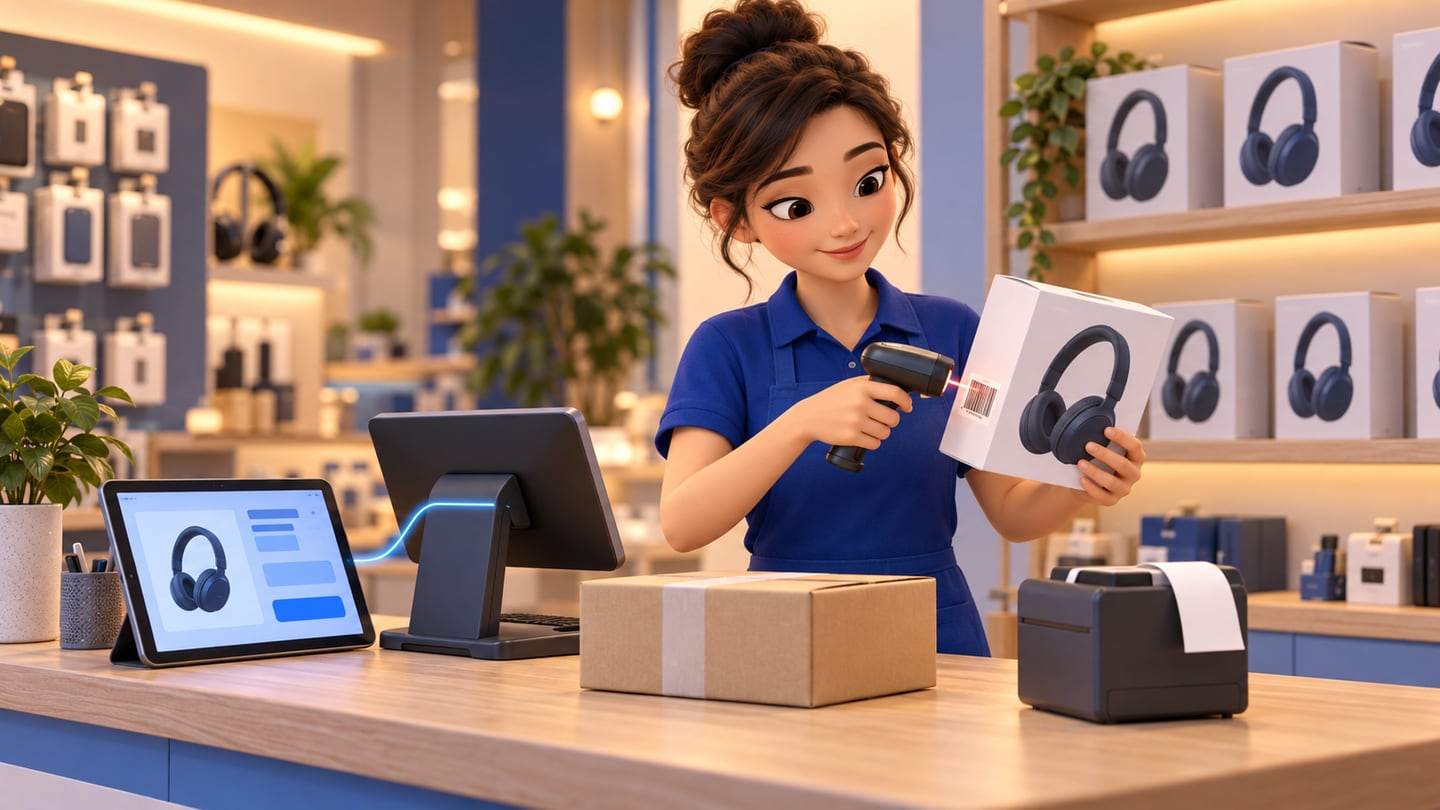
Whether you choose a ready platform or custom development, connecting to POS and inventory is the operational heart. In Iraq, most businesses sell from a physical shop and online simultaneously. If the online store and POS don't share the same inventory, you'll face problems like selling products that ran out minutes ago, or repeated manual entry of orders.
Ready platforms connected to POS like Ra8m solve this automatically: every in-store sale decreases inventory, every online order reserves or decreases inventory, and the business owner sees a unified report of sales, orders, and profit.
In custom development, you need to code this connection yourself through APIs, which takes time and requires careful testing to ensure data syncs without errors or delays.
07
Payments and Delivery in Iraq: Technical and Operational Challenge
Payment methods in Iraq differ from Western markets. Cash on Delivery (COD) is most common, and some platforms support ZainCash, Qi Card, and international cards through locally available payment gateways.
Coding payment integration requires understanding provider APIs, handling success and failure cases, recording transactions, and automatically updating order status. Ready platforms usually provide ready or semi-ready integrations with local payment providers. Custom development requires building these integrations from scratch or using programming libraries.
Delivery requires integration with local delivery companies or managing a dedicated delivery team. The store must record the address, track order status (new, preparing, out for delivery, delivered, cancelled), and send notifications to customer and team.

08
Arabic Support and RTL: Essential, Not Secondary
Arabic support doesn't mean just translating text. The store needs correct RTL direction, proper alignment of buttons, images, and tables, clear Arabic product names, understandable error messages, and Arabic notifications. If the team works in Arabic, the admin interface must be Arabic too, not just English.
Ready platforms like Ra8m are designed from the ground up to support Arabic and English, with correct RTL direction, Hijri and Gregorian dates, and clear Arabic product names and invoices. Custom development requires i18n (Internationalization) libraries and manual setup to ensure RTL works correctly across all pages and components.
The technical challenges of Arabic and RTL go beyond translating the user interface. Numbers must display correctly (Arabic-Indic ١٢٣ or Western 123 depending on preference), dates need proper formatting (10/10/2026 or ١٠ صفر ١٤٤٨), currency must show "Iraqi Dinar" or "د.ع" understandably, and long product names must break correctly without unnatural cuts.
Tables and cards need reversed alignment. In LTR, text starts from left and icons on right. In RTL, the opposite is true, but some elements (numbers, codes, URLs) remain LTR even in RTL context. Handling this mix requires precise CSS and thorough testing on different devices.
Error messages and notifications in Arabic must be natural, not literal translation from English. The Iraqi team and customers appreciate clear, professional Arabic language, and this builds trust more than an English interface or weak Arabic translation.
09
Security and Compliance: A Responsibility Not to Be Ignored
The online store handles sensitive data: customer information, addresses, phone numbers, and payment details. Store development must include strong security: HTTPS, data encryption, protection from SQL Injection and XSS, user permission management, and activity logs (Audit Logs).
Ready platforms manage security, backups, and compliance as part of the service, with specialized teams monitoring threats and updating systems. Custom development makes you fully responsible for security, which requires specialized expertise and regular testing.
Regarding legal and tax compliance, this article explains only the technical side. For legal requirements, consult a qualified specialist or accountant.
10
The Real Cost: Not Just Development
The cost of ecommerce development doesn't stop at initial build. Ready platforms have monthly or annual subscriptions that include hosting, maintenance, updates, and support. Ra8m for example starts at 50,000 Iraqi Dinar per month for adding Ecommerce connected to POS system (check the pricing page for current details).
Custom development may seem cheaper initially if you find a low-cost team, but the real cost includes: initial build, hosting, domain, SSL certificates, maintenance, bug fixes, updates, security, backups, and technical support. Over one or two years, the total cost of custom development may far exceed a ready platform subscription, especially if you don't have an in-house team.
Path Cost Comparison (illustrative numbers, check actual offers)
| Item | Ready Platform (Ra8m) | Custom Development |
|---|---|---|
| Initial Build | Included | 5,000,000+ IQD |
| Hosting | Included | 50,000+ IQD/month |
| Maintenance | Included | 500,000+ IQD/year |
| Updates | Included | Team time |
| Technical Support | Included | Separate contract |
| Security & Backups | Included | Your responsibility |
| POS Connection | Included | Custom coding |
11
When to Choose Ready Platform?
Choose ready platform if:
You want to start in days or weeks, not months
You need store connected to POS and inventory without complexity
You don't have an in-house technical team or annual maintenance budget
You sell standard products (clothing, electronics, food, pharmacy) without complex requirements
You need Arabic support, RTL, and tested user experience
You prefer focusing on sales and marketing instead of managing technology
Ra8m Ecommerce provides a ready store connected to POS system products and inventory, with Arabic and English support, COD, ZainCash, Qi Card, delivery, and unified sales and order reports.
12
When to Choose Custom Development?
Choose custom development if:
You have unique requirements not supported by ready platforms
You need deep integration with external ERP or CRM systems
You have complex workflows or unique sales models
You have an in-house technical team or ongoing maintenance budget
You need complete control over every aspect of design and coding
Long-term investment in a platform you fully own justifies the cost and effort
But remember: custom development isn't always better. Most businesses need fast, reliable sales, not a complex programming project.
13
Testing Platforms Before Final Decision
Before making your decision, actually test the ready platform. Register a trial account in Ra8m or another platform, add 10-20 real products from your business, try creating a complete order, observe how the order appears in the admin panel, verify inventory updates, and ask a friend or employee to try purchasing from their phone.
Ask specific questions: Is the customer interface clear in Arabic? Do buttons and menus work correctly with RTL? Can you add product options (colors, sizes) easily? Does the order arrive immediately? Can you export a sales report? These questions reveal operational problems before commitment.
For custom development, ask the team to show similar past projects, talk to a previous client if possible, and ask about the maintenance plan in detail: how many support hours monthly? What happens in emergencies? Is there an SLA (service level agreement)? Are updates included or charged per hour?
14
Common Mistakes in Choosing Development Path
Many businesses make costly mistakes when choosing an ecommerce development path:
Mistake One: Choosing based on visible price only. A platform that seems "cheap" may hide high payment fees, lack of Arabic support, weak hosting, or no POS connection. Compare full operational cost over two years, not just the first month.
Mistake Two: Assuming custom development means complete ownership without constraints. Custom development makes you own the code, but you still depend on the technologies used (React, Laravel, database), hosting, payment providers, and maintenance team. True ownership also means complete responsibility for updates, security, and bugs.
Mistake Three: Ignoring internal team time. If you choose custom development, your staff will spend hours explaining requirements, reviewing design, testing features, reporting bugs, and following up on delivery. This time has financial value, even if it doesn't appear in the developer's invoice.
Mistake Four: Not testing the complete order flow before launch. Whether you choose a platform or custom development, test the complete process: select product, add to cart, enter address, choose payment, confirm order, order appears in admin, inventory updates, team notified, order prepared, then delivered. Any broken step stops sales.
15
Practical Plan for Choosing Your Path
1. Define your needs: What products? How many expected orders? Do you also sell from a shop? What payment and delivery methods?
2. Evaluate ready platforms: Try Ra8m or other platforms, test POS connection, review prices and support
3. Evaluate custom development: Request quotes, ask about time and maintenance, verify previous examples
4. Compare total cost: Not just initial price, but maintenance, support, and time required over two years
5. Start small: If you choose ready platform, start with simple plan then expand. If you choose custom development, start with MVP (minimum viable product) and test it before building everything
16
Conclusion
Ecommerce store development in Iraq has two paths: a ready platform offering speed, reliability, and POS connection, or custom development giving greater flexibility with greater responsibility. Most businesses benefit from ready platforms like Ra8m because they enable fast sales without a technical team, with Arabic support, and clear inventory, order, and report connections.
Custom development suits large businesses with unique requirements, but requires greater investment in time, cost, and maintenance. Choose the path that serves your goal: fast reliable sales, or complete flexibility with complete responsibility.
17
Frequently Asked Questions
What does ecommerce store development in Iraq mean?
Ecommerce store development in Iraq means building an online sales interface connected to products, inventory, orders, payments, and delivery, either through a ready platform or custom development based on needs.
When is a ready platform enough instead of custom development?
A ready platform is enough when you need fast sales, inventory connected to POS, Arabic support, and clear payment and delivery, without time or a technical team for ongoing maintenance.
What technologies are used in ecommerce development?
Ready platforms use React, Node.js, and cloud databases. Custom development may use Next.js, Laravel, Shopify API, or WooCommerce depending on requirements.
How does the store support payments and delivery in Iraq?
Cash on delivery is most common, and some platforms support ZainCash, Qi Card, and cards. Delivery is through local delivery partners or a dedicated team.
Does Ra8m provide an ecommerce store connected to POS?
Yes. Ra8m provides an ecommerce store connected to POS products and inventory, with Arabic and RTL support, COD, ZainCash, Qi Card, delivery, and no development team required.
Frequently asked questions
What does ecommerce store development in Iraq mean?
Ecommerce store development in Iraq means building an online sales interface connected to products, inventory, orders, payments, and delivery, either through a ready platform or custom development based on needs.
When is a ready platform enough instead of custom development?
A ready platform is enough when you need fast sales, inventory connected to POS, Arabic support, and clear payment and delivery, without time or a technical team for ongoing maintenance.
What technologies are used in ecommerce development?
Ready platforms use React, Node.js, and cloud databases. Custom development may use Next.js, Laravel, Shopify API, or WooCommerce depending on requirements.
How does the store support payments and delivery in Iraq?
Cash on delivery is most common, and some platforms support ZainCash, Qi Card, and cards. Delivery is through local delivery partners or a dedicated team.
Does Ra8m provide an ecommerce store connected to POS?
Yes. Ra8m provides an ecommerce store connected to POS products and inventory, with Arabic and RTL support, COD, ZainCash, Qi Card, delivery, and no development team required.
Written by
RA8M Team
Practical guides for restaurants, shops, and operations teams
Next step
Try RA8M with data close to your operation
Read next
Related RA8M guides
Ecommerce
Cost of Building an Online Store in Iraq: From Platform to App
Read article
Ecommerce
How to Open Online Store in Iraq: Practical Launch Guide
Read article
Ecommerce
Ecommerce Platform in Iraq: How to Choose the Right System
Read article
Ecommerce
Create Online Store in Iraq: A Practical Launch Guide
Read article
Payments and Ecommerce
Payment Gateway Iraq: Online Store Checklist for Merchants
Read article