Bakery Software in Iraq: POS, Recipes, Stock and Costing
A practical guide to bakery software in Iraq covering POS sales, recipes, raw materials, finished goods, inventory deduction, cost math, orders, and reports.
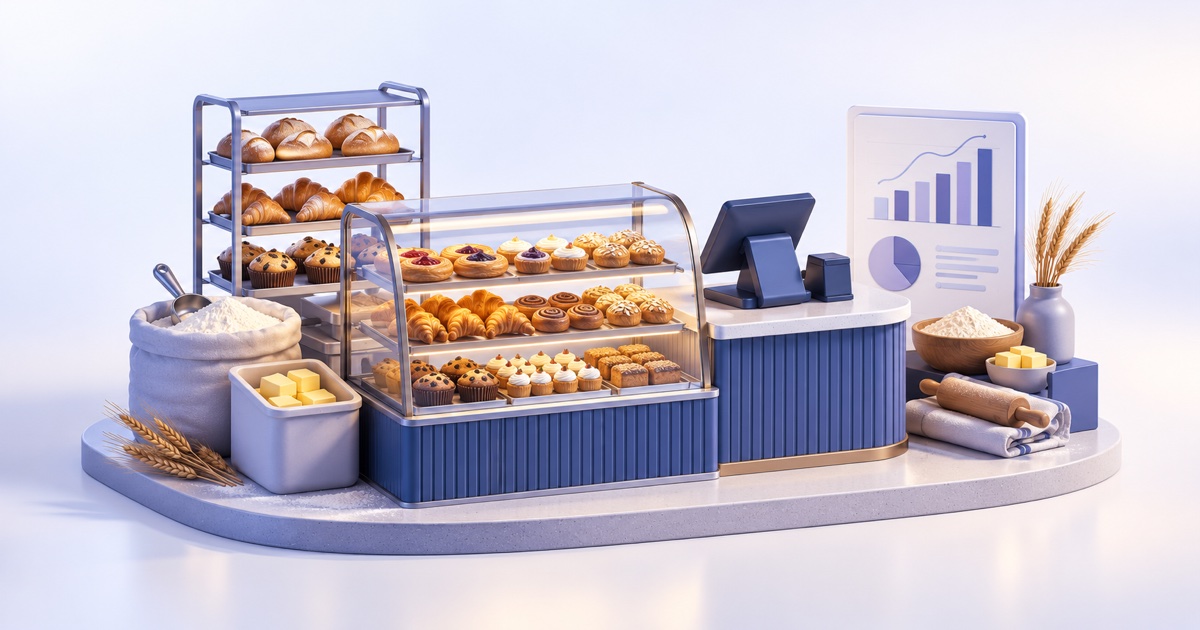
Bakery software helps Iraq bakeries and sweets shops sell from the cashier, track recipes, deduct raw materials, manage finished goods, record purchases, and calculate production cost. A strong bakery setup should connect POS, inventory, recipes, reports, and offline selling so owners can compare flour, sugar, packaging, and labor-sensitive production against real sales.
01
Bakery Software in Iraq: POS, Recipes, Stock and Costing
Bakery software is not just a cashier screen for bread, cakes, pastries, and sweets. A bakery in Iraq often buys raw materials, produces finished goods, sells quickly during rush hours, handles custom orders, and needs to understand whether each product is profitable.
Quick answer: Bakery software helps Iraq bakeries and sweets shops sell from the cashier, track recipes, deduct raw materials, manage finished goods, record purchases, and calculate production cost. A strong bakery setup should connect POS, inventory, recipes, reports, and offline selling so owners can compare flour, sugar, packaging, and labor-sensitive production against real sales.
02
What should bakery software manage?
A bakery system should manage two sides of the business: front-counter selling and back-of-house production. At the counter, the team needs fast POS buttons, receipts, discounts, payments, customer orders, and offline selling. Behind the counter, the owner needs raw material stock, purchases, recipes, formulas, finished goods, production quantities, waste, and reports.
This matters because bakeries do not only resell finished products. They transform flour, sugar, butter, oil, eggs, yeast, chocolate, boxes, cups, and packaging into products with different margins. If the system only records final sales, the owner may know revenue but not the real cost behind it.
03
Bakery POS vs normal shop cashier
A normal shop cashier sells products that already exist as separate units. Bakery POS may need to sell both fixed products and production batches. It may handle items sold by piece, box, tray, weight, or custom order. It should also support quick sales because morning bread, sweets, and café counters can become busy fast.
The system should be simple enough for the cashier and detailed enough for management. If every sale requires complex production entry, the counter slows down. If production is never recorded, the owner loses cost visibility. Good bakery software keeps those workflows connected without making daily selling painful.
04
Features to compare before choosing
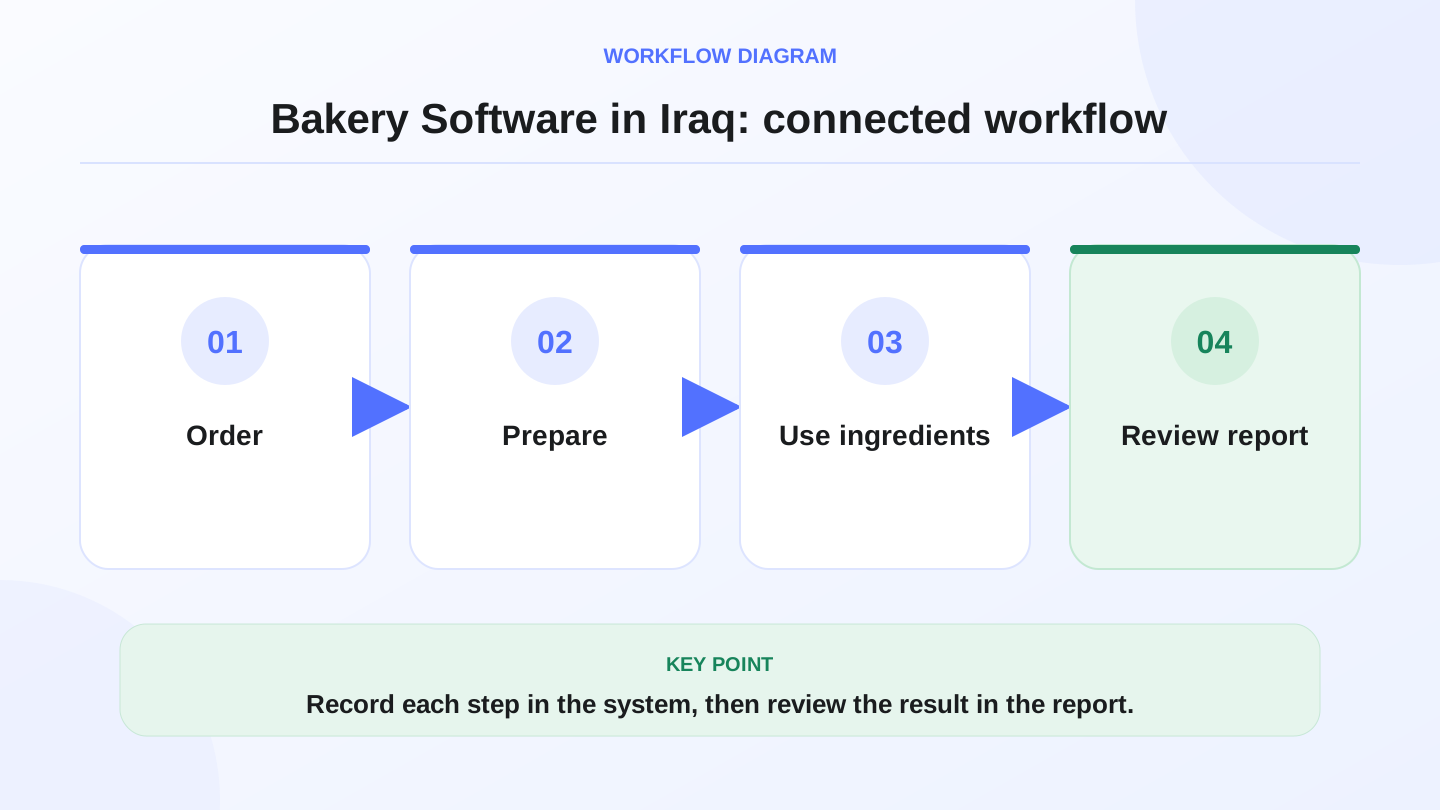
Do not judge bakery software only by its dashboard. Run a realistic scenario: buy ingredients, produce a batch, sell part of it, adjust waste, and read the report.
| Bakery need | Why it matters | Demo test |
|---|---|---|
| Fast POS screen | Speeds bread, pastry, and sweets sales | Complete 10 mixed sales quickly |
| Offline selling | Keeps cashier running during internet interruptions | Disconnect internet and close a sale |
| Recipe or formula tracking | Connects finished goods with raw materials | Produce one batch and review material usage |
| Purchases | Adds flour, sugar, packaging, and supplier bills | Enter a supplier bill and stock increase |
| Finished goods | Tracks produced items ready for sale | Move a production batch into sellable stock |
| Waste and adjustments | Handles damaged or expired items | Record damaged sweets and review variance |
| Reports | Shows best sellers, costs, and stock pressure | Check daily sales and material movement |
05
Worked example: recipe cost for a pastry batch
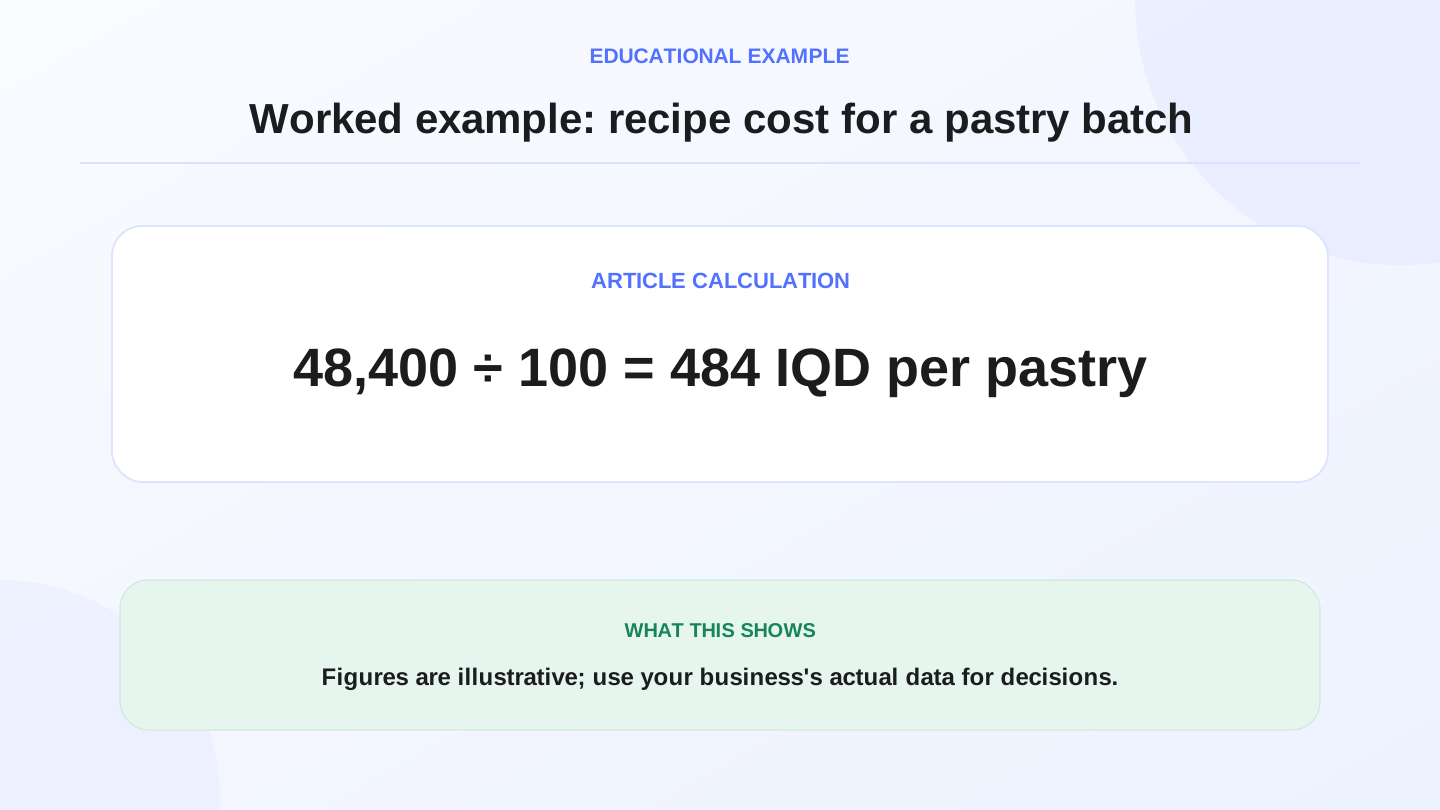
Assume a bakery produces 100 pastries. The recipe uses 8 kg flour, 3 kg sugar, 2 kg butter, and 100 boxes. Illustrative costs are 1,500 IQD per kg flour, 1,800 IQD per kg sugar, 8,000 IQD per kg butter, and 150 IQD per box.
Material cost is: flour 8 × 1,500 = 12,000 IQD; sugar 3 × 1,800 = 5,400 IQD; butter 2 × 8,000 = 16,000 IQD; boxes 100 × 150 = 15,000 IQD. Total material cost = 48,400 IQD.
Cost per pastry is 48,400 ÷ 100 = 484 IQD before labor, rent, utilities, waste, and other overhead. If the pastry sells for 1,000 IQD, the owner still needs to check whether remaining overhead leaves enough margin. These figures are illustrative; use real supplier prices for actual decisions.
06
Raw materials, recipes, and finished goods
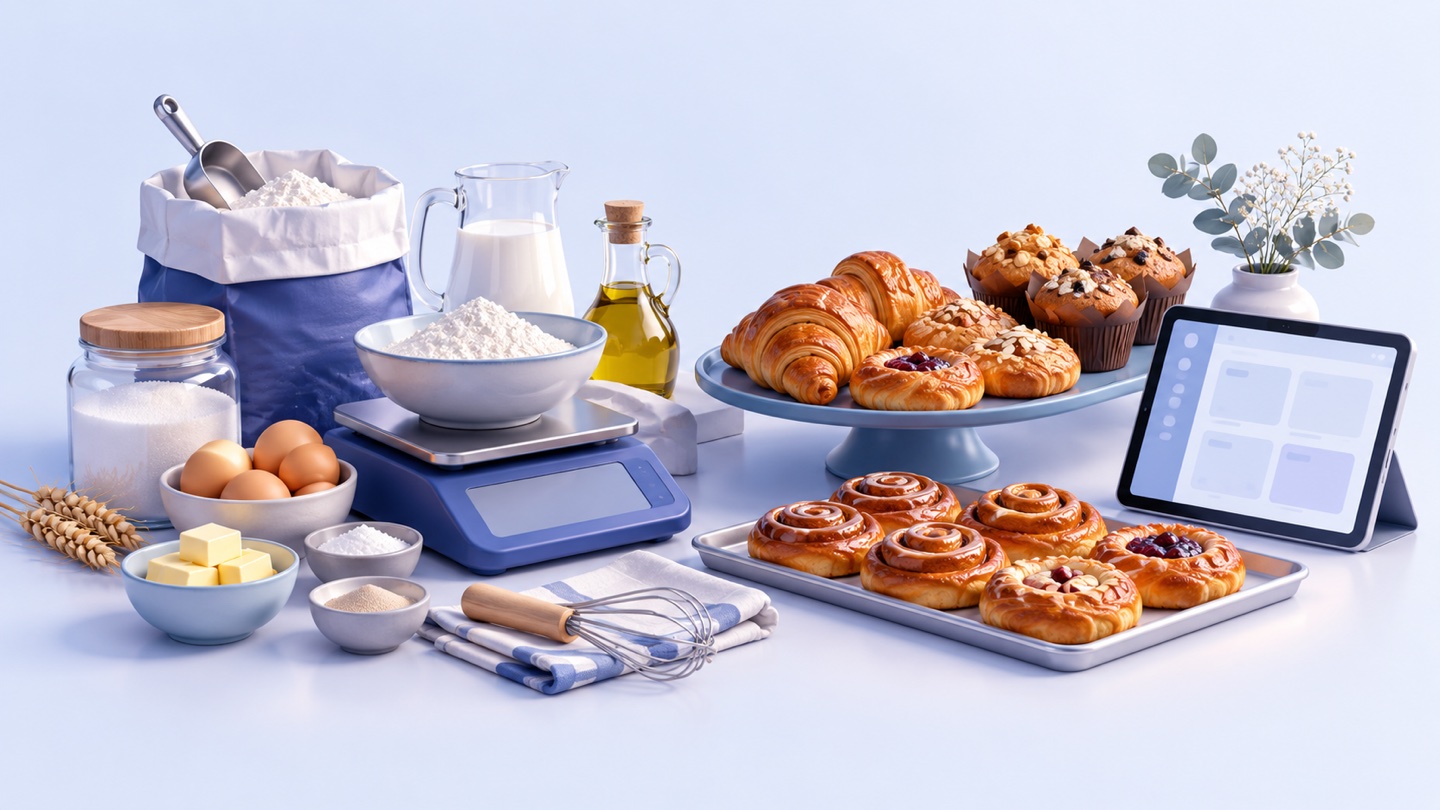
Bakery inventory has layers. Raw materials enter through purchases. Recipes or formulas define how much material is used for each product. Production turns raw materials into finished goods. POS sales reduce finished goods. Waste or adjustments explain differences.
If these layers are disconnected, the owner may buy too much flour, run out of packaging, or underprice sweets because butter cost changed. A system that connects recipes with stock can make cost changes visible earlier. RA8M supports manufacture-style workflows for businesses that use raw materials, formulas, finished goods, and cost calculation.
07
Custom orders and customer commitments
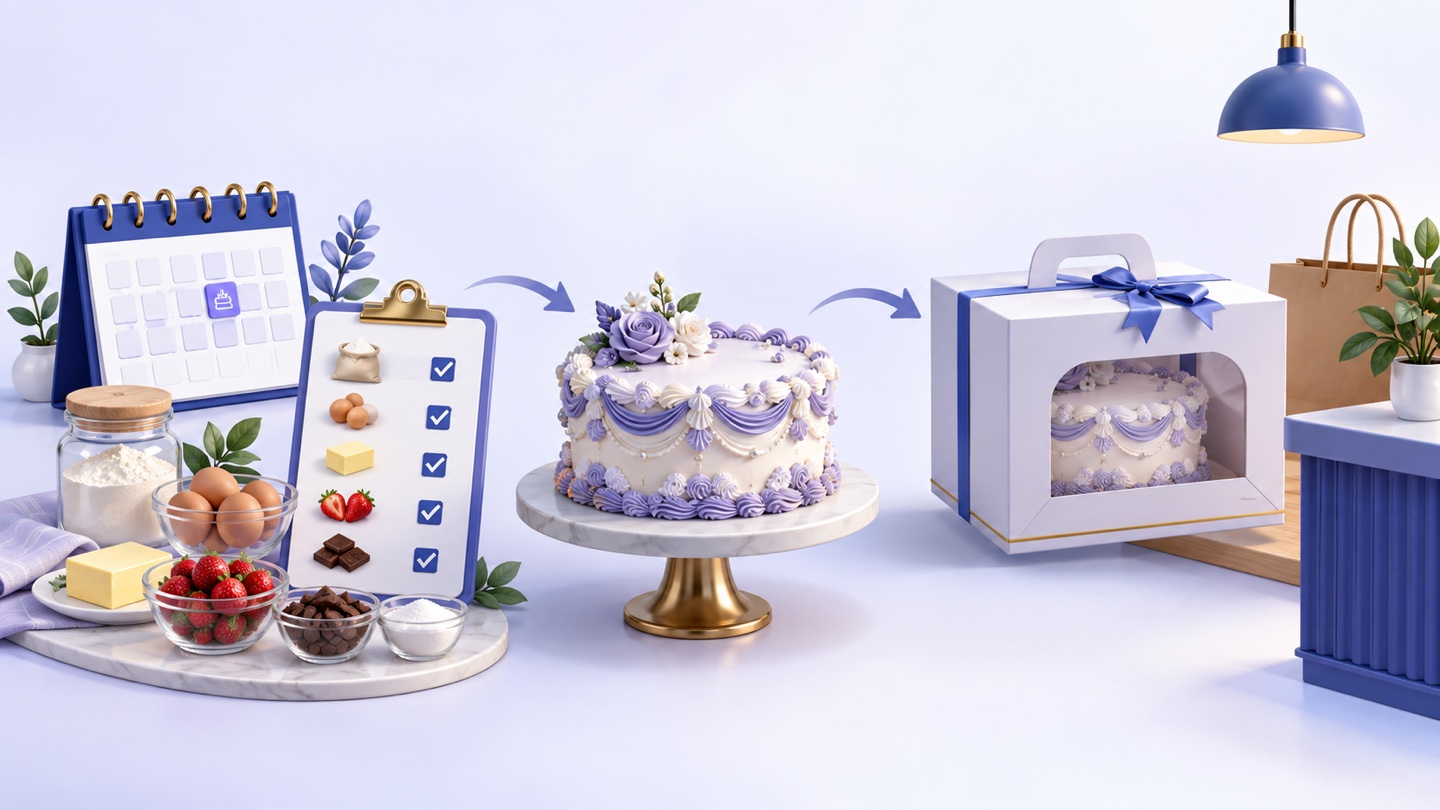
Many bakeries and sweets shops handle customer orders for birthdays, events, offices, cafés, or family gatherings. The software should help record order details, deposit or payment status where relevant, pickup date, customer contact, and the items required.
Even if full production scheduling is handled manually, recording customer orders next to POS and inventory helps reduce missed commitments. For a growing bakery, this discipline can matter as much as the cashier because reputation depends on delivering the right order at the right time.
08
Purchases and supplier control
Bakery costs move quickly when flour, butter, sugar, chocolate, oil, and packaging prices change. Purchase records help owners understand cost pressure instead of guessing. Supplier bills should increase raw material stock and appear in financial reports.
A useful weekly check is comparing purchased materials with produced and sold goods. If flour purchases rise but sales do not, the owner should investigate waste, recipe changes, staff meals, unrecorded production, or stock count errors. Purchase management is part of bakery profit control, not only bookkeeping.
09
Offline cashier workflow for busy periods
Bakeries often have concentrated rush periods. A cashier system that stops during an internet problem can create a line, missed sales, and handwritten receipts that must be entered later. For Iraq businesses, offline-ready POS is a practical requirement, not a luxury.
During a demo, test offline selling. Disconnect the internet, sell several items, print or record receipts, reconnect, and confirm the transactions sync into reports. RA8M POS is offline-ready and syncs when internet returns, which is important for bakeries, cafés, restaurants, and retail counters.
10
Reports bakery owners should watch
Bakery reports should answer simple but important questions: What sold most today? Which products slowed down? Which raw materials are low? Did waste increase? Which cashier sold what? What was bought this week? Which items may need price review?
A strong report does not replace the owner; it gives the owner a cleaner view. For multi-branch bakeries or businesses supplying cafés and shops, branch or location reports become even more important because production and sales may happen in different places.
11
When a simpler setup is enough
A very small home bakery or owner-operated counter may start with a simple cashier, manual recipe sheet, and basic purchase notes. If production is small and the owner controls every ingredient personally, full bakery software may be more than needed.
Upgrade when production volume grows, staff members enter sales or purchases, custom orders increase, material costs are unclear, waste becomes visible, or products are sold through both a physical counter and online channels. Software should reduce confusion, not create extra work that the team will ignore.
12
Where RA8M fits
RA8M fits Iraq bakeries, sweets shops, cafés, and production businesses that need Arabic-first POS, offline selling, inventory, purchases, reports, roles, branches, ecommerce connections, and manufacture-style raw material workflows. It is useful when the owner wants to connect front-counter sales with ingredient usage and cost visibility.
If the business only sells a few products and tracks ingredients manually without problems, a lighter setup may be enough. If the business needs POS, stock, recipes, costs, reports, and online selling in one system, compare RA8M POS, RA8M industries, and RA8M pricing. Pricing can change, so verify current plans before buying.
13
Conclusion
Bakery software should make the cashier faster and the production side clearer. It should help the owner sell products, buy materials, control recipes, calculate costs, track stock, understand waste, and read reports without rebuilding the day from memory.
For bakeries and sweets shops in Iraq, prioritize Arabic usability, offline POS, raw material tracking, recipe costing, purchase discipline, finished goods, and reports. Start with one real product and one real batch, then choose software that can follow the workflow from ingredient to sale.
Frequently asked questions
What is bakery software?
Bakery software is a POS and operations system for selling bakery items, tracking raw materials, managing recipes or formulas, recording purchases, calculating cost, and reviewing reports.
Why do bakeries need recipe costing?
Recipe costing helps a bakery understand how much flour, sugar, butter, packaging, and other materials are used in each product so prices and margins are easier to control.
Does offline POS matter for bakeries in Iraq?
Yes. Offline POS matters because bakeries often sell during busy morning and evening periods, and the cashier should keep working if the internet drops.
Can RA8M fit bakeries and sweets shops?
Yes. RA8M supports POS, inventory, purchases, reports, offline selling, and manufacture-style workflows for businesses that use raw materials, recipes, formulas, and finished goods.
Written by
RA8M Team
Practical guides for restaurants, shops, and operations teams
Next step
Try RA8M with data close to your operation
Read next
Related RA8M guides
Pharmacy and Services
Sweets Shop Software in Iraq: POS, Recipes, Stock and Orders
Read article
Pharmacy and Services
Salon, Bakery and Sweets Shop Software in Iraq: How to Choose the Right POS
Read article
Ra8m Blog
Offline POS System in Iraq 2026 — Complete Guide
Read article
Pharmacy and Services
Wholesale Software in Iraq: Distribution and Bulk Sales Guide
Read article
POS and Cashier
Best Cashier Software in Iraq: Practical Buyer Checklist
Read article