Wholesale Software in Iraq: Distribution and Bulk Sales Guide
How Iraq wholesalers and distributors can choose software for bulk sales, customer pricing, inventory, delivery, payments, branches, and reports.

Wholesale software helps Iraq distributors manage bulk sales, customer accounts, inventory, purchases, payments, delivery preparation, branch visibility, and reports. The right system should show what stock is available, what customers owe, which items move fastest, and how sales, purchases, and payments affect the business without relying on scattered notebooks.
01
Wholesale Software in Iraq: Distribution and Bulk Sales Guide
Wholesale and distribution businesses live on movement: goods arrive from suppliers, quantities split across customers, payments come later, and the owner needs to know what is available before promising delivery. A simple cashier tool is rarely enough when invoices, customer balances, stock, and purchasing must stay connected.
Quick answer: Wholesale software helps Iraq distributors manage bulk sales, customer accounts, inventory, purchases, payments, delivery preparation, branch visibility, and reports. The right system should show what stock is available, what customers owe, which items move fastest, and how sales, purchases, and payments affect the business without relying on scattered notebooks.
02
Why wholesale operations need different control
A retail shop usually sells small quantities to many walk-in customers. A wholesaler may sell cartons, boxes, or bulk quantities to fewer customers, often with negotiated prices and later payment. That creates more pressure on inventory accuracy and customer balances.
If the team promises stock that is not available, delivery fails. If payments are recorded in a notebook but invoices are in another place, the customer account becomes unclear. If purchases do not update stock on time, the owner may reorder too late or overbuy.
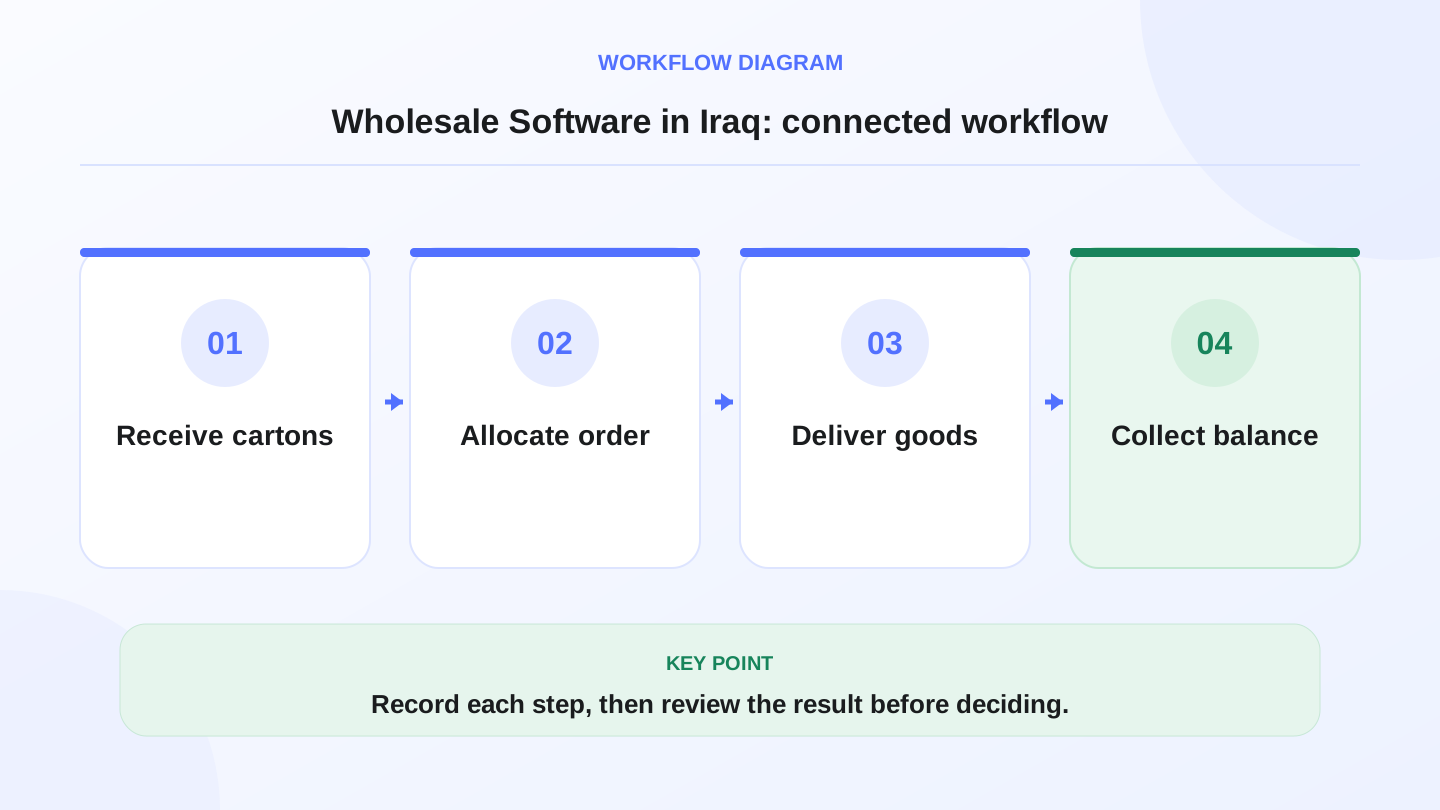
A practical sequence has four connected steps: Receive cartons, Allocate order, Deliver goods, Collect balance. Recording each step makes the daily result easier to review.
03
What should wholesale software manage?
The core workflow is simple to describe: buy from suppliers, receive stock, sell in bulk, prepare delivery, collect payment, and read reports. The difficulty is keeping those steps connected when there are many products, customers, employees, and branches.
A practical system should manage product categories, units, barcode or SKU codes, customer accounts, invoices, payments, purchase bills, stock movements, staff roles, branch visibility, and sales reports. For a business that also sells from a counter, POS should share the same inventory.
| Area | What to track | Why it matters |
|---|---|---|
| Inventory | Cartons, units, adjustments, transfers | Prevents overselling |
| Customers | Invoices, payments, balances | Controls credit and collection |
| Purchases | Supplier bills and costs | Updates stock and margin view |
| Delivery | Prepared orders and status | Reduces missing or wrong items |
| Reports | Sales, items, branches, payments | Guides buying decisions |
04
Bulk quantities, units, and pricing
Wholesale businesses often buy by carton and sell by carton, box, or unit. The software must make units clear so the team does not confuse 10 cartons with 10 pieces. Product setup should define how the item is counted and how staff should sell it.
Customer pricing also matters. Some customers may receive special pricing based on volume or relationship. Even if the system starts with manual price selection, the invoice should clearly record the final price, discount, quantity, and payment status.
05
Worked example: stock after bulk sales and delivery
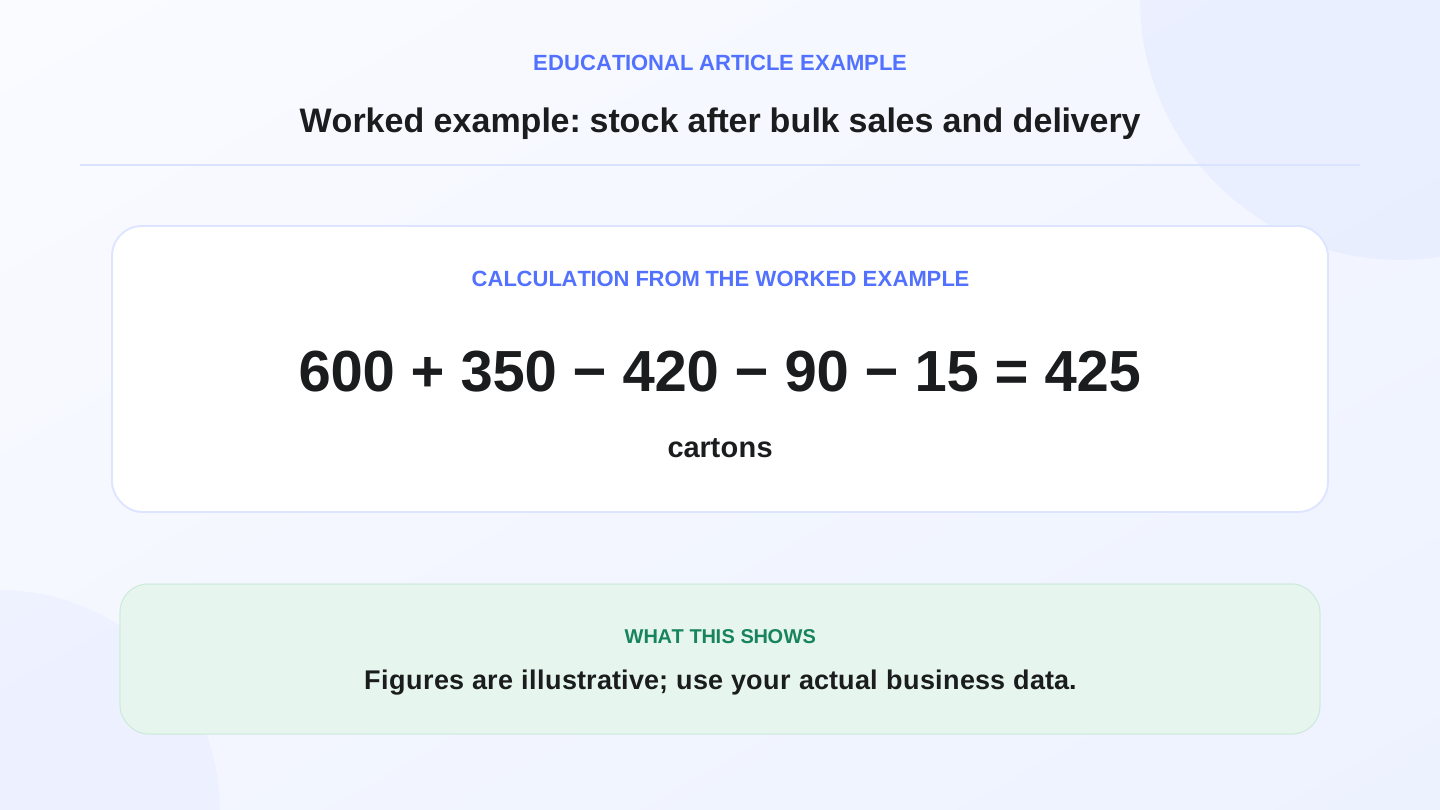
Imagine a distributor in Basra starts the week with 600 cartons of bottled water. It receives 350 cartons from a supplier, sells 420 cartons to supermarkets, reserves 90 cartons for delivery tomorrow, and records 15 damaged cartons during loading.
Available stock after confirmed movements = 600 opening + 350 purchase - 420 sold - 90 reserved - 15 damaged = 425 cartons.
If the warehouse physically counts 410 cartons, the difference is 15 cartons. The owner should review delivery preparation, damaged stock, invoices not completed, and any manual adjustments. These numbers are illustrative and should be replaced with real business data.
06
Customer balances and payment discipline
Many wholesale customers do not pay every invoice immediately. That can be normal, but it must be visible. The owner needs to know what each customer bought, what was paid, what remains, and whether the team should approve another order.
A good system records invoices and payments together. It should help the owner review unpaid balances without searching through messages, paper receipts, and employee notes. This is operational control, not legal or accounting advice; formal finance and tax decisions should be reviewed with qualified professionals.

07
How POS and wholesale can work together
Some distributors also run a showroom or counter. Walk-in customers buy smaller quantities while B2B customers buy in bulk. If counter sales live in one tool and wholesale invoices live elsewhere, inventory becomes unreliable.
Connecting POS with wholesale inventory keeps stock movement in one place. A counter sale reduces stock just like a bulk invoice. Purchases increase stock, adjustments explain differences, and reports can show both retail and wholesale movement.
08
Distribution, branches, and delivery preparation
Distribution adds a location problem. Stock may be in the warehouse, a branch, a vehicle, or reserved for a customer order. The more locations involved, the more important it is to record transfers and permissions.
For a growing operator, branch visibility helps answer practical questions: which branch has stock, which customer order is ready, which items need purchasing, and which employee can approve adjustments. Without clear roles, anyone can change stock and the reports lose trust.

09
Reports wholesalers should review weekly
Daily reports show sales and payments. Weekly reports should show item movement, customer balances, purchase needs, slow-moving items, and stock value. These reports support buying decisions because wholesale cash can get trapped in products that do not move.
For example, if one item sells 120 cartons per week and only 80 cartons remain, the business has less than one week of cover. If supplier lead time is 5 days, purchasing should happen before the shortage affects delivery.
10
When does RA8M fit wholesale and distribution?
RA8M fits wholesalers that want Arabic-first software for sales, inventory, purchases, payments, reports, roles, branches, and finance visibility. It is useful when the same business needs POS for counter sales and structured inventory for bulk operations.
RA8M may be more than necessary for a very small trader with only a few recurring products and no employees. But if the business has many SKUs, customer credit, supplier bills, branch movement, or repeated stock differences, a connected system becomes safer than notebooks.
11
Implementation checklist for wholesalers
Start with products and units. Decide whether each item is counted by carton, box, piece, or mixed unit. Then enter opening stock from a real count, list active customers, and define which staff can create invoices, record payments, or adjust quantities.
For the first month, compare four numbers every week: purchases received, invoices issued, payments collected, and expected stock. If one number does not make sense, investigate immediately while the records are fresh. The goal is not perfect automation; it is a reliable operating habit.
12
Conclusion: wholesale software should protect stock and cash
Wholesale software in Iraq should protect two things: available stock and customer money owed. If the system cannot answer those questions quickly, the owner is still managing blind.
Review RA8M industry workflows, compare pricing, and verify current plan details before buying because public pricing can change. The right setup should make sales, purchases, inventory, payments, and reports work as one daily record.
Frequently asked questions
What is wholesale software?
Wholesale software organizes bulk sales, customer accounts, inventory, purchases, invoices, payments, delivery preparation, and reports for B2B selling.
What should distributors track first?
Start with stock quantity, customer balances, purchase cost, sales invoices, payments, delivery status, and daily item movement.
Does wholesale software need POS?
Often yes if the business also sells from a counter or showroom. POS keeps walk-in sales and wholesale inventory in the same stock record.
How does software help customer credit?
It records invoices and payments so the owner can see outstanding balances by customer instead of relying on manual notebooks.
When does RA8M fit wholesalers?
RA8M fits wholesalers that need sales, inventory, purchases, invoices, payments, reports, roles, and branch visibility in one Arabic-first system.
Written by
RA8M Team
Practical guides for restaurants, shops, and operations teams
Next step
Try RA8M with data close to your operation
Read next