Salon, Bakery and Sweets Shop Software in Iraq: How to Choose the Right POS
A practical guide to salon software, bakery software, and sweets shop POS in Iraq, covering services, recipes, stock, reports, and offline-ready selling.
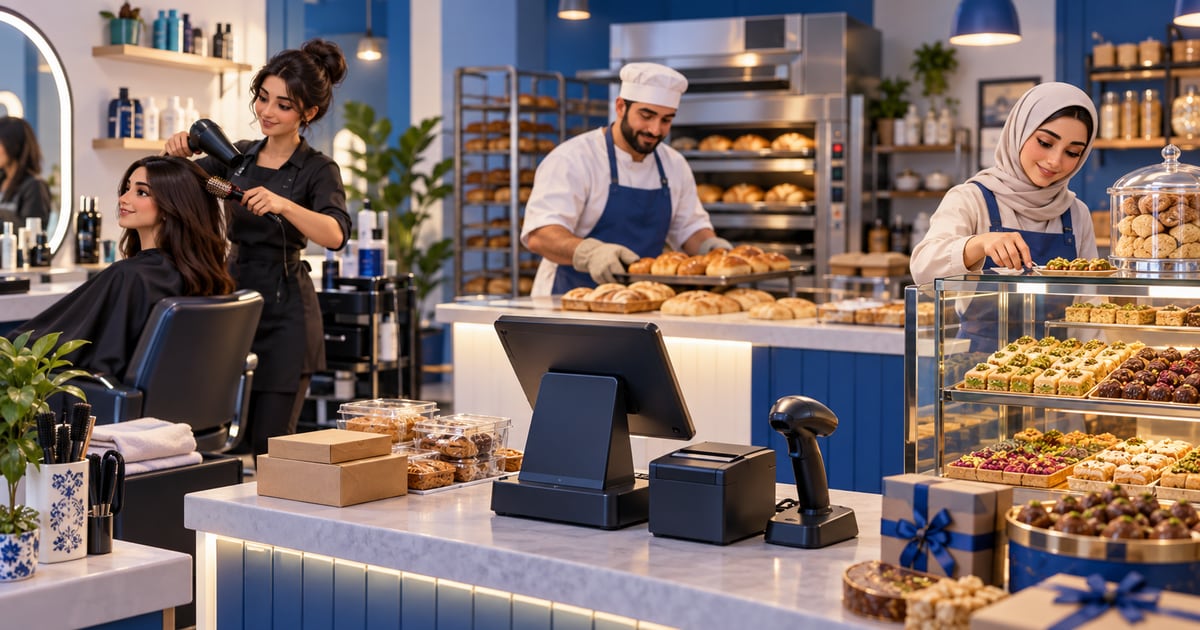
The best salon, bakery, or sweets shop software in Iraq connects POS sales with services or products, stock or raw materials, staff, invoices, reports, and offline-ready cashier workflows. It should support Arabic, show daily sales clearly, and help calculate material usage or service revenue without separate spreadsheets.
01
Salon, Bakery and Sweets Shop Software in Iraq: How to Choose the Right POS
A practical guide to salon software, bakery software, and sweets shop POS in Iraq, covering services, recipes, stock, reports, and offline-ready selling.
Quick answer: The best salon, bakery, or sweets shop software in Iraq connects POS sales with services or products, stock or raw materials, staff, invoices, reports, and offline-ready cashier workflows. It should support Arabic, show daily sales clearly, and help calculate material usage or service revenue without separate spreadsheets.
02
What does a salon, bakery, or sweets shop need from POS software?
A beauty salon, bakery, and sweets shop do not operate like a simple box-selling store. A salon sells services tied to staff time and payments. A bakery or sweets shop sells daily products that depend on ingredients, recipes, batches, and sometimes waste.
So the question is not only whether the software has a cashier screen. The better question is whether it connects the sale to the service, recipe, stock movement, and report the owner needs. In Iraq, the system should be Arabic-first, easy for staff, and usable when the internet drops during a busy shift.
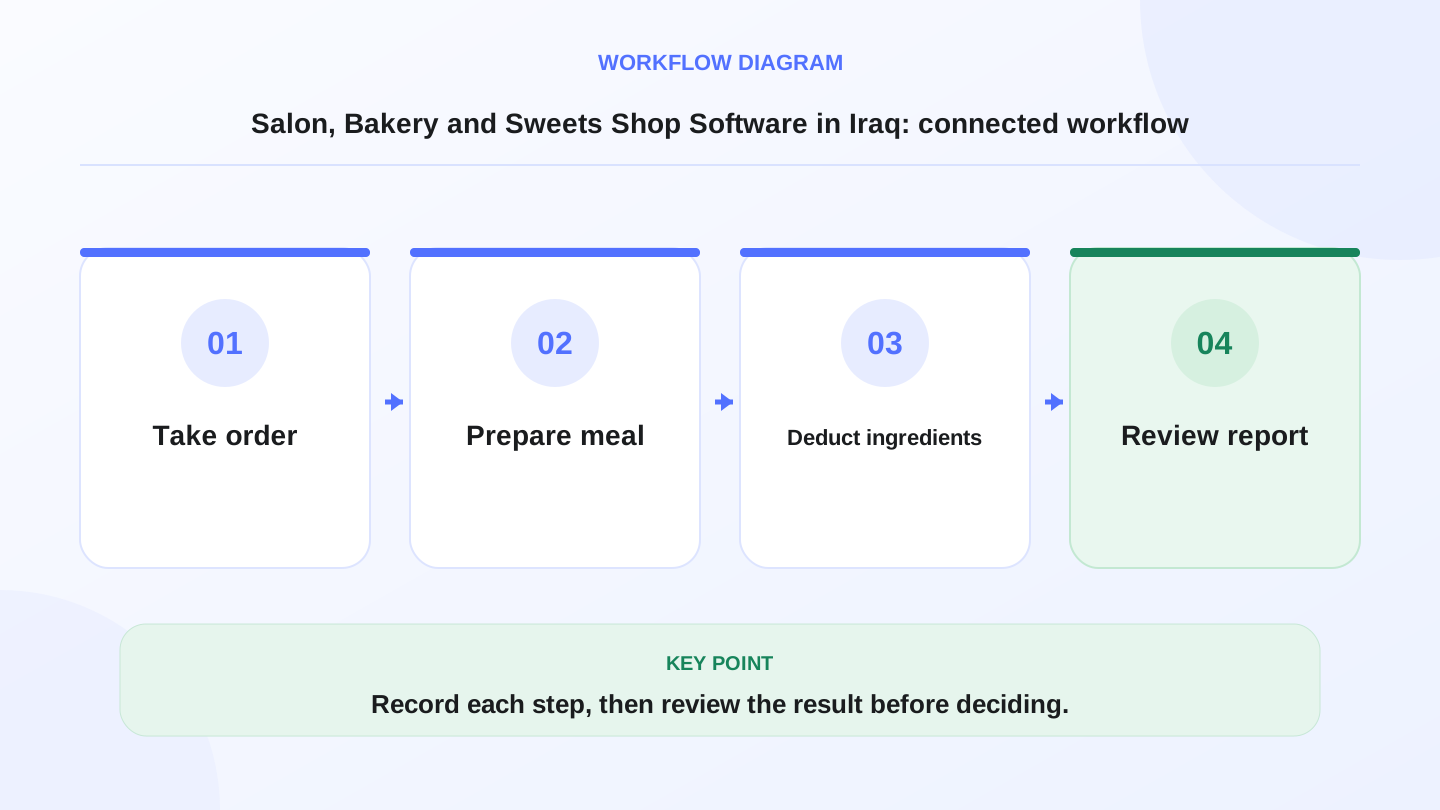
A practical sequence has four connected steps: Take order, Prepare meal, Deduct ingredients, Review report. Recording each step makes the daily result easier to review.
03
How salons, bakeries, and sweets shops differ
These businesses share the need for fast checkout and daily reports, but they measure value differently. A salon tracks staff, service revenue, and payments. A bakery tracks ingredients, production, and waste. A sweets shop may combine ready-made items, custom orders, discounts, and seasonal demand.
Good software should not force every business into the same template. It should let the operator define services or products, track quantities or materials where needed, and manage permissions around the way the business actually works.
Use this table as a checklist before testing any vendor demo.
| Business type | What is sold | What to track | Important system feature |
|---|---|---|---|
| Salon | Services, packages, and care products | Staff, service, payments, daily report | Service setup, permissions, reports |
| Bakery | Bread, pastries, and daily items | Raw materials, production, waste, fast sales | Inventory, recipes, cost tracking |
| Sweets shop | Ready items and custom orders | Stock, orders, discounts, seasons | Products, invoices, sales reports |
04
Why POS and inventory should be connected
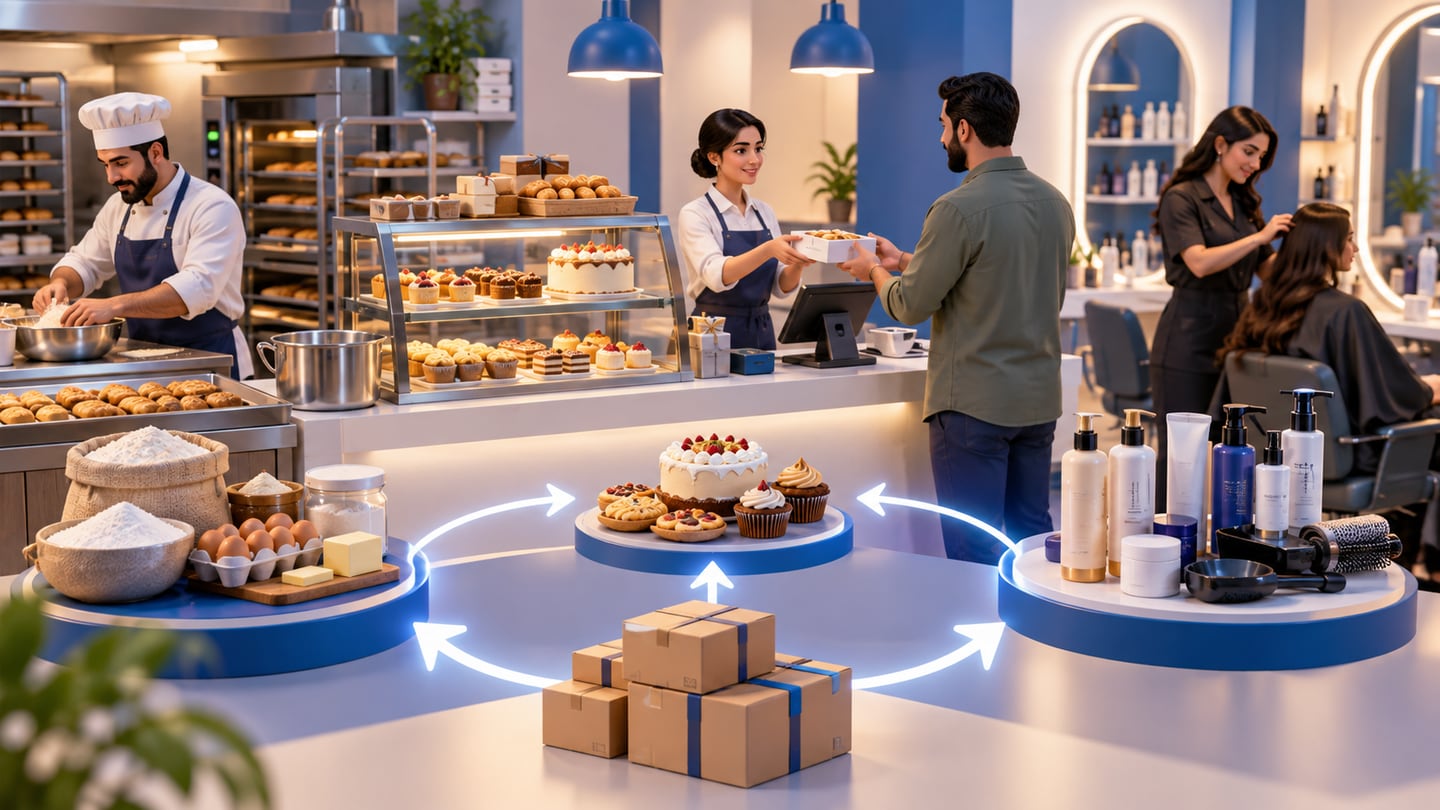
For bakeries and sweets shops, each sale should be traceable against stock, ingredients, or finished goods. If materials stay in a separate notebook, the owner may sell heavily without understanding production cost, low-stock risk, or waste.
For salons, inventory often appears through products used during services or sold at the counter. Even in a service business, a clear record of sales, products, staff, and payments reduces dependence on memory and messaging apps.
05
Worked example: calculating sweets production margin
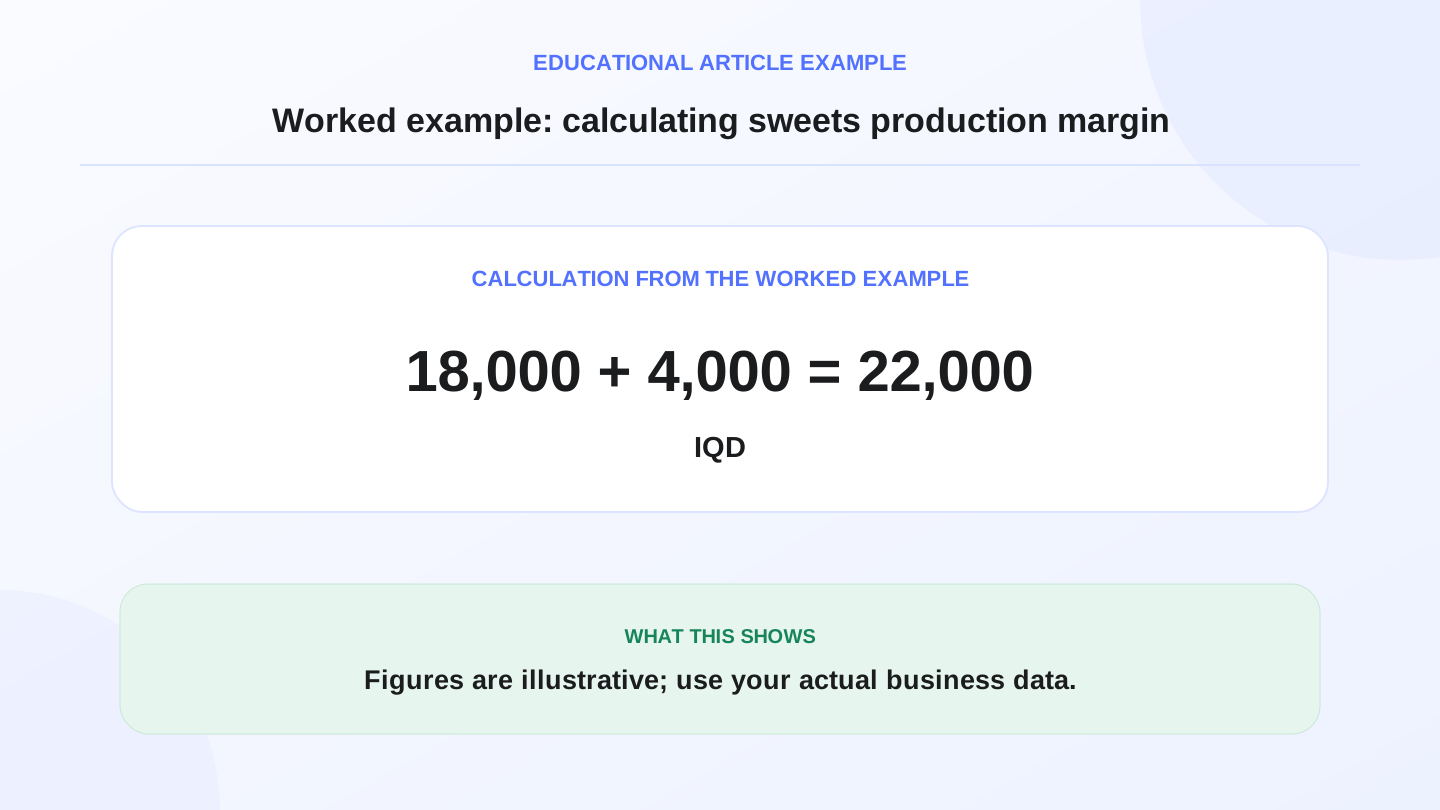
Assume a sweets shop produces one cake tray. Ingredients cost 18,000 IQD, packaging costs 4,000 IQD, and the tray sells for 35,000 IQD.
Total direct cost = 18,000 + 4,000 = 22,000 IQD. Approximate profit before other expenses = 35,000 - 22,000 = 13,000 IQD. Approximate profit percentage of the selling price = 13,000 ÷ 35,000 × 100 = 37.1%.
If the shop sells 20 trays in one day, approximate profit before other expenses = 13,000 × 20 = 260,000 IQD. Software should make this kind of daily operating math visible instead of leaving it until month-end.
Math example: The numbers are illustrative. Use your real costs and current prices before making pricing decisions.
06
Reports the owner should see
A daily report should answer simple questions: how much did we sell today, which service or item sold most, which staff member handled the sale, what payment method was used, how many discounts were given, and which products or materials are close to running out?
For Iraq SMBs, reports should be readable in Arabic-first operations and still support English-speaking team members where needed. The owner usually needs practical action numbers: reorder materials, adjust a service price, review a staff workflow, or investigate repeated discounts.
07
What to test before buying
Do not rely on a slide deck. Test a complete workflow: create a service or product, complete a sale, print or record an invoice, check stock, add a purchase or expense, and open the report. If you have more than one location, test permissions and branch visibility.
Ask about offline selling as well. During a salon rush or a bakery morning, internet interruption should not stop checkout. RA8M public product references describe POS as offline-ready, with syncing when the connection returns.
08
When RA8M fits
RA8M fits Iraq businesses that need an Arabic-first and bilingual cashier connected with inventory, purchases, reports, customers, roles, and permissions. It can support salons that need service and payment organization, and bakeries or sweets shops that need product, material, and daily cost discipline.
A simpler setup may be enough for a very small seller with few products, no staff, and no meaningful stock pressure. But once employees, raw materials, branches, or daily reporting matter, connected software becomes a control tool rather than a nice extra.
09
Setup checklist for the first week
Do not judge salon, bakery, or sweets shop software only by the sales screen. The first week should prove that the setup matches real work. Create the main service categories, product categories, raw materials, finished items, prices, discounts, staff roles, payment methods, and receipt settings before the team depends on it during a rush.
For a bakery or sweets shop, enter the recipes or material assumptions that affect cost. Flour, sugar, oil, packaging, cream, chocolate, and boxes should not stay invisible if they drive margin. For a salon, separate services, retail products, and staff access so the owner can see whether revenue came from services, product sales, or both.
Train staff on three daily habits: record every sale through POS, receive purchases before using new stock, and close the shift with the expected cash or payment total. If these habits are not clear, even good software will produce weak reports.
10
Common mistakes to avoid
The first mistake is buying a cashier system that cannot explain inventory. This is painful for bakeries and sweets shops because ingredients disappear through production, waste, samples, and daily demand changes. The second mistake is letting every employee use the same account; owners then cannot review who changed prices, cancelled orders, or edited quantities.
The third mistake is ignoring offline selling. If internet drops during a busy morning, the cashier should continue recording orders and receipts, then sync later. The fourth mistake is copying online or phone orders into a separate notebook instead of connecting them to the same product and stock records.
A practical system should reduce repeated work, not create a new place to enter the same number.
11
Conclusion
Choosing salon, bakery, or sweets shop software is not only a cashier decision. It is a decision about how services, products, materials, reports, and permissions connect. Start with the daily workflow that causes the most pressure, then choose the system that reduces manual copying and increases trust in the numbers.
Frequently asked questions
What is the best salon software in Iraq?
The best fit supports Arabic, services, staff, invoices, payments, reports, and product or inventory tracking when needed.
Does a bakery need inventory software?
Yes, if it tracks raw materials, recipes, daily production, or waste. Connecting POS and inventory helps explain cost and reorder needs.
Can RA8M work for sweets shops?
RA8M is relevant for sweets shops that need POS, inventory, purchases, reports, permissions, and ecommerce connection where needed.
Does the cashier work when internet drops?
RA8M public product references describe the POS as offline-ready, allowing selling and later syncing when the connection returns.
Where should I check pricing?
Review the current pricing page before buying because commercial details and plan packaging can change.
Written by
RA8M Team
Practical guides for restaurants, shops, and operations teams
Next step
Try RA8M with data close to your operation
Read next