Ecommerce Platform in Iraq: How to Choose the Right System
A practical Iraq guide to choosing an ecommerce platform by products, inventory, payments, delivery, POS connection, Arabic support, and operating cost.

The right ecommerce platform in Iraq should show products clearly, support Arabic and English, connect online orders with inventory and POS, and make payments, delivery, and reports easy to manage. If online sales stay separate from the shop cashier, stock errors appear quickly. The safest choice is a platform that can grow from a simple storefront into connected POS, inventory, and reporting workflows.
01
Ecommerce Platform in Iraq: How to Choose the Right System
This guide helps you choose an ecommerce platform by language, payment, delivery, and cost. If you also sell in-store, run the POS and online stock integration test.
Choosing an ecommerce platform is not only a design decision. For an Iraq business, the platform should help you show products, receive orders, track inventory, manage payments and delivery, and connect online selling with the shop cashier so the team is not operating two separate businesses.
Quick answer: The right ecommerce platform in Iraq should show products clearly, support Arabic and English, connect online orders with inventory and POS, and make payments, delivery, and reports easy to manage. If online sales stay separate from the shop cashier, stock errors appear quickly. The safest choice is a platform that can grow from a simple storefront into connected POS, inventory, and reporting workflows.
02
What does an ecommerce platform mean for an Iraq business?
An ecommerce platform is the system that builds your storefront, organizes products, images, prices, and variants, receives customer orders, and turns those orders into internal operations. For a retailer in Baghdad, a seller in Basra, or a restaurant that wants online orders, the platform is not just a pretty page. It is how online sales become real work for the team.
The difference becomes visible after the first month. If the online store does not connect with inventory and cashier workflows, staff must copy the order into a notebook, WhatsApp, spreadsheet, or another system. That creates mistakes in price, product availability, delivery status, and daily reporting. The platform should reduce this work, not create more of it.
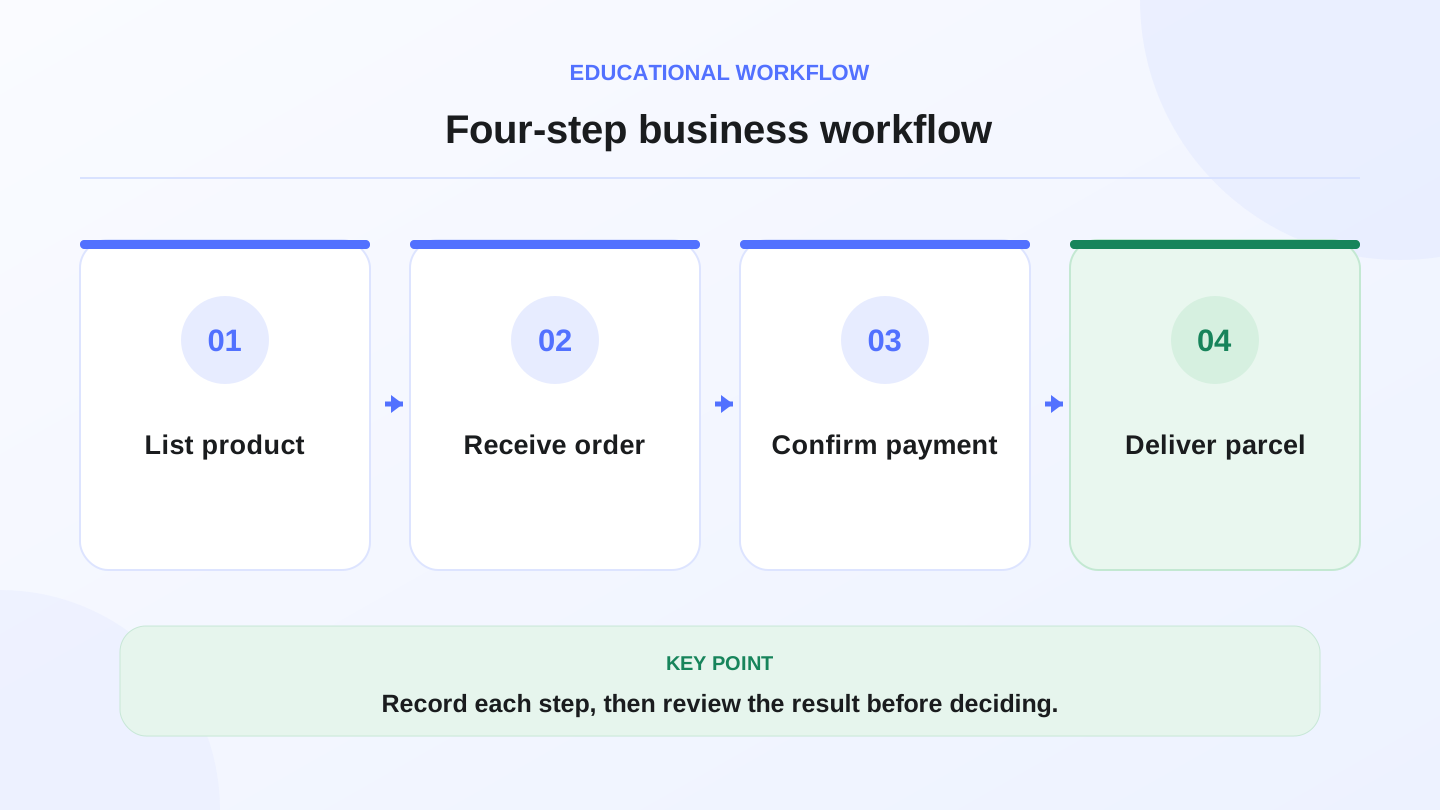
A practical sequence has four connected steps: List product, Receive order, Confirm payment, Deliver parcel. Recording each step helps review the result.
03
Start with your operating workflow, not the template
A nice storefront matters, but it is not the first question. Start with daily operations: how many products do you sell, do you have colors and sizes, do you sell from one branch or many, do you need Arabic and English, does the customer pay online or cash on delivery, and is the same stock sold both in-store and online?
If the same products are sold through both channels, your priority is the connection between ecommerce and POS. The business needs to know what is available, what was sold, what must be packed, and what should appear in reports. A disconnected online store may look simple at first, but it often pushes the real cost onto employees.
04
Compare platform types before you choose
This table does not mean every business needs the most advanced option. It means the platform type should match operating complexity. A small seller can start simple, but a shop with stock, staff, and daily orders should avoid building a second isolated workflow.

| Option | Best fit | Operating risk | What to check |
|---|---|---|---|
| Simple order page | Early test or very few products | Manual entry and unclear stock | Are orders and reports organized? |
| Standalone store | Online-only seller | Separate from shop selling | Can inventory connect later? |
| POS-connected store | Shop selling online and in-store | Needs proper setup | Do orders deduct stock automatically? |
| Fully custom platform | Large company with special needs | Higher cost and complexity | Is the volume worth the build? |
05
Why POS and inventory connection changes the decision
When ecommerce is separate from cashier software, the business has two sources of truth. The POS sells in the branch, the online store receives orders, and the team reconciles both at the end of the day. On quiet days, this may work. During promotions, holidays, or high-volume periods, the errors become obvious.
Connection reduces that risk. An online order should reduce stock, appear in sales records, and be visible to the team preparing the order. This matters for clothing shops, electronics stores, supermarkets, restaurants, and cafes because one product can be sold from the shelf and the website at the same time. The platform should protect the customer experience before an unavailable product is sold.
06
Worked example: the cost of manual order entry
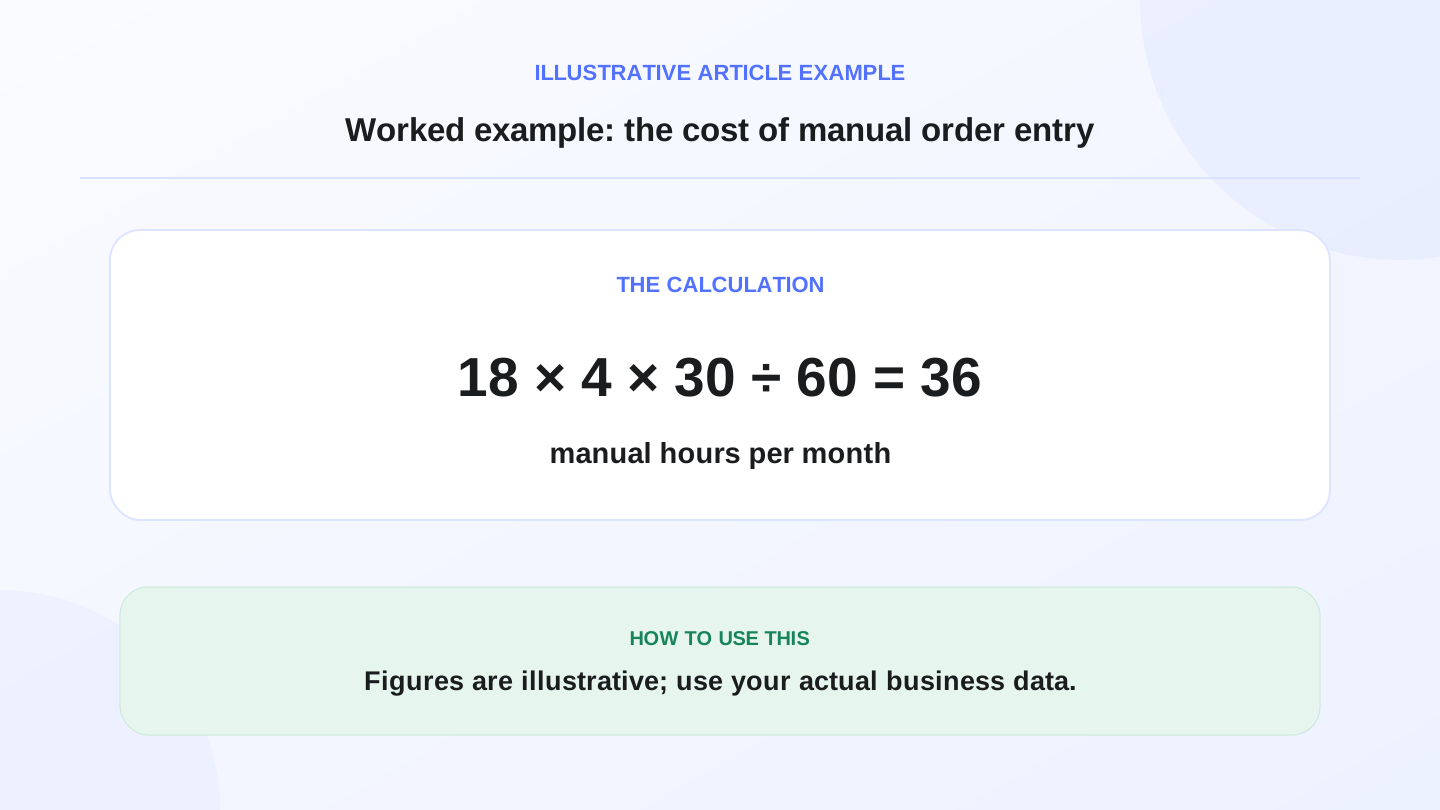
Assume an online store receives 18 orders per day. If an employee spends 4 minutes copying each order into another system, the daily time is 18 × 4 = 72 minutes. Over 30 days, that becomes 72 × 30 = 2,160 minutes, or 36 hours per month.
If the employee’s time is valued at an illustrative 6,000 IQD per hour, the monthly value of that work is 36 × 6,000 = 216,000 IQD. This is not an official RA8M price. It is a way to compare software cost against repeated manual work. A low subscription can still be expensive if it creates hours of copying, checking, and correcting.
07
Payments and delivery in Iraq
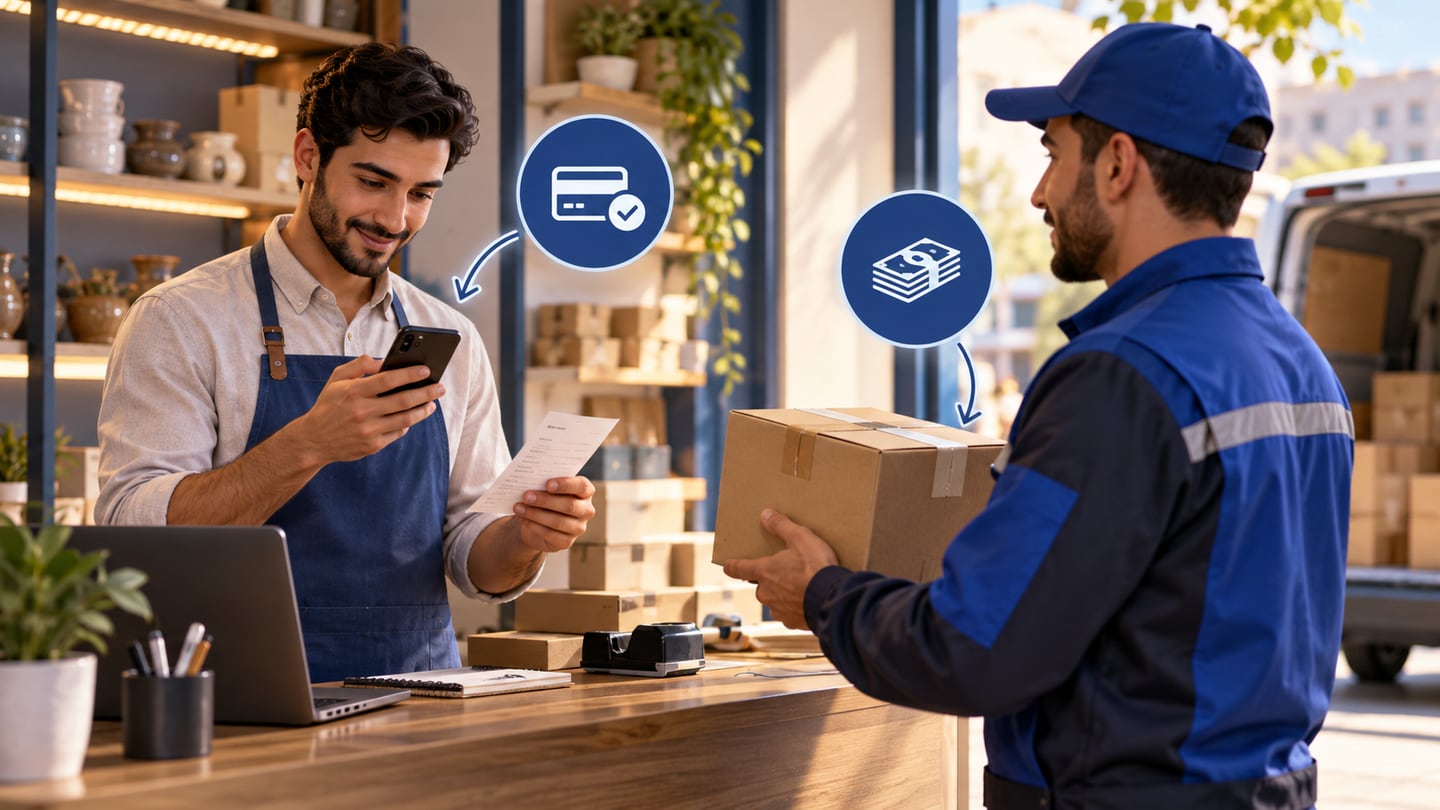
Many Iraq ecommerce orders still depend on cash on delivery, while some businesses need electronic payment options such as cards or wallets when available through the current setup. Do not only ask whether the platform supports payment. Ask how payment status appears in the order, how staff review it, and whether reports separate cash, card, and other methods clearly.
Delivery is similar. Can the customer enter a useful address? Can staff update order status? Can the owner see what was delivered, canceled, or returned? RA8M public sources describe ecommerce payment and logistics capabilities depending on configuration, so verify the current details before making a final buying decision.
08
Arabic and English support is not cosmetic
For Iraq businesses, Arabic support is an operating requirement. The customer journey should be understandable in Arabic, the team should be able to work in Arabic or English, and product names, receipts, and order information should be clear. RTL support matters because awkward Arabic screens slow staff and reduce trust.
Bilingual support also helps when owners, managers, accountants, and cashiers use different language preferences. A platform that looks good in English but becomes hard to use in Arabic is not truly ready for many local teams. The buying test should include real Arabic product names, customer details, and order workflows.
09
When does RA8M fit, and when is something simpler enough?
RA8M fits when you want an Arabic-first ecommerce storefront connected with POS products, inventory, orders, reports, and daily selling workflows. It is relevant for shops, restaurants, cafes, supermarkets, service businesses, and operators in Iraq who sell both online and in-store and want one connected record.
A simpler tool may be enough if you have only a few products, are testing an idea for a short period, and do not need accurate inventory or team permissions. But once you receive daily orders and sell the same products in the shop, separation between the store and cashier becomes an operating cost. At that point, connected software is usually safer.
10
Practical checklist before subscribing
Before you pay, answer these questions in writing. Does the platform support Arabic and RTL? Can it handle product variants such as color and size? Does each order reduce inventory? Can staff permissions be controlled? Can managers review daily sales? Does it connect with real product pages and pricing options? Can the business grow from a simple online store into a connected POS and inventory system without rebuilding everything?
Run a small test before committing: add products, create an order, change stock, cancel an order, disconnect the internet where relevant to POS workflows, and review the reports. If you need spreadsheets to understand what happened, the platform does not yet cover the full workflow.
11
Conclusion
The best ecommerce platform in Iraq is the one that matches daily operations: Arabic-ready, clear for customers, practical for staff, and connected to inventory and POS when the business needs it. If you only need to show a few products, a simple setup can work. If you want organized selling across online and in-store channels, start with a connected platform like RA8M and verify the right plan on the pricing page.
For more details about development paths and costs, see ecommerce store development in Iraq and cost of building an online store.
12
FAQs
What is the most important ecommerce platform feature?
For an operating business, the most important feature is connecting orders, products, and inventory with daily selling. POS integration reduces manual entry and stock mistakes.
Do I need an online store if I sell on Instagram or WhatsApp?
Messages can work for very small volume, but an online store becomes important when you need a structured catalog, trackable orders, stock visibility, and sales reports.
Should I choose an Arabic ecommerce platform?
In Iraq, Arabic support, RTL screens, clear Arabic customer journeys, and bilingual staff workflows matter because many owners, cashiers, and customers work in Arabic every day.
Does RA8M include ecommerce?
Yes. RA8M public sources describe Ecommerce as an add-on that creates a storefront connected with POS products and inventory, with payment and delivery workflows depending on setup.
How should I compare ecommerce platform cost?
Compare subscription cost with staff time, manual order entry, stock errors, rejected orders, and the cost of managing disconnected tools. Always verify current pricing before buying.
Frequently asked questions
What is the most important ecommerce platform feature?
For an operating business, the most important feature is connecting orders, products, and inventory with daily selling. POS integration reduces manual entry and stock mistakes.
Do I need an online store if I sell on Instagram or WhatsApp?
Messages can work for very small volume, but an online store becomes important when you need a structured catalog, trackable orders, stock visibility, and sales reports.
Should I choose an Arabic ecommerce platform?
In Iraq, Arabic support, RTL screens, clear Arabic customer journeys, and bilingual staff workflows matter because many owners, cashiers, and customers work in Arabic every day.
Does RA8M include ecommerce?
Yes. RA8M public sources describe Ecommerce as an add-on that creates a storefront connected with POS products and inventory, with payment and delivery workflows depending on setup.
How should I compare ecommerce platform cost?
Compare subscription cost with staff time, manual order entry, stock errors, rejected orders, and the cost of managing disconnected tools. Always verify current pricing before buying.
Written by
RA8M Team
Practical guides for restaurants, shops, and operations teams
Next step
Try RA8M with data close to your operation
Read next
Related RA8M guides
Online Store and Ecommerce
Online Store Design in Iraq: POS-Connected Selling Guide
Read article
Ecommerce
Create Online Store in Iraq: A Practical Launch Guide
Read article
Online Store and Ecommerce
Link Online Store With POS in Iraq: Why It Matters
Read article
Online Store and Ecommerce
Build Online Store in Iraq: Catalog, Stock and Orders
Read article
Ecommerce
How to Open Online Store in Iraq: Practical Launch Guide
Read article