Cost Accounting for Small Businesses in Iraq: Unit Cost, COGS, and Margin
Cost accounting for small businesses in Iraq: direct and overhead layers, purchase-to-COGS flow, illustrative IQD bakery and sweets examples, links to recipe costing and break-even, and Ra8m JournalEntriesTab plus ProfitLossReport—no invented report names.
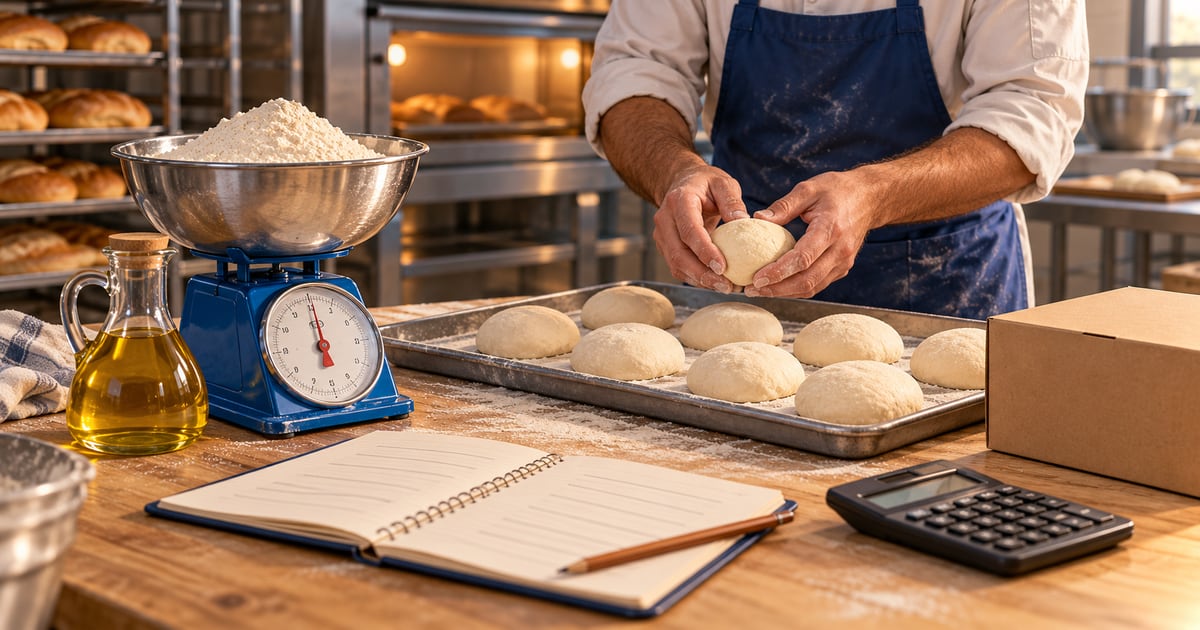
Cost accounting for small businesses in Iraq tracks unit cost from direct materials, indirect production support, and allocated overhead before COGS hits ProfitLossReport. Post purchases and usage with double-entry discipline, reconcile inventory, and audit on JournalEntriesTab. Ra8m shows cost of sales on ProfitLossReport—no extra fictional cost report names in this guide.
01
Cost Accounting for Small Businesses in Iraq: Unit Cost, COGS, and Margin
The menu price felt fine until flour jumped, delivery bags doubled, and ProfitLossReport still showed a thin net line. Cost accounting for small businesses in Iraq is how you explain that gap: what each plate, tray, or SKU actually consumes before rent and wages land in operating expenses. It sits between daily purchasing and profit and loss for Iraq shops—and it feeds honest break-even point conversations without inventing market statistics.
Pair this guide with accounting principles in Iraq, cost of goods sold, double-entry posting, cash flow timing, and financial statements when you close a month. For people operations that change labour cost, read HR management for small businesses in Iraq. In Ra8m, confirm plans on pricing—Basic 7,500 IQD/month, Advanced 15,000, Manufacture 30,000, ecommerce from 50,000 (verify live before purchase).
Quick answer: Cost accounting builds unit cost from direct materials, indirect production support, and allocated overhead, then compares it to selling price before you trust COGS on ProfitLossReport. Post purchases and usage through double-entry, reconcile inventory, and audit with JournalEntriesTab—not with made-up report names. ProfitLossReport shows cost of sales and expenses for the period you select.
02
Cost Accounting for Small Businesses in Iraq: Unit Cost, COGS, and Margin
03
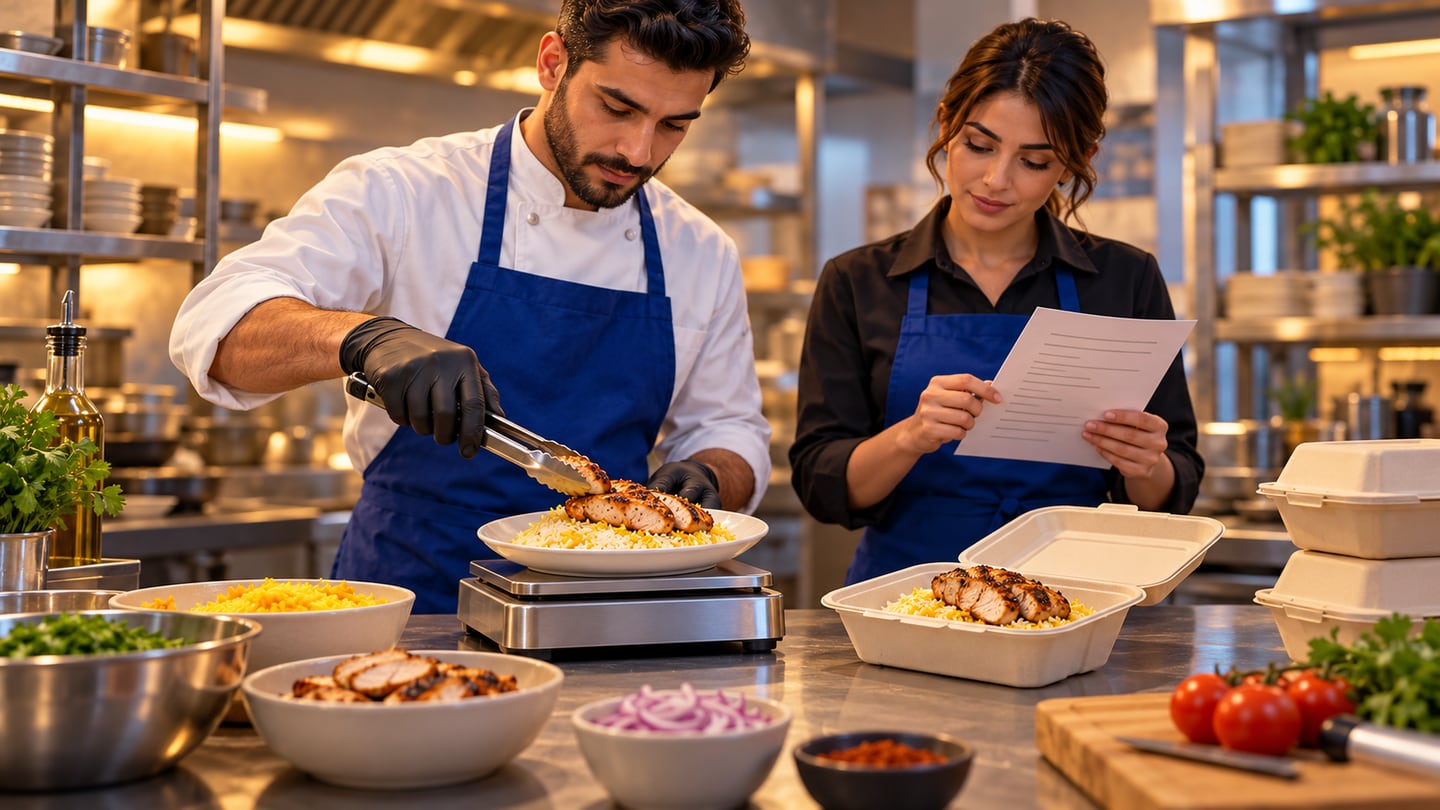
Four layers shop owners confuse
Do not hide rent inside COGS to make margin look better—your accountant will reclassify it anyway when building financial statements.

| Layer | Question it answers | Common Iraq shop example |
|---|---|---|
| Direct cost | What moves with one SKU or recipe? | Flour, sugar, meat, box |
| Indirect cost | What supports production but not one unit? | Kitchen power, gas for oven |
| Overhead | What runs the shop even if sales pause? | Rent, admin phone, accounting |
| Unit cost | What is one sale truly worth? | Total allocated ÷ quantity sold |
04
From supplier bill to margin on the profit and loss
1. Purchase — supplier bill increases inventory (not always instant expense).
2. Usage — POS sale or recipe deduction reduces stock.
3. COGS — cost of what sold flows to ProfitLossReport via cost of goods sold logic.
4. Margin — selling price minus unit cost; compare to break-even fixed bills.
Pay suppliers with disciplined payment vouchers so JournalEntriesTab shows cash out against the right payable—not a mystery drawer shortage.

05
Worked example: sweets shop «Al-Rabia» (illustrative IQD)
Al-Rabia sweets (fictional name) in Basra tracks one tray of baklava monthly.
If slices thrown away or given as samples are not counted, unit cost looks artificially low—fix counts before you scale delivery.
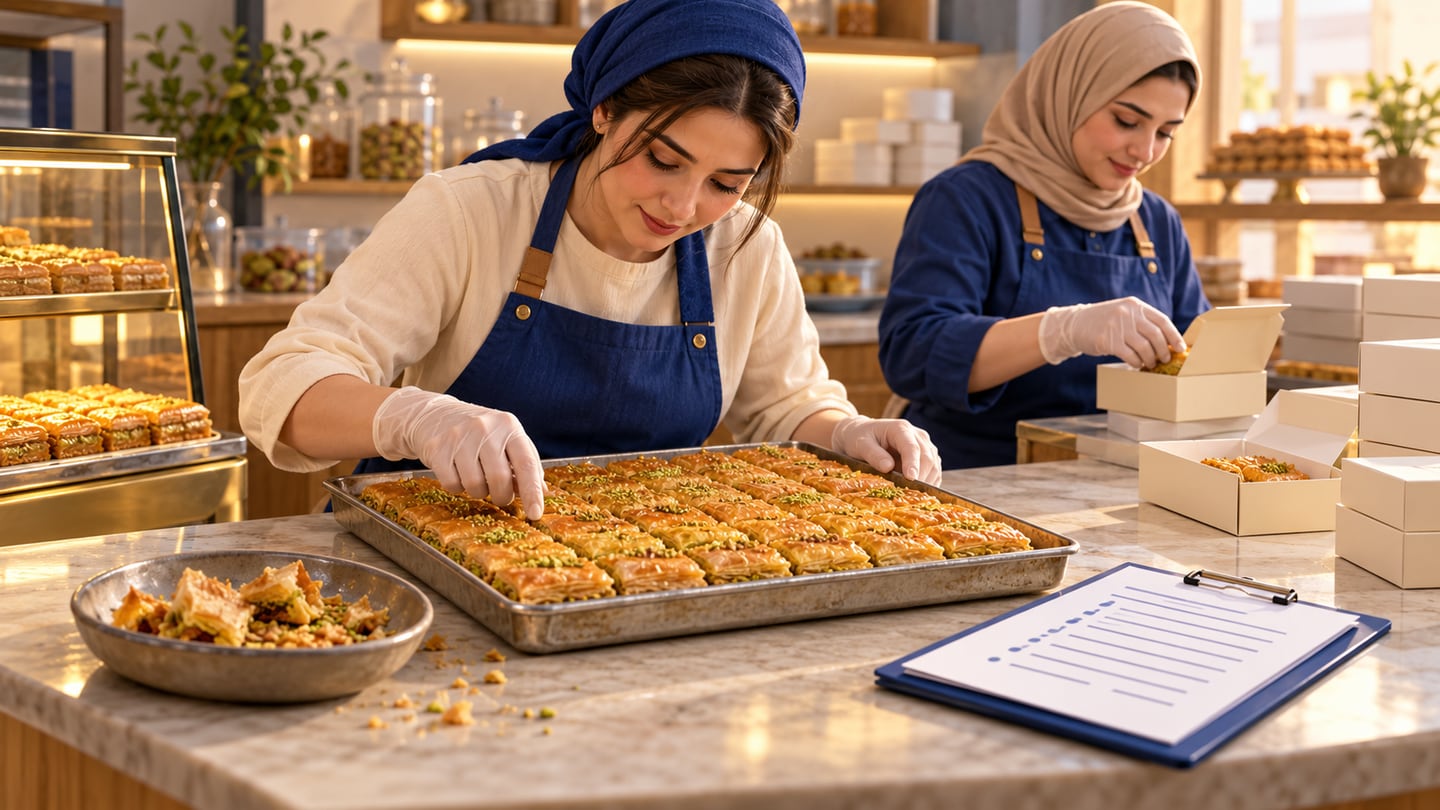
| Item | Illustrative IQD |
|---|---|
| Nuts, phyllo, syrup (direct) | 48,000 |
| Boxes and labels | 6,500 |
| Share of kitchen power (allocated) | 4,200 |
| **Tray cost** | **58,700** |
| Slices sold (32) | unit ≈ 1,834 |
| Menu price per slice | 3,500 |
| Gross margin per slice (before shop wages) | ≈ 1,666 |
06
Recipes, manufacturing, and POS
Restaurants should mirror ingredient lists in recipe costing for Iraq so each POS line deducts stock. Manufacture plan workflows matter when you produce intermediates (dough, sauces) before retail packs. If you only retail pre-packed goods, focus on weighted average cost from purchases instead of multi-step BOMs.
| Mistake | Why it hurts | Safer habit |
|---|---|---|
| Treating every supplier payment as COGS | Overstates expense, understates inventory | Match bill to stock receipt |
| Ignoring shrinkage | False margin | Staff meal log + waste line |
| Mixing owner drawings with COGS | Distorts unit math | Separate equity drawings |
| Pricing from competitor only | Ignores your utilities | Unit cost first, market second |
07
How Ra8m supports the numbers (real report names only)
There is no substitute for a physical stock count before you trust COGS for a month. Export ProfitLossReport only after you reconcile POS sales, purchase bills, and inventory adjustments on JournalEntriesTab.
| Tool | Role in cost accounting |
|---|---|
| **JournalEntriesTab** | Prove debits and credits for purchases, adjustments, and COGS |
| **ProfitLossReport** | Period view of revenue, cost of sales, and operating expenses |
08
Month-end checklist tied to other guides
Re-read accounting principles for revenue recognition vs cash.
Tie COGS to cost of goods sold Iraq opening and closing inventory.
If cash timing confuses profit, open cash flow in Iraq.
When packages go to a bank, bundle ProfitLossReport with notes from JournalEntriesTab as your accountant prefers—see financial statements.
Workshop checkpoint: direct flour and oil in a bakery recipe
When you practice cost accounting for small businesses in Iraq, treat direct flour and oil in a bakery recipe as a weekly habit—not a year-end surprise. Pull purchase bills from your supplier file, match them to inventory movements, and open JournalEntriesTab for the accounts that moved. Compare the same period on ProfitLossReport with your profit and loss guide and cost of goods sold checklist. If unit cost drifted, revisit recipe costing or your spreadsheet before you change menu prices. Numbers here stay illustrative IQD until you export your own ledger.
Workshop checkpoint: packaging that changes with delivery bags
When you practice cost accounting for small businesses in Iraq, treat packaging that changes with delivery bags as a weekly habit—not a year-end surprise. Pull purchase bills from your supplier file, match them to inventory movements, and open JournalEntriesTab for the accounts that moved. Compare the same period on ProfitLossReport with your profit and loss guide and cost of goods sold checklist. If unit cost drifted, revisit recipe costing or your spreadsheet before you change menu prices. Numbers here stay illustrative IQD until you export your own ledger.
Workshop checkpoint: kitchen electricity you allocate by hour
When you practice cost accounting for small businesses in Iraq, treat kitchen electricity you allocate by hour as a weekly habit—not a year-end surprise. Pull purchase bills from your supplier file, match them to inventory movements, and open JournalEntriesTab for the accounts that moved. Compare the same period on ProfitLossReport with your profit and loss guide and cost of goods sold checklist. If unit cost drifted, revisit recipe costing or your spreadsheet before you change menu prices. Numbers here stay illustrative IQD until you export your own ledger.
Workshop checkpoint: rent that should not hide inside COGS
When you practice cost accounting for small businesses in Iraq, treat rent that should not hide inside COGS as a weekly habit—not a year-end surprise. Pull purchase bills from your supplier file, match them to inventory movements, and open JournalEntriesTab for the accounts that moved. Compare the same period on ProfitLossReport with your profit and loss guide and cost of goods sold checklist. If unit cost drifted, revisit recipe costing or your spreadsheet before you change menu prices. Numbers here stay illustrative IQD until you export your own ledger.
Workshop checkpoint: shrinkage after staff meals and samples
When you practice cost accounting for small businesses in Iraq, treat shrinkage after staff meals and samples as a weekly habit—not a year-end surprise. Pull purchase bills from your supplier file, match them to inventory movements, and open JournalEntriesTab for the accounts that moved. Compare the same period on ProfitLossReport with your profit and loss guide and cost of goods sold checklist. If unit cost drifted, revisit recipe costing or your spreadsheet before you change menu prices. Numbers here stay illustrative IQD until you export your own ledger.
Workshop checkpoint: supplier bills paid before goods are sold
When you practice cost accounting for small businesses in Iraq, treat supplier bills paid before goods are sold as a weekly habit—not a year-end surprise. Pull purchase bills from your supplier file, match them to inventory movements, and open JournalEntriesTab for the accounts that moved. Compare the same period on ProfitLossReport with your profit and loss guide and cost of goods sold checklist. If unit cost drifted, revisit recipe costing or your spreadsheet before you change menu prices. Numbers here stay illustrative IQD until you export your own ledger.
Workshop checkpoint: POS discounts versus true unit cost
When you practice cost accounting for small businesses in Iraq, treat POS discounts versus true unit cost as a weekly habit—not a year-end surprise. Pull purchase bills from your supplier file, match them to inventory movements, and open JournalEntriesTab for the accounts that moved. Compare the same period on ProfitLossReport with your profit and loss guide and cost of goods sold checklist. If unit cost drifted, revisit recipe costing or your spreadsheet before you change menu prices. Numbers here stay illustrative IQD until you export your own ledger.
Workshop checkpoint: month-end stock count before ProfitLossReport
When you practice cost accounting for small businesses in Iraq, treat month-end stock count before ProfitLossReport as a weekly habit—not a year-end surprise. Pull purchase bills from your supplier file, match them to inventory movements, and open JournalEntriesTab for the accounts that moved. Compare the same period on ProfitLossReport with your profit and loss guide and cost of goods sold checklist. If unit cost drifted, revisit recipe costing or your spreadsheet before you change menu prices. Numbers here stay illustrative IQD until you export your own ledger.
<!--PAD-->
09
Summary
Cost accounting for small businesses in Iraq keeps unit cost, COGS, and margin honest before ProfitLossReport tells the story of the month. Use JournalEntriesTab for evidence, recipes for kitchens, and HR management when labour is the cost you can flex fastest.
10
FAQ
What is cost accounting for a small shop in Iraq?
It is the discipline of knowing what each product or service truly costs—materials, packaging, and fairly allocated overhead—before you read net profit on ProfitLossReport. It supports pricing and inventory decisions; it is not a tax filing by itself.
How is cost accounting different from COGS on the profit and loss?
COGS is the ledger line for goods sold in a period. Cost accounting is the method that builds unit costs and explains shrinkage, recipes, and allocations before COGS posts.
Do I need a separate cost accounting report in Ra8m?
Use ProfitLossReport for cost of sales and expenses, JournalEntriesTab for audit trails, and your inventory or recipe tools for unit math. We do not invent extra report names here.
How do recipes tie in?
Restaurants and bakeries should link ingredients to sales through recipe costing so POS deductions match purchases.
When should I review unit cost?
After supplier price changes, menu edits, delivery packaging changes, and before you trust break-even targets for a new branch.
How does cost accounting connect to financial statements?
Accurate COGS and expense classification feed financial statements once double-entry and period cut-off are clean.
Which Ra8m plans support cost tracking?
Confirm live pricing: Basic 7,500 IQD/month, Advanced 15,000, Manufacture 30,000, ecommerce from 50,000—verify on /en/pricing before you buy.
Frequently asked questions
What is cost accounting for a small shop in Iraq?
Knowing what each product or service truly costs—materials, packaging, and fairly allocated overhead—before you read net profit on ProfitLossReport. It supports pricing and inventory; it is not a tax return alone.
How is cost accounting different from COGS on the profit and loss?
COGS is the ledger line for goods sold in a period. Cost accounting builds unit costs and explains shrinkage and recipes before COGS posts.
Do I need a separate cost accounting report in Ra8m?
Use ProfitLossReport for cost of sales and expenses and JournalEntriesTab for audit trails. We do not invent extra report names here.
How do recipes tie in?
Link ingredients to POS sales through the recipe costing guide so deductions match purchases.
When should I review unit cost?
After supplier price changes, menu edits, packaging changes, and before you trust break-even targets for a new branch.
How does cost accounting connect to financial statements?
Accurate COGS and expense classification feed financial statements once double-entry and period cut-off are clean.
Which Ra8m plans support cost tracking?
Confirm live pricing: Basic 7,500 IQD/month, Advanced 15,000, Manufacture 30,000, ecommerce from 50,000—verify on /en/pricing before you buy.
Written by
RA8M Team
Practical guides for restaurants, shops, and operations teams
Next step
Try RA8M with data close to your operation
Read next
Related RA8M guides
Accounting and Finance
Accounting Principles for Iraqi Businesses: Financial vs Managerial, Bookkeeping, IQD Exercises
Read article
Accounting and Finance
Free Accounting Software in Iraq: Limits, Shop Needs, and When Integrated Reports Win
Read article
Accounting and Finance
Raw Materials Management for Small Manufacturers in Iraq: Receive, Store, Cost, and Produce
Read article
Accounting and Finance
Financial Statements for Iraqi Businesses: Four Reports, How They Connect, and Year-End Close
Read article
Accounting and Finance
Accounts Receivable and Payable in Iraq: الذمم المدينة, Aging, and Ra8m Credit
Read article