POS Software Pricing in Iraq: Cost, Features and ROI
A practical guide to POS software pricing in Iraq: compare monthly cost, features, offline selling, inventory, training and daily value before subscribing.
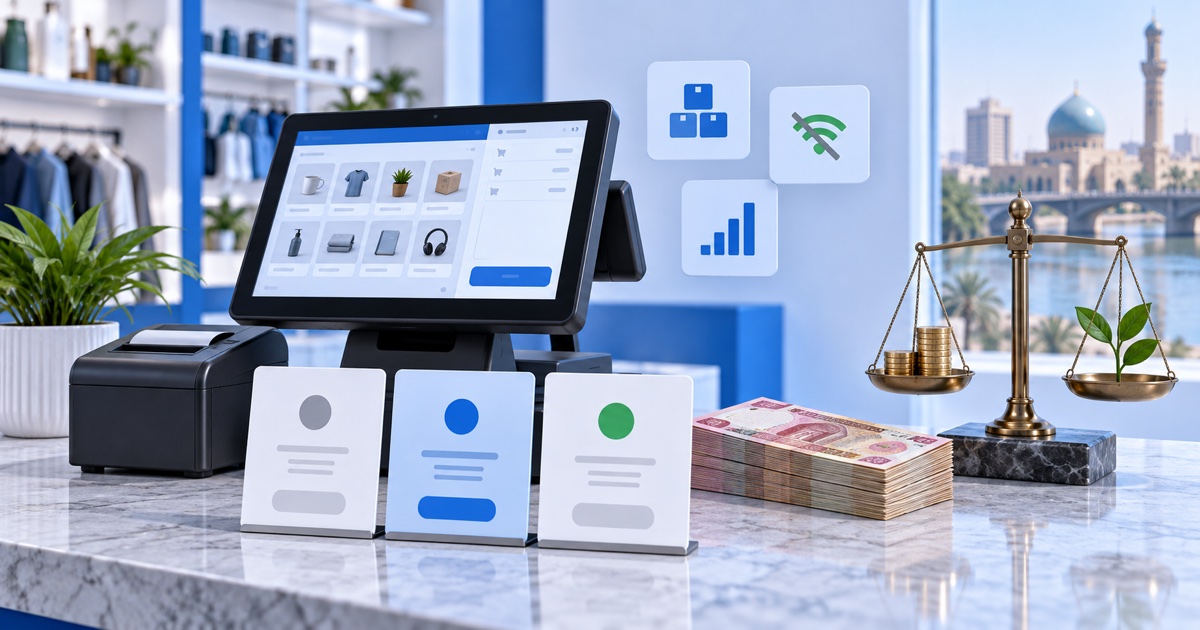
POS software pricing in Iraq should be compared by daily operating value, not only monthly fee. Check whether the plan includes cashier sales, inventory, purchases, reports, roles, offline selling, support, and ecommerce options. Divide the monthly subscription by working days, then compare that cost with time saved, fewer stock mistakes, and clearer daily reports.
01
POS Software Pricing in Iraq: Cost, Features and ROI
POS software pricing is not just the number written on a plan page. For an Iraq shop, restaurant, supermarket, salon, or online seller, the real question is whether the monthly cost pays back through faster cashier work, cleaner inventory, fewer closing mistakes, and reports the owner can trust.
Quick answer: POS software pricing in Iraq should be compared by daily operating value, not only monthly fee. Check whether the plan includes cashier sales, inventory, purchases, reports, roles, offline selling, support, and ecommerce options. Divide the monthly subscription by working days, then compare that cost with time saved, fewer stock mistakes, and clearer daily reports.
02
What does POS software pricing usually include?
A POS subscription normally covers the cashier application plus the records behind it: products, prices, discounts, customers, invoices, payment methods, cash register activity, and reports. Stronger plans may also include inventory movements, purchase bills, branch controls, staff permissions, finance reports, and ecommerce sync.
For Iraq businesses, the feature list should be tested against daily reality. A cafe may care about quick orders and modifiers. A clothing shop may need variants and barcode sales. A supermarket may need fast checkout and low-stock visibility. A service business may care about invoices, staff activity, and payment tracking.
03
Price alone is a weak comparison
Two systems can show similar monthly prices but solve very different problems. One may be a simple sales screen. Another may connect sales, inventory, purchases, reports, roles, and online orders. The second plan can look more expensive until the owner counts the cost of manual stock errors, missing reports, and time spent reconciling cash.
The right pricing question is: what daily work does this plan remove or control? If the POS only prints receipts, compare it as a cashier tool. If it becomes the operating record for sales, stock, purchases, and finance, compare it as business management software.
04
POS pricing checklist for Iraq businesses
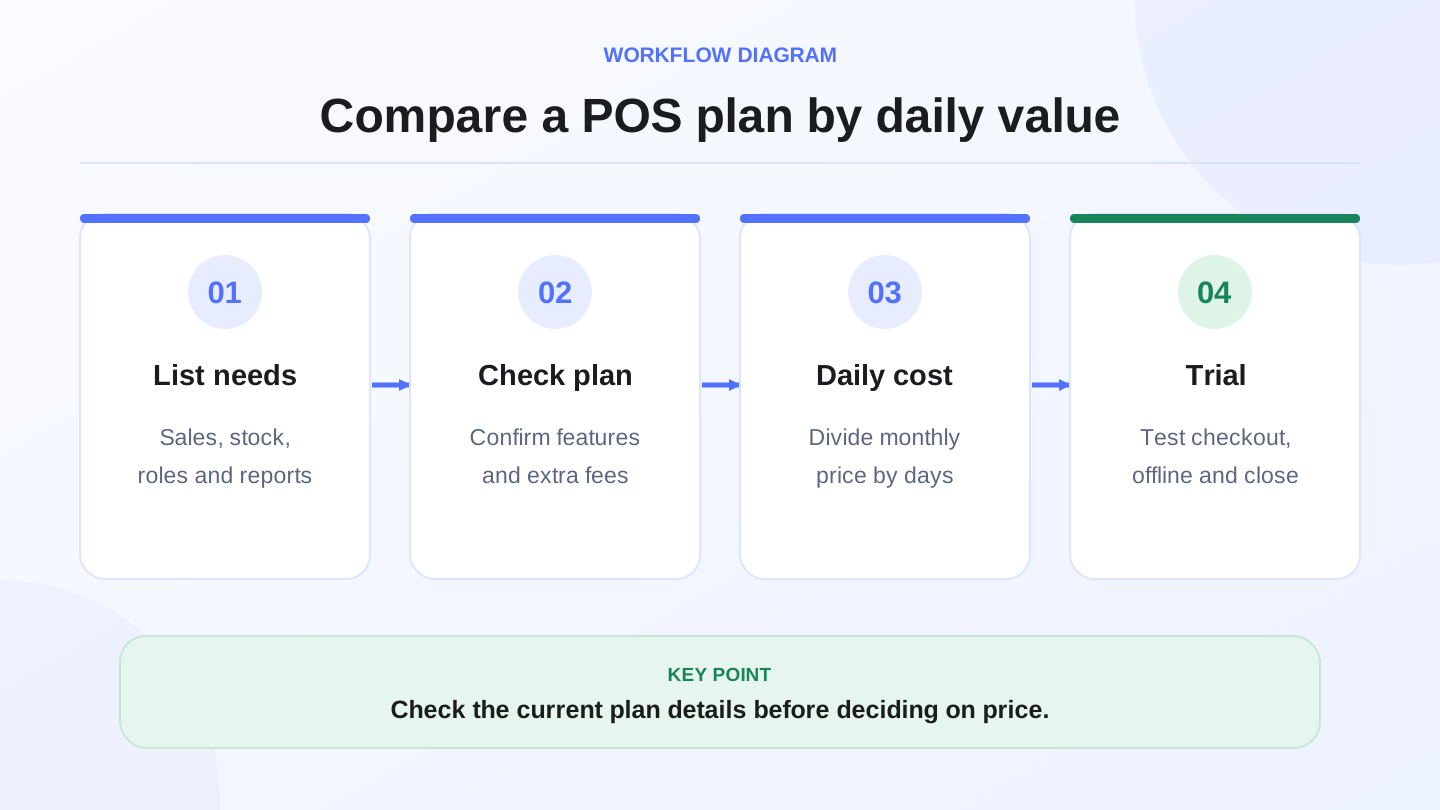
Use this checklist before choosing a plan or starting a free trial.
Do not mark a feature as included until you know whether it is available in your plan, needs setup, or costs extra.
| Pricing item | What to check | Why it matters |
|---|---|---|
| Cashier sales | Products, discounts, returns, receipts | Prevents slow checkout and missing records |
| Inventory | Stock deduction, purchases, adjustments | Shows what is available and what needs reorder |
| Offline selling | Continue sales during weak internet | Important for many Iraq locations |
| Roles | Cashier and manager permissions | Protects price changes, deletions, and reports |
| Reports | Daily sales, payments, stock, profit signals | Helps owner manage without guessing |
| Branches | Per-branch stock and staff visibility | Needed when the business expands |
| Ecommerce | Online store, order sync, stock sync | Avoids separate online and in-store records |
| Support | Setup, training, migration help | Reduces adoption risk for the team |
05
Worked example: monthly price to daily cost
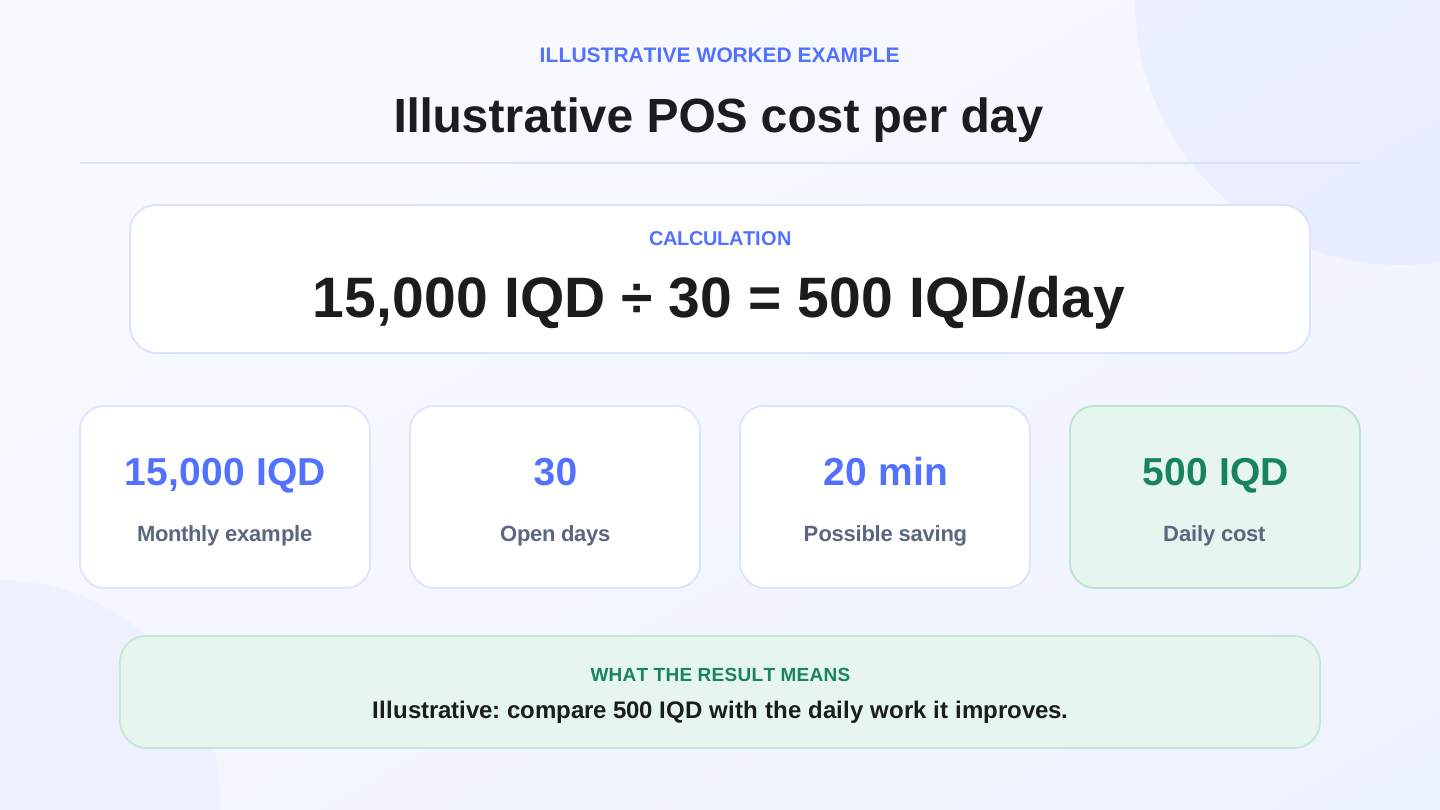
Assume a POS plan costs 15,000 IQD per month and the business operates 30 days. Daily cost = 15,000 ÷ 30 = 500 IQD per day.
Now compare that 500 IQD with value created. If the system saves 20 minutes in daily closing, prevents one inventory mistake per week, and gives the owner clearer sales reports, the plan may be economical. If the team only uses it as a receipt printer and ignores inventory and reports, even a low price can feel wasted.
Public RA8M materials list Basic, Advanced, Manufacture, and Ecommerce add-on pricing, but pricing may change. Always verify current pricing on RA8M pricing before making a purchase decision.
06
Which features change the price the most?
The biggest pricing differences usually come from depth. A simple cashier plan may be enough for a small counter that sells ready-made products. A business with variants, raw materials, recipes, purchases, suppliers, branches, or ecommerce needs deeper controls.
Inventory depth is one major factor. Basic stock quantities are different from product variants, transfers, adjustments, low-stock alerts, and cost visibility. Ecommerce is another factor: if online orders need to update POS stock, the system must connect the storefront, products, orders, payments, and delivery workflow.
07
How does offline POS affect the value?
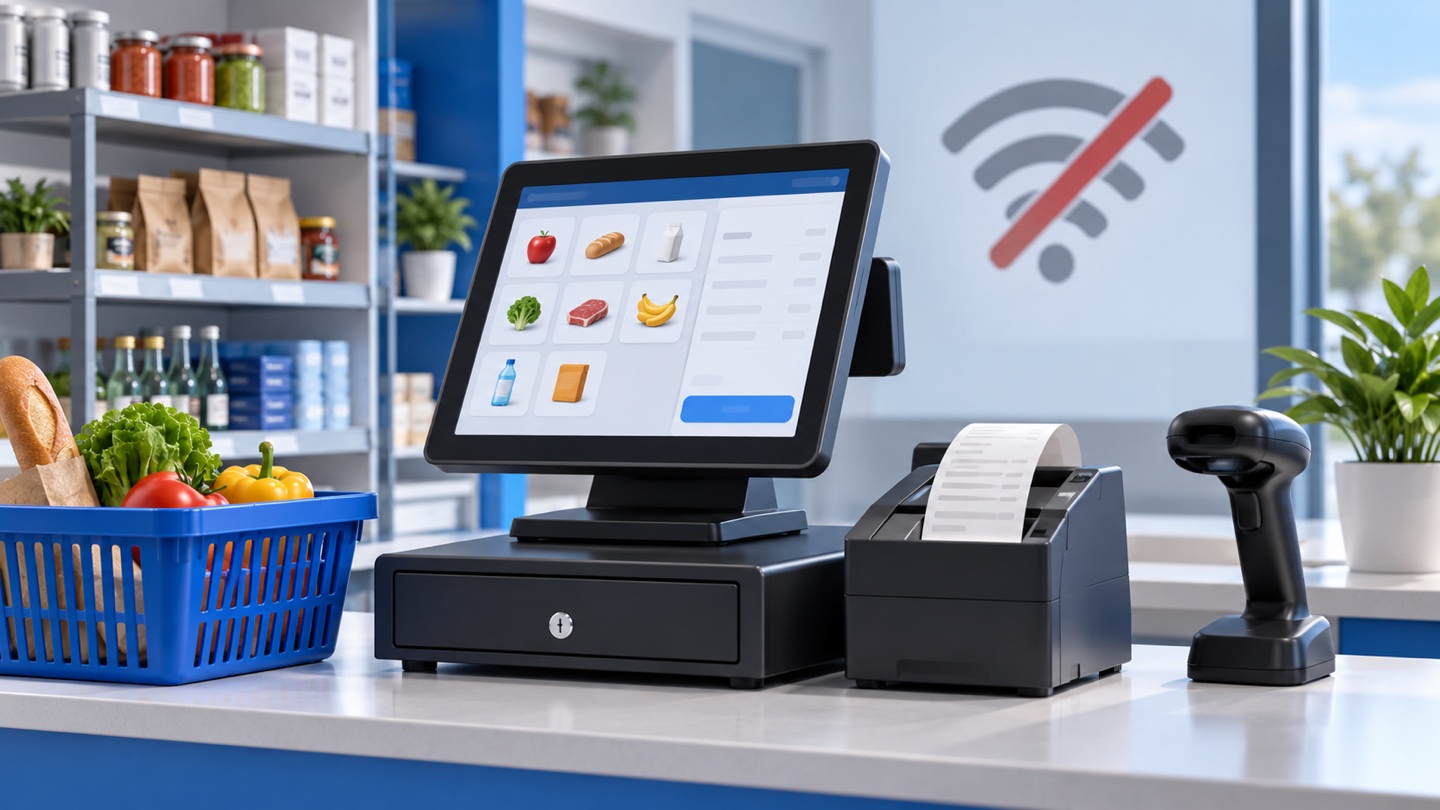
Offline selling is valuable when internet interruptions would otherwise stop sales. A plan with offline-ready POS can help the cashier continue selling, printing, and recording transactions, then sync when internet returns. That value is hard to see on a pricing table, but it matters on a busy day.
When evaluating pricing, ask how offline mode behaves: what can the cashier do while disconnected, what syncs later, and what limits exist. RA8M public materials state that RA8M POS is offline-ready and syncs when internet returns, which is especially relevant for Iraq operators.
08
POS only vs POS plus ecommerce
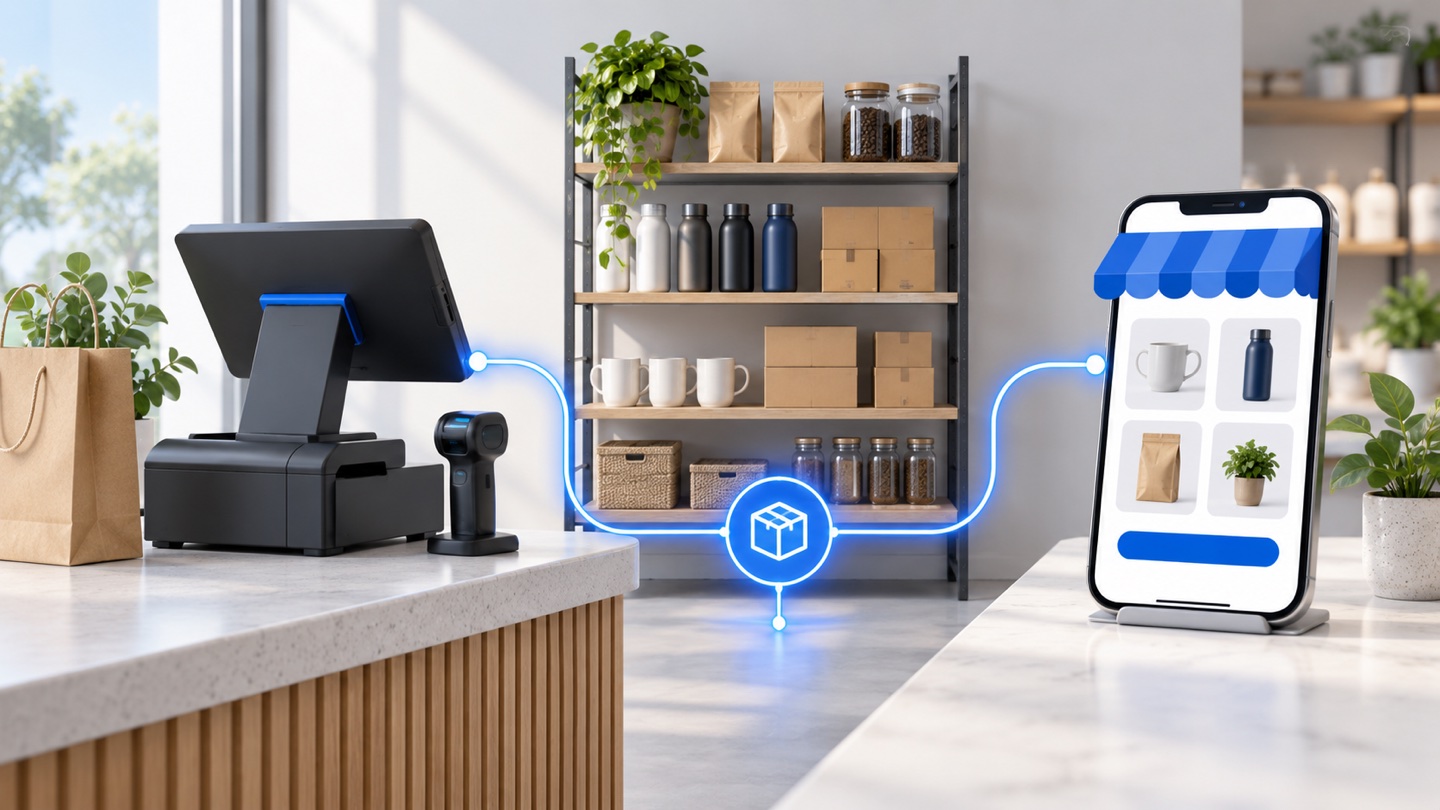
Some businesses only need in-store cashier operations. Others sell on Instagram, WhatsApp, a website, or multiple branches and need online orders to connect with stock. Pricing changes when ecommerce enters the workflow because the system is no longer only a register.
If your business needs ecommerce, compare RA8M Ecommerce and RA8M POS together instead of pricing them as separate tools.
| Setup | Best fit | Pricing question |
|---|---|---|
| POS only | One shop or counter selling in person | Does the plan include inventory and reports? |
| POS plus inventory | Shops, cafes, pharmacies, supermarkets | Are purchases, adjustments, and low stock included? |
| POS plus ecommerce | Stores selling in person and online | Do online orders sync with POS products and stock? |
| POS plus branches | Growing operators | Can each branch see the right stock, staff, and reports? |
09
When can a cheaper plan be enough?
A cheaper plan may be enough when the business has one location, few products, simple sales, no raw materials, no ecommerce, and no complex reporting needs. In that case, paying for advanced workflows too early may not create immediate value.
But cheaper is risky when the team needs controls the plan does not include. If the owner still counts stock manually, closes cash in a notebook, and guesses which product is profitable, the low monthly price is not the full cost. The missing reports become the cost.
10
When should you choose a stronger plan?
Choose a stronger plan when stock accuracy affects profit, when multiple employees use the system, when purchases and suppliers need tracking, or when the owner needs branch-level reports. Restaurants and cafes may need recipe or ingredient workflows. Retail shops may need variants. Supermarkets may need barcode speed and low-stock discipline.
Manufacturing, bakeries, and production-style businesses may need raw materials, finished goods, formulas, damaged items, and cost calculation. These workflows are deeper than simple cashier sales, so they should be priced as operational control, not only as POS.
11
Questions to ask before subscribing
Before paying, ask whether setup support is included, how data import works, whether CSV export is possible, how users and roles are managed, how reports are structured, and what happens if you later add ecommerce or another branch. Ask whether pricing changes when you add users, devices, branches, products, online store features, or support.
Also ask your team to test the system in Arabic and English. A bilingual owner may understand an English interface, but cashier staff may work faster with Arabic RTL screens and Arabic receipts. Adoption matters as much as price.
12
When does RA8M fit?
RA8M fits when the business wants Arabic-first POS connected to inventory, purchases, finance, reports, roles, branches, and ecommerce. It is especially relevant for Iraq restaurants, cafes, retail shops, supermarkets, pharmacies, salons, service businesses, and multi-branch SMBs that need offline-ready cashier workflows.
A simpler setup may be enough for a very small seller with few products and no reporting needs. But once stock, employees, branches, online orders, or daily reports matter, pricing should be judged against operational value.
13
Conclusion
Compare POS software pricing by daily value, not just the monthly fee. List the workflows you need, calculate the daily cost, test real cashier and inventory scenarios, and verify current pricing before subscribing. Start with RA8M POS and check current pricing when you are ready to compare plans.
14
FAQs
How should I compare POS software pricing?
Compare the monthly fee, included features, inventory depth, offline selling, user roles, reports, support, onboarding, and whether ecommerce or branches cost extra.
Is the cheapest POS plan always better?
No. A cheap plan can become expensive if it lacks inventory control, reports, offline selling, permissions, or support that your team needs every day.
How do I calculate daily POS cost?
Divide the monthly subscription by the number of days you operate. Then compare the daily cost with time saved, errors avoided, and reporting value.
Should ecommerce be included in POS pricing?
If you sell online, yes. Compare whether ecommerce is included, an add-on, or a separate system, and whether orders sync with POS stock.
When does RA8M fit the pricing decision?
RA8M fits when an Iraq business needs Arabic and English POS, offline selling, inventory, purchases, reports, roles, branches, or ecommerce in one workflow.
Frequently asked questions
How should I compare POS software pricing?
Compare the monthly fee, included features, inventory depth, offline selling, user roles, reports, support, onboarding, and whether ecommerce or branches cost extra.
Is the cheapest POS plan always better?
No. A cheap plan can become expensive if it lacks inventory control, reports, offline selling, permissions, or support that your team needs every day.
How do I calculate daily POS cost?
Divide the monthly subscription by the number of days you operate. Then compare the daily cost with time saved, errors avoided, and reporting value.
Should ecommerce be included in POS pricing?
If you sell online, yes. Compare whether ecommerce is included, an add-on, or a separate system, and whether orders sync with POS stock.
When does RA8M fit the pricing decision?
RA8M fits when an Iraq business needs Arabic and English POS, offline selling, inventory, purchases, reports, roles, branches, or ecommerce in one workflow.
Written by
RA8M Team
Practical guides for restaurants, shops, and operations teams
Next step
Try RA8M with data close to your operation
Read next