Salla vs Zid vs RA8M: Choosing an Arabic Ecommerce Platform
A practical Iraq-focused comparison of Arabic ecommerce platform choices: storefront, POS sync, stock, payments, delivery, roles, reports, and operating cost.

For an Iraq business, the best Arabic ecommerce platform is the one that matches the operating model, not only the storefront design. Compare Salla, Zid and RA8M by Arabic and English experience, POS inventory sync, payment and delivery workflow, staff roles, reports, and total monthly cost. RA8M fits businesses that want ecommerce connected to in-store POS and stock.
01
Salla vs Zid vs RA8M: Choosing an Arabic Ecommerce Platform
Choosing an Arabic ecommerce platform is not only a design decision. For an Iraq business, the real question is whether the online store can support Arabic buyers, staff, stock, delivery, payments, and reports without creating extra manual work every day.
Quick answer: For an Iraq business, the best Arabic ecommerce platform is the one that matches the operating model, not only the storefront design. Compare Salla, Zid and RA8M by Arabic and English experience, POS inventory sync, payment and delivery workflow, staff roles, reports, and total monthly cost. RA8M fits businesses that want ecommerce connected to in-store POS and stock.
02
What is the real decision behind Salla vs Zid vs RA8M?
Searches for Salla alternative or Zid alternative usually mean the owner is not only looking for another brand name. They are asking whether their current or planned store can handle local operations: Arabic product pages, clear checkout, cash on delivery, card payments where available, delivery status, inventory deduction, staff roles, and reports.
For Iraq businesses, the comparison should start with workflow. A fashion shop in Baghdad that sells through a physical store and online needs different tools from a creator selling five handmade items per week. A supermarket with barcode stock needs different controls from an Instagram seller testing demand.
RA8M should be evaluated as an Arabic-first POS and ecommerce system. Its ecommerce add-on is positioned around a branded storefront connected to the same products and inventory used by the POS. That makes it most relevant when the online store must connect to in-store selling.
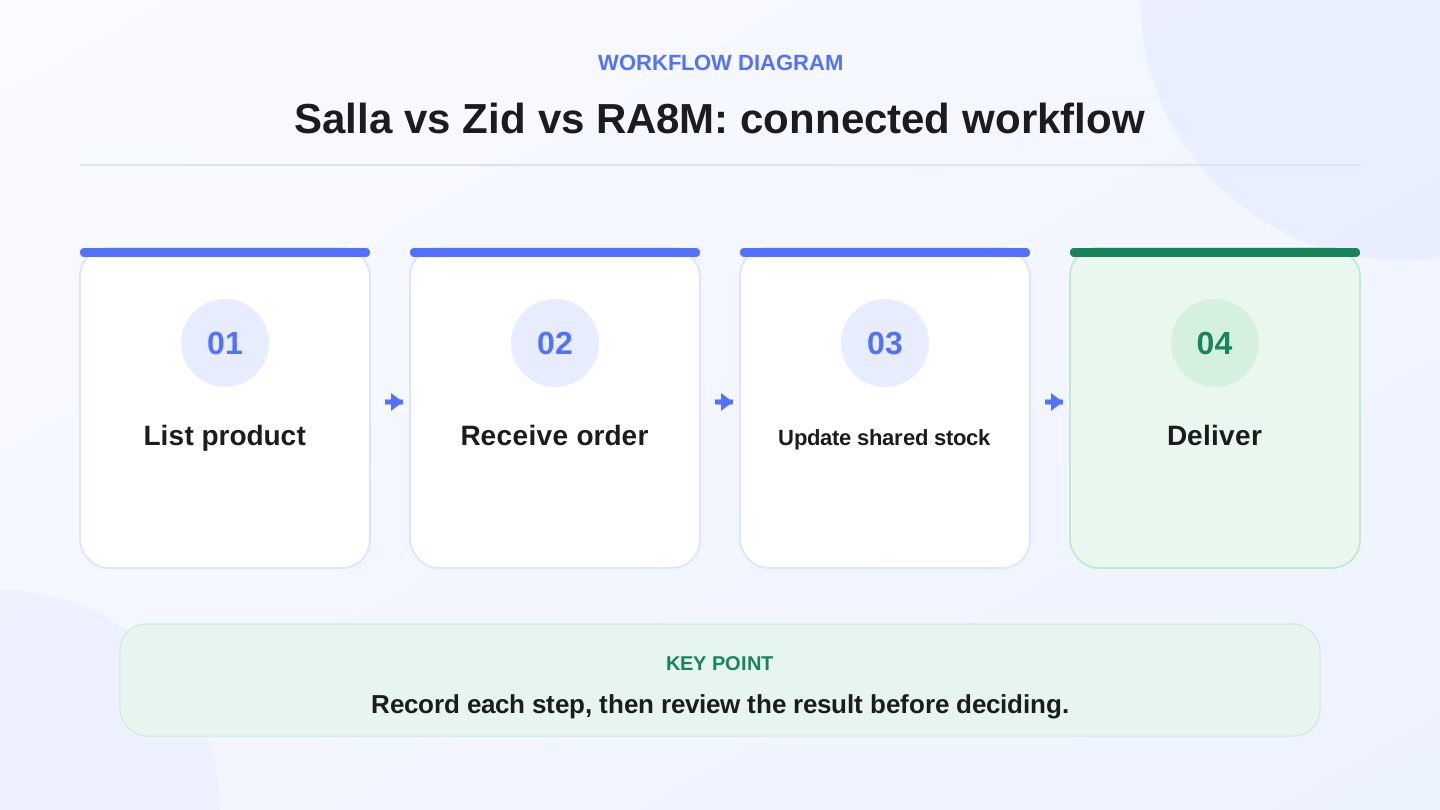
A practical sequence has four connected steps: List product, Receive order, Update shared stock, Deliver. Recording each step makes the daily result easier to review.
03
Comparison table: what to check before choosing
Use this table as a practical checklist. It is not a claim that one platform is universally better. Features, availability, and pricing can change, so verify current details with each provider before buying.

| Decision area | What to check | Why it matters in Iraq |
|---|---|---|
| Arabic storefront | RTL pages, Arabic product names, bilingual support | Customers and staff may need Arabic first, with English as backup |
| POS connection | Same product catalog, stock, orders, and customers | Prevents online and in-store stock conflicts |
| Payments | COD, Visa, Mastercard, wallets, gateway availability | Payment options depend on provider terms and customer trust |
| Delivery | Courier handoff, status tracking, returns | Failed delivery can cost time and money |
| Reports | Sales by channel, product, branch, and payment method | Owners need to see what online selling actually adds |
| Roles | Cashier, manager, branch, ecommerce staff access | Protects operations as the team grows |
| Cost | Monthly plan, add-ons, commissions, setup work | Cheap software can become expensive if manual work stays high |
04
When RA8M fits better than a store-only setup
RA8M fits when the business sells in-store and online from the same stock. Examples include retail shops, clothing stores, cafés, restaurants, supermarkets, pharmacies, salons, and multi-branch operators. In these cases, ecommerce is not separate from operations; it is another sales channel.
If a cashier sells the last item in the shop, the online store should not keep showing that item as available. If an online order arrives, staff should know whether stock is reserved, deducted, packed, delivered, returned, or cancelled. A connected POS and ecommerce workflow reduces these daily mistakes.
Review RA8M Ecommerce for the storefront add-on and RA8M POS for in-store cashier workflows.
05
When a simpler ecommerce platform may be enough
A simpler store builder may be enough when the seller has low order volume, no physical cashier, no branches, and simple stock. For example, a small seller taking a few custom orders per week may not need deep POS, purchase, branch, and finance workflows at the start.
The risk appears when the business grows. Orders come from the website, messages, and in-store customers. Stock is counted manually. Delivery returns are not recorded. The owner sees revenue but not accurate margin, remaining stock, or channel performance.
If the business expects growth, choose a platform that can move from storefront to operations without forcing a rebuild.
06
Worked example: the hidden cost of manual stock updates
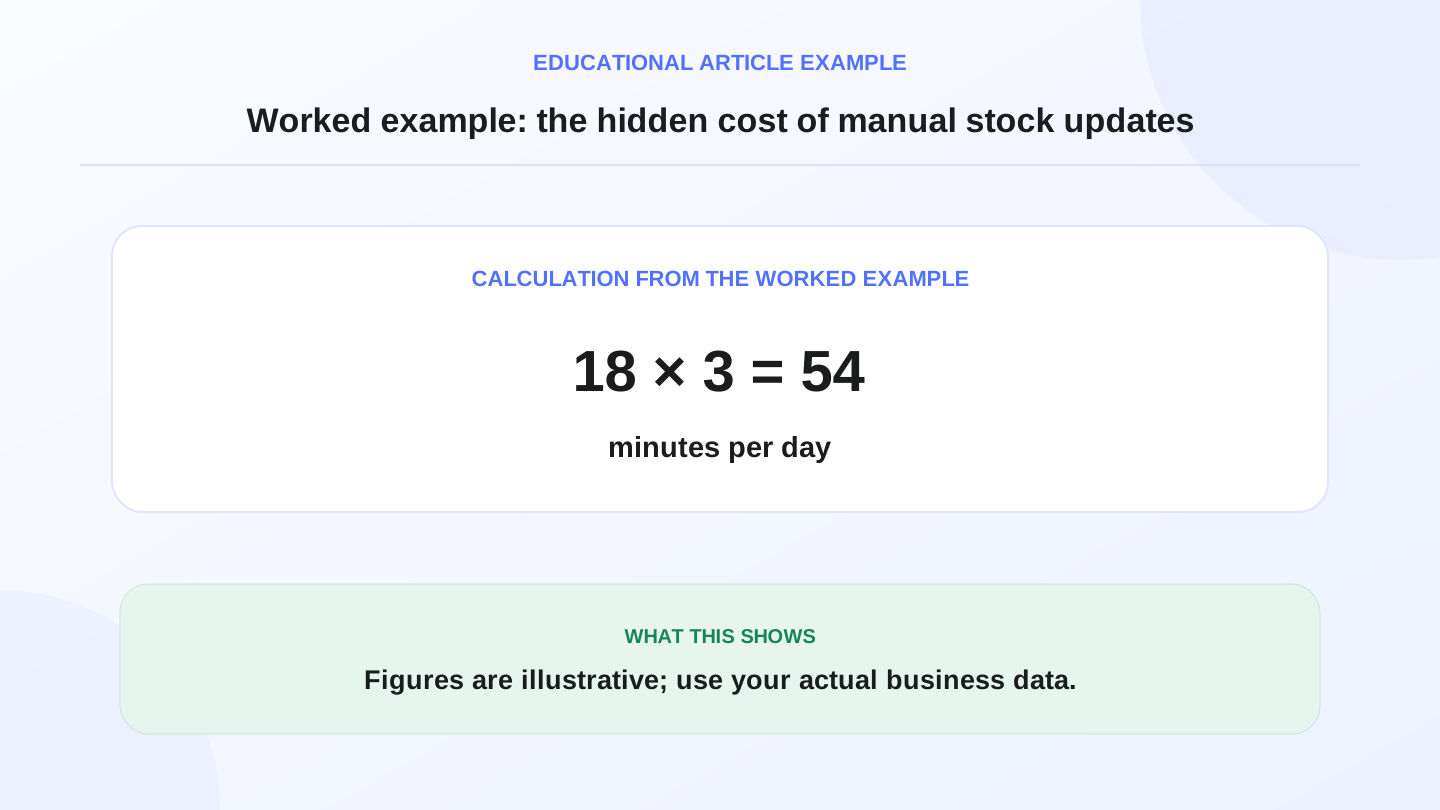
Assume a shop receives 18 online orders per day and each order requires 3 minutes of manual stock checking, payment status checking, and spreadsheet updating.
18 orders × 3 minutes = 54 minutes per day.
Across 30 days, that becomes:
54 minutes × 30 = 1,620 minutes, or 27 hours per month.
If the owner values staff time at an illustrative 5,000 IQD per hour, the manual workload costs:
27 hours × 5,000 IQD = 135,000 IQD per month.
This number is illustrative only. The point is that platform price is not the full cost. Manual reconciliation, mistakes, returns, and late reports can cost more than the subscription difference.
07
Payment and delivery questions to ask
Before choosing any ecommerce platform in Iraq, ask which payment methods are currently available for your business category and account. Public RA8M materials describe Visa, Mastercard, cash on delivery, and Boxy delivery/logistics capabilities for ecommerce, but availability and provider terms should be verified before launch.
Ask practical questions: Can staff mark COD orders clearly? Can prepaid orders be separated from unpaid orders? What happens if a customer cancels after stock is reserved? How are refunds and returns reflected in reports? Who confirms delivery and who puts returned stock back?
These are operational questions, not only technical integration questions.

08
Reporting is where the platform proves itself
A store can look beautiful and still be operationally weak. The owner needs to answer basic questions: Which products sold online? Which products sold in-store? Which channel created returns? Which payment method creates failed orders? What stock should be reordered? Which branch fulfilled the order?
RA8M is positioned as a POS-led business operations platform with inventory, purchases, finance, reports, roles, branches, and ecommerce. That positioning matters for businesses that want one view of sales rather than separate islands of data.
09
Total cost checklist
When comparing platforms, write down the full monthly operating cost. Include the software plan, ecommerce add-ons, payment fees, delivery costs, custom domain, setup help, staff time, app integrations, and any manual reconciliation.
Pricing may change; verify RA8M plans on Pricing and verify other providers directly. Avoid deciding from one headline price without checking how the whole order flow works.
10
Conclusion: choose the platform around the workflow
For Iraq businesses, the right Arabic ecommerce platform is the one that can be operated accurately every day. If the business only needs a simple storefront, a store-first tool may be enough. If it needs POS, stock, purchases, finance, reports, branches, and ecommerce in one connected workflow, RA8M deserves a close look.
Start with the customer journey, then map the staff journey behind it. The best platform is the one that keeps both clean: customers can order easily, and the business can fulfill, reconcile, and report without rebuilding operations by hand.
Frequently asked questions
Is RA8M a Salla alternative for Iraq businesses?
RA8M can be considered by Iraq businesses that need an Arabic ecommerce storefront connected to POS products, inventory, orders, payments, delivery workflows, and reports. The right choice depends on the workflow needed.
How should I compare Salla, Zid and RA8M?
Compare storefront language, checkout options, payment and delivery support, POS stock sync, roles, reports, pricing, and how much manual work remains after each order.
Why does POS sync matter for ecommerce?
POS sync prevents the store from selling products online that were already sold in-store. It also keeps stock, orders, customers, and reports in one operational record.
Should a small seller use a simpler store builder?
Yes, a simple store builder may be enough for a low-volume seller with manual stock and few orders. A connected system matters more when in-store and online sales happen together.
Does this article claim one platform is best?
No. It gives a workflow checklist for Iraq businesses and explains where RA8M fits. Always verify current features, pricing, and availability before choosing.
Written by
RA8M Team
Practical guides for restaurants, shops, and operations teams
Next step
Try RA8M with data close to your operation
Read next